The Social Seller & Social Buyer

Hi gang!

Let me know what you think of this project!

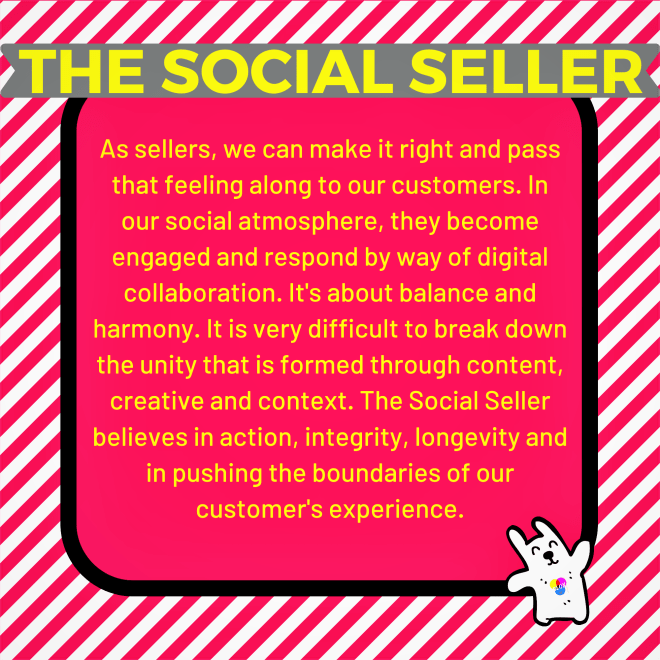
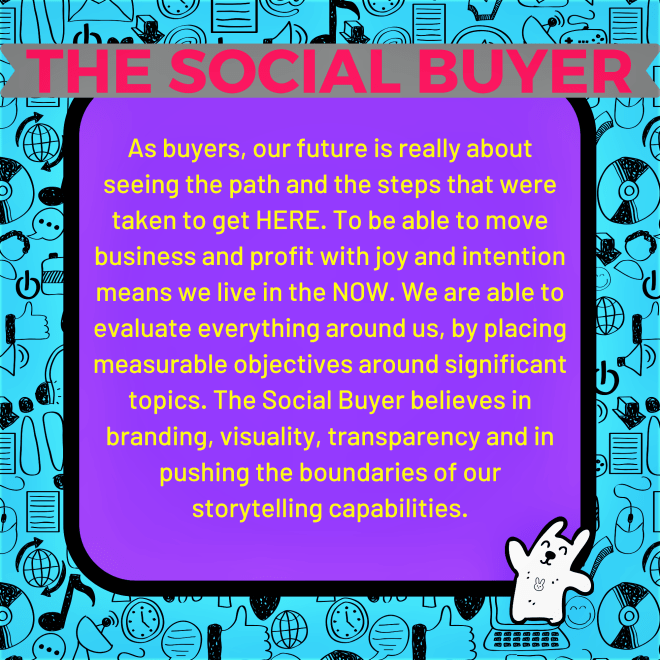
In my next few posts, I will showcase elements extracted from a direct mail proposal I created about brand strategy. The images below are a continuation of my Seller & Buyer persona study (also see image description in Previous Projects) and comment on the social aspect of selling and buying in the marketing industry.

Here is a pertinent excerpt from another relatable post Brand Names

For example, we (Sellers & Buyers) make the same, dedicated connections when observing a special life experience. Then, this can be observed through products and services. We recall brand names and in the long-term, we remember who you are for what you can bring to the table. Then, the name you have chosen to attach to your products and/or services will become synonymous and eventually engrained in time.

The original document was printed on glossy cardstock and sized like a 10″ vinyl record cover. They were presented in a stack, so that the viewer could lay them out on a table and take in a visual and sensory experience.

I placed a variation of the BLOX rabbit mascot in the bottom right hand corner of the images, the seller mascot wearing the creative BLOX logo and the buyer mascot wearing the technical BLOX logo. I’ve just recently defined this aspect of my brand and have much more to explore regarding it in the future.

Here’s an interesting article you should read – Why people focus on the right-hand side of a design taken from creativebloq.com.

9

10.png

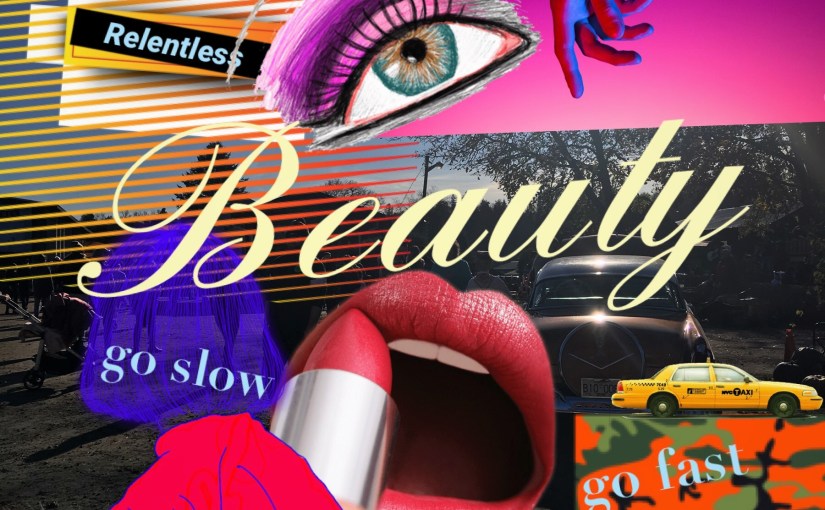
Relentless Beauty – Directing Art in Life

Hi everyone!

This post is being published a couple of weeks late. It sides like a dialogue or script between my negative and positive conscience. It also questions the personality of reality and the role of work impacting everyday life. Have a read and let me know what you think!

1

I am you.

We are masterpieces at work.

A masterpiece is considered to be a work of outstanding artistry, skill, or workmanship. I am building something great in my brain, that might take 5-10 years to materialize, but for today…it is a matter of steps.

  1. TED Talk
  2. Meet some important CEOs (Microsoft, Facebook etc.)
  3. Have an annual income>$100,000.00

Step 1 – The Wait

This past year has been a period of unparalleled accomplishment and perseverance.

  1. Being able to write well – technically (analyses) and creatively (rationale)
  2. Upping my graphic design capabilities (still supporting MART)
  3. Identifying the BLOX brand (logos for example)

Step 2 – Past Reconciliation

Bell Bird / I walked away from my desk knowing it was over. And every time I returned, I resumed my role, but thought to myself quietly and strategically: 1 – you don’t allow me to be artistic or creative in a way that would generate an income; 2 – despite all my hard work and dedication, you haven’t allowed me to move forward or upward; and 3 – down to the date I left, you gave me the belief that I could achieve something bigger, better and huge.

Step 3 – Hiding

When I say there’s a solution, here’s why. My partner is the most realistic human being that has ever existed! He tells me; I should listen. Now, I’m trying to understand, again (in this moment of gratitude), WHY I have the NEED to reveal a few big secrets, but I won’t. I think it’s going to take a long while, you guys might as well grab some food.

Step 4 – Revelation

Chona: I am not realistic.

Daisy: I am the least realistic human being that has ever existed!

Chona Fe: I am so utterly unrealistic that I presume the world in a digital fashion and to me, it all makes sense.

Seventeen: And my unrealisticness bears unbreakable confidence and this leads me to believe that people already understand it, that other people exist in a digital fashion as well and that it is all working.

Steps, I said. Steps.

Step 5 – Fighting Back

Blox Bunny / Back at my desk, I am thinking again: when I left my former job, there was something inside of me that longed to escape. I was previously trapped in the mind of a realistic person! This does not satisfy me! I want it back! I belong in there. So, I started writing this blog and finally, I have a platform to voice my concerns, however all I want to do is write and that leads to my battle with time.

2

Young at heart.

Old in thought.

Step 6 – In the Past

It feels like more things have been given to me and I have spent a whole lot of time trying to decipher those things regularly. The pursuit seems futile. Is it? I experience true happiness when I am free to create, to express myself as I will. Just being is so strong.

Step 7 – Entrance

Chona begins to write feverishly on a notepad: the questions become – how does the audience receive these creations? But that is not a real question. The real question is, does it matter how they receive it? Wrong again. Once I release a creation into someone’s hands, or brain for that matter, is that it? Is that all that matters?

No, no, no!

Step 8 – The Return

We need to feel a reason to proceed with creating.

Step 9 – The End

I will get there, promise. And when all else fails, I did it for love and the beauty surrounding it.

3

A very dear friend of mine, Yenukwa Kombian, is the co-owner and facilitator of King of Hearts (a collective of men helping men). He shared a few quotes with me when I was feeling down and they really helped –

About struggling as an artist/entrepreneur

…being an artist/entrepreneur, grinding it out and never being recognized for your hard work. It talks a lot about giving up, letting go and even going into a dark hole that you feel stuck in. The line ‘Lose My Air’ is directly correlated with anxiety, and depression. Feeling overwhelmed and stuck in life. I think it’s so easy nowadays to compare ourselves to everyone around us, and that can be crippling. The one thing I have learned through all of this, is that everyone is on their own path, their own chapter of life and it’s extremely unfair to compare yourself to everyone around you. – Brandon Linkewich

About hustling aligning

Destroy the idea that you have to be constantly working or grinding in order to be successful. Embrace the concept that rest, recovery, and reflection are essential parts of the progress toward a successful and ultimately happy life.

About feeling behind in life

You’re not behind in life. There’s no schedule or timetable that we all must follow. It’s all made up. Wherever you are right now is exactly where you need to be. Seven billion people can’t do everything in exactly the same scheduled order. We are all different with a variety of needs and goals. Some get married early, some get married late, while others don’t get married at all. What is early? What is late? Compared with whom? Compared with what? Some want children, others don’t. Some want a career; others enjoy taking care of a house and children. Your life is not on anyone else’s schedule. Don’t beat yourself up for where you are right now. It’s YOUR timeline, not anyone else’s, and nothing is off schedule. – Emily Maroutian

And so, it should be said…

Has anything changed since last year? Are you more ahead of the game? Do I understand being HERE and NOW? Is there something standing in my way? Is it constructed or real? What is real anyway?

Revealing my true identity…

Instead of defining it as creating, writing, being artistic, it must be redefined as working. This mantra says it best – At work, I have the opportunity to do what I do best, every day. That’s it. That’s all that matters!

I think somewhere on this blog I talk about losing my identity, then regaining it. It just isn’t as easy as that. As an artist, you can create a wonderful masterpiece and use it to build yourself up. But when you are done, you have to start all over again and this is a problem. It’s a similar thing building a social media presence. You can really use what’s out there to help support your vision or you can get lost in the confusion of trying to fit in (or out) with a trillion other ‘things’, plus being an open book for everyone one to read. The role of work is to harness these conditions. To take the experience and quantify or qualify it. To have a goal and to accomplish it, then to move on to the next task. Bell provided me with this motion, it just lacked the artistic/creative portion. This past year I have learned how to objectify my work and I am ready to apply these skills.

4

Please bring your trays to a tray return station. We’ll take care of the sorting, recycling and trash. To lower our environmental impact, nearly 90% of waste in the IKEA stores is sent for recycling or used for energy production. And we’re working hard to get to 100%.

IKEA’s founder Ingvar Kamprad thought along these lines, “To do business with a clear conscience is an attitude that pays. We have to find more time for ourselves and to regain respect for the environment in which we live.”

I agree and what if the sign instead read –

Please bring your brains to a brain return station. We’ll take care of the sorting, recycling and trash. To lower our environmental impact, nearly 90% of waste in the BLOX stores is sent for recycling or used for energy production. And we’re working hard to get to 100%.

The idea that the brain requires an actual vacation – with pay – connotes the modern (we’ve been modern for much too long) notion of a retreat. The IKEA restaurant works just great.

Conclusion – Digital Detox Works

Leave your devices at the door and have a seat with us in our cafe, er…restaurant. You really have to plow deep to comprehend your body visiting versus your mind walking in. That is how I think. Typically the thoughts are in motion, in my head and do not leave it. Case in point, there’s power in environment, yet I am denied, time and time again.

Hyper Conclusion – The Drive of Your Mind

It is incessant. Must be more positive. Must be HERE and NOW. Must trust, believe, have faith and most importantly, love.

It causes turbulence. Must convert to renewable energy. Big breakfasts. Netflix. Naps. Running.

1 day left until Halloween!

Yay!

Project Future – Can Something Become Practical in Theory?

Hey gang!

I am futuristic and that’s final. My mind lives in the future. Theoretically, I train envisioning that we can live in an entirely digital space. Practically, we live in this space doing regular things, but we also fend for ourselves using our brains. Oh, so this is life! Let’s put a couple of examples into perspective. Note: this post is starting to examine the concept of ‘internet of things’.

Abstract – thing / being / human / agreeance / motion

We live on a physical planet where issues like climate change are just beginning to surface. This a real and serious thing. A 16-year-old climate change activist from Sweden, Greta Thunberg is fighting with global politicians pleading, “How dare you!” Her statement is full of impatience. Does this quantify or qualify the time it has taken to have a crisis like climate change in focus? Now envision, in an utmost technologically advanced society, affecting the outcome of global issues via thought. Think about this – do Thunberg’s words permeate:

an action / integrity / longevity (experience) *creativity +strength

or

a brand / transparency / visuality (capability) *productivity -weakness

In certain applications that are already in place, we could debate the efficacy of an activist’s approach. However, would there be more power in advertising or marketing a cause if the objective considered certain design elements or art attributes? How do we implicate values like belief, trust and faith into a balanced and harmonious solution? And what would be the outcome of such an act? More opportunities? Less threats?

Think ads, television, movies, radio, books.

If those in charge of operating the goods either 1 – don’t fully comprehend new technologies due to incumbent roles and desires of maintaining diplomatic consensus or 2 – need to allocate funds to get everything in place, this does not mean they’re not participating in or understanding at all. And I’m talking highly established and evolved grey matter here! Executives of all sorts know, but the argument could be that we may potentially lack tacit knowledge and this is required to engage with younger generations or for that matter, older ones too. Throes of people that might already comprehend digitization (including all levels of being – thing, human etc.) are waiting for two things – a revolution and massive change. How is it going to pan out?

An example of Global Comprehension at work –

Do you remember when Facebook’s Mark Zuckerberg endured a 2-day congressional inquisition on the possibility that his company helped to fix Trump’s election campaign by intentionally (or unintentionally) releasing Facebook user data?

  • What was that all about?
  • How would you explain it to a Baby Boomer, Millennial or Digital Native?
  • How did this issue affect us in terms of technology?
  • How did this issue affect us in terms of marketing and advertising?
  • How did this issue affect us in relation to design?
  • Does it bear any importance?
  • How do we begin to explain these types of situations without being merely journalistic or too afraid to elaborate in a caption?
  • Should it matter and why?

We are honourably asking, what does Facebook incentivize and why? Personally, I think they are doing something amazing and are truly planning for our future.

In spite of everything, both Thunberg and Zuckerberg bear weight and responsibility representing modern dilemmas that many people don’t want to talk about. Or perhaps won’t or can’t.

Q: So, what are these dilemmas that require Global Comprehension?

A: Critical mass (Thunberg example) and artificial intelligence (Zuckerberg example)

Hypothetical Solution: recognizing power in unanimity (Thunberg example/things in agreeance) and leading with a ‘Productive Creative’ brain (Zuckerberg example/things in motion)

Note: the term Productive Creative is explored in Hustle & Float, a book by Rahaf Harfoush, a strategist, digital anthropologist, best-selling author and Executive Director of the Red Thread Institute of Digital Culture. She also teaches “Innovation & Emerging Business Models” at SciencesPo in Paris. This quote explains Productive Creative further –

But what happens when the product or service we are providing becomes more intangible in nature? The economy’s gradual shift to include more knowledge work meant that creativity was suddenly a highly desirable trait. That’s where the Productive Creatives came in: to stay relevant and profitable in a rapidly evolving economy, companies desperately needed problem solvers, strategic thinkers, and idea generators. This new type of work created a ripple within traditional workplaces, which now struggled to apply the same clear-cut approach to the creative class. Organizations had to adapt the decades-old systems that developed standardized organizational capabilities to ones that cultivated individual experts who could respond to market conditions with agility.

It would be time to show people – from all walks of life – what is actually going on. There is no need to be livid or paranoid or just plain complacent; if we just had Global Comprehension in place!

So let us say that today, we have the power, we have the goods, and we most definitely have the stage to set our differences aside and come up with new and inventive ways to approach our problems. So, the question becomes – can we altruistically and artificially fix problems like climate change? Could all the world’s brains come together and compute a solution that’s entirely technical (it could just be code of us walking around – engineering a practical application of semantics and proxemics really), but that would emote a creative shift in the planet’s thought processes, all things included? Without the desire to push our creative and technical limits, we will not progress. We will not move forward with fundamental ideas like artificial intelligence or critical mass.

If we can understand the essential framework of these new systems, future generations can develop and implement changes. Gen Y will test and research, then together, all generations can draw some very much needed transparent, accurate and responsible conclusions. The funny thing is, when the revolution (arguably renaissance even) is over and done with, what will be left? In other words, if there is no dilemma, did the dilemma even exist in the first place? This is my theory on Practicality – one planet, 1 human!

Uh-oh!

Today, let’s be practical (according to http://www.dictionary.com):

  • relating to practice or action
  • consisting of, involving, or resulting from practice or action
  • of, relating to, or concerned with ordinary activities, business, or work
  • adapted or designed for actual use; useful
  • engaged or experienced in actual practice or work
  • inclined toward or fitted for actual work or useful activities 

This is a timely discussion and we are all a part of it. How does this make you feel? Worried, scared, unusual? Would you be interested in exploring these ideas further if they were presented differently? As a note, I am always speaking to a mainstream audience. I think connections need to be made for each and every one of us, not only for those residing in an academic pool.

Great work, talk soon!


ChonaBLOX Graphics

Hey everyone!

What a whirlwind of week it’s been!

Between studying like a madwoman and trying to maintain a consistent posting schedule, I’ve designed some quick, quirky graphics for various topics up on The ChonaBLOX Blog.

Right now, they are being shared across multiple platforms (remember, have you had your FILPTS today?) and I will present them in one swift punch once my colour scheme (rainbow, of course) has had its say.

I suppose it would be my most current body of work, should any amazing agencies in the air desire a digital marketer with an artistic penchant to boot!

For now, here’s a sample. A graphic designed today for my latest #girlstories post – her name is SABRINA and she is a…GHOST!

Check out her story as it relates to two other Elevententeen characters, Judge Judy (I know, and yes, on purpose) and Alice from Wonderland.

new #girlstories sabrina (1)

And last thing, two very important marketing terms that I’ve come across lately and seem to apply to my work – top of mind and evergreen. Here are a couple of simple definitions.

First, per Wikipedia –

In marketing, top-of-mind awareness (TOMA) refers to a brand or specific product being first in customers’ minds when thinking of a particular industry or category. … At the market level, top-of-mind awareness is more often defined as the “most remembered” or “most recalled” brand names.

And second –

Evergreen content is content that is always relevant – much like the way evergreen trees retain their leaves all year around. Interesting and relevant content that does not become dated is necessary in order to be found online by search engines (The Balance Careers).

As we enter the beginning of Q4 or reach the end of the year, I want to consider these definitions as they relate to my brand and marketing strategy. How have these terms applied to your business? Do you think they are relevant and does applying these concepts to your work produce less disparity between yourself and your audience? Let’s have a brainstorm!

Cheers y’all!

PS – Halloween is just around the corner, what are your plans?

PPS – FILPTS is a BLOX acronym standing for Facebook, Instagram, LinkedIn, Pinterest, Twitter & Snapchat.

PPPS – I gotta up my Snapchat game! Any cool tips or tricks my friends?

Supporting Businesses Using Social Media Strategy – A Quick 5 Step Review

My work strategies always begin with my mission statement (or simple variations of it) – Simpler is Larger.

In other words, we must create work that is easy to understand, so that businesses can afford more time and apply more effort toward ‘larger’ things. 

Read this quick review on supporting businesses using social media strategy.

b. (1)

1

When choosing clients, consider engaging with businesses that are focused on change or influence. Clients should be dedicated toward defining or refining their digital marketing plan.

  • An example of change could be increasing purchases of an item that has just entered the market and the business’ product list.
  • An example of influence could be supporting a new real estate development that gives back to Indigenous groups.

2

We should launch campaigns that matter to the community and foster promotions that persuade target audiences of the relative merits of a product, service, brand or issue”. Think objective and the answers to it. Will the audience (buyer) believe in what they see? Does it make sense? Does it make the business more approachable? Will the work and project parameters make us (seller) happy and productive?

  • An example of a campaign would be to recognize employees within a large organization. This matters because each employee plays a specific part in helping the company succeed. The employees represent community, because they live where they work and work where they live. Think local (global further down the line), sustainable, viable and profitable.
  • An example of a promotion would be to develop quick, one-minute videos showing customers a range of products and how they could be used at home. Imagine a household cleaning products line or sleek and modern furniture for the bedroom, then promote the best-selling features of the products in an environment where buyers dwell. Think top of mind, clear, fast and evergreen.
  • At the end of the campaign/promotion cycle, offer an appealing call to action like, “Our products are made with environmentally friendly, cruelty-free ingredients! Click here to see PROOF and we’ll send you a FREE antibacterial cloth!” Or, offer a discount on stale inventory like, “Receive a FREE eco-friendly table lamp with any purchase of a nightstand!” Think longevity, adaptability, convenience and action.

3

The next step is establishing or fine-tuning the objectives for presentation. We need to understand the business’ identity (more to do with the company itself) and image (more to do with their brand) to develop an effective expression of their work.

  • Some examples of identity aspects would be things like catch phrases (trendy sayings), slogans (company mottos), keywords (descriptions), tone (for example academic or casual), values, a mission statement and a vision. Identity aspects can be imbued in the work and are most likely to be effective in a post’s caption or ad copy.
  • Some examples of image aspects would be things like branded colour scheme (best to stick to one or two), a logo (optional), a tag (optional), branded typeface (best to stick to one or two) and style (for example, sleek and modern). Image aspects can change, it’s important to be flexible.

3

Next, true potential will be revealed via design elements, bringing everything together for the audience to capture. The best design elements to consider would be things like source (where is the content coming from – stock imagery or work from an artist), medium (what forms do they want to use – photography, graphic design, text-based, video etc.), composition (how will images be composed), pattern (what pattern will the posts follow) and grid utilization (applying creativity to posting layouts).

4

The main goal of a social media strategy is to achieve balance + harmony with the work itself and to find the ‘sweet spot’/the magic for HOW the work is done. You will know your goal has been met when 1 – both the Seller & Buyer are satisfied with the results; 2 – an efficient workflow has been put into place; and 3 – you have a good idea of HOW to put everything together for publishing. And with the right timing/scheduling and succinctly, yet artfully composed caption/copy, clients’ social media platforms will sing! Think always compete with the best.

5

Remember, if our work is easily understood and done, then the client’s business can consider a greater capacity (which in turn opens up new avenues for us!). Have metrics set up to evaluate the work. If businesses are wondering HOW to put together the required metadata (aspects and elements) / to successfully scale relevant data (the large scale attributes like brand image and company identity) / which in turn impacts the fluency and efficacy of their overarching campaigns and promotions / we can provide a concept kit in a simple and easy to read format.

If you’re enjoying this new listicle style I’ve been using lately, please let me know. I would be happy to produce more work this way.

Cool guys, have an amazing day!

5 Ways Social Media is Changing the Way We Communicate

Hey everyone! 

Let’s jump right into it. 

We all know things are different. We rarely use our phones to place calls anymore. Progressively, we are relying on different social media platforms to reach out – to friends, family, co-workers and customers. We can interact with more people at once. No need to place a phone call (unless you want to close a deal); we can send a snap using Snapchat, add tags to Instagram Stories or relay continuous messages via applications like Facebook Messenger. And think, we are doing this while doing the same thing with others. All at once. In synergy, together. Thing are really changing!

The following listicle written for Jelly Marketing, touches on this new ‘permanent impermanence’ or our ability to communicate in infinite ways via digital platforms, a.k.a. social media. Social media is here to stay. Read on to find out HOW social media maximizes communicative potential!

1 Creating New Sets of Social Skills

One of the most amazing ways communication has changed via social media, is in its integration of new sets of social skills or groups of attributes more focused on visual communication. The people we are interacting with are more inclined to be engaged, because they are constantly absorbing positive social imagery – videos, gifs, stickers, emojis and even colourful applications in the form of digital writing instruments like pencils and paintbrushes. Communication has become fun! It’s almost as if this function of elements has paved a way for our social skills to light up a space. Try using Canva to bring light to your brand, for example. In this space, our feelings and emotions are heightened, so as a result we are more likely to engage in this new way, time and time again. In our current adaptive environment, this may contribute toward new forms of success.

New York Behavioral Health emphasizes this idea stating –

“Our ability to process emotional cues is associated with personal, social and academic success (Knapp & Hall, 2010).”

2 Leading with Identity

Social media has provided us with ways to express ourselves, something that is more difficult to do in a short face-to-face encounter or during a mobile phone call. We can use all the different platforms to form our image & identity, then we can choose the ways we want to share this information with others. And the greatest thing about social media is that again, it is a 2-way communication channel, so we can interact with other individuals who have similar interests or attributes. This may increase our levels of self-image or esteem. Of course, there are many discussions that would argue against this, but the point of the matter is – it’s your identity and YOU can choose. We can start to pick apart our best features and develop them further using social media aspects like, a profile picture or Facebook cover photo. Even curating a group of boards showcasing who you are and what you like on Pinterest can help develop your identity!

Dr. Uğur Gündüz is an Associate Professor at Istanbul University for the Faculty of Communication and he wrote a research article published in 2017 for the Mediterranean Journal of Social Sciences on The Effect of Social Media on Identity Construction (www.degruyter.com).

Here is an excerpt relating to my idea of leading with identity –

Social media enables identity expression, exploration, and experimentation; something natural for the human experience. It is the agencies in real life, which provide a source of names for different sectors, that inspire the internet communities and the interactions they make within themselves.

3 Adaptive Learning

The ways that we communicate via social media are vast. It is not only a means to communicate with other people in new and creative ways or for establishing a specific digital identity. It is a structural tool that can be used to learn, teach and educate ourselves and others by employing incentive and authoritative techniques. Take for example, Instagram. Today’s Social Media Coordinators put together detailed strategies while skillfully composing content + format. We are learning to use the left side of our brain by applying grids, patterns, permutations and combinations. On the other end of things, we are training the right side of our brain by developing context and adding visuality to the mix.

The future of Generation Z will rely on social media to communicate findings and research relating to topics that are impacting the world. A couple of examples are the state of the science behind climate change or evaluating mental health based on technological consumption. According to a recent study, more and more teachers and professors are incorporating social media into their classrooms to engage students and support their educational development, whether online or in person (Ashford University).

4 Critical Mass

In marketing, critical mass is the idea that one, small movement in the form of an idea or expression can expand the sheer power and capacity of digital media. This can work in two ways, one – it helps users become aware of today’s most pertinent topics, current events, trends and critical intelligence that affect the way we communicate and do work. We don’t need to rely on a newspaper, we can obtain various points of view on the same topic from several different sources. Then, we can cross-postulate for our own purposes or to share with others across platforms like a blog or company e-newsletter. We can even use the least amount of words to create sustainable influence and significant reach (Twitter). Sharing information has never been so easy! We need to take advantage of critical mass in that sense. The second way is – contributing toward HOW businesses communicate. This impacts brand awareness, brand loyalty and even methods for prospecting and retaining clients. Sellers and buyers can flaunt their understanding of today’s fluctuating market (not just stocks and bonds stuff) without having to depend on outside sources, if they are connected to social media. It’s a two way street and we’re giving each other high fives!

Merriam-Webster points out that, “Once these elements reach the size that enables a company to operate efficiently, it is said that a company has reached its critical mass. Critical mass is the point at which a company becomes profitable.”

In this case, the elements are social platforms which provide new hubs of information that can make or break a company’s profitability. Social media has truly become a vital and crucial form of business development. Businesses cannot thrive without it. We communicate and work with it. Period.

Check out this article for more information – Social Media: The World’s Newest Source of Profit

5 Communicating Your Vision

In an era prior to social media, how did we figure out or map our goals? Probably with a vision board, a thought bubble written down on paper or by simply sitting down, daydreaming about what we could accomplish. This has changed so much today. Now, we can objectify our goals and visions using platforms like LinkedIn. Here, you have ample space in the About section to describe your ideas. It becomes a part of your LinkedIn profile, so other people, including employers, can see what you’re all about. But what’s even better is, you can use this section to produce timely updates relating to your journey. Others are watching and they can see the progression.

Instagram alone has become an indispensable tool for business owners. Through thoughtful curation and strategy, businesses can be portrayed in a respectable light that touches on what they offer, how they care about their customers, and in other words, what they do best. Think – campaigns that reflect a company’s core values, promotional posts that keep customers interested in products and services or spotlights on employees and company best practices, so customers can really know what they’re putting their money toward.

The hope for today is that we may collaboratively succeed using our most innovative tools (social media) and techniques (social media strategy), to communicate with others from all facets of life.

Jelly Marketing is an award-winning Digital Marketing & PR firm providing digital ads, social media, SEO, & public relations services to brands in Vancouver and the Fraser Valley. Their case studies explore various client objectives and the innovative + mainstream ways we can produce results by catering toward communicating vision. Have a look!

That’s it for today and remember everyone, always think of PRAC and are you living it today – Popularity, Relevance, Authority & Credibility.

The power is in us to incite wonder and change!

Talk soon!

10 – The Final End

So, who do we got here? Filburt quipped – Stan’s over there. Shady from S and L pronounced, I seen Cherry standing to the right with her sister. So, who else is missing? Um, I think Seventeen and Each Other were caught making out in their cache car. Cache car? Yeah. Like you know. Invisible transportation to Life Space. And who’s leaving Life Space right now? A Tree. And I saw A Day go to. Okay, well…we are close to arranging the final tribune.

We were that close.

“He came in and interrupted me!”

“Ya so. Why didn’t you just tell him to leave?”

Daisy was walking down the sidewalk. Again. It was raining. The weather never changed here. It was consistently blue-gray and purple. Wet and bleak. The sunshine rays were hidden by Indigo; the pupils of Elevententeen did not deserve Paradise Colours.

We were that.

“Filburt, can you please pass me my tea?”

“Ya sure. Here you go, do you have enough cream?”

Daisy’s milk was a nice colour of baby lime chartreuse. She didn’t even want to stir it, because then it would change into something orange and forceful. She was deciding on a Dream for the day, to carry with her in the front pocket of her Levi’s. She had another note in there from Baby Bear, who was said to be related to Seventeen and Other of Each Other. The wall at the Nike outlet now included various options for Dreams in colours ranging from green to teal to yellow. Unfortunately, that was the only colour palette available, because the others were worth too much due to their high wavelength interval. “Man, I miss orange! This blue just won’t do!”, Daisy exclaimed as she clearly had too much of a muddled mind frame to understand the meaning of that statement today.

Okay, okay, so back to The Tree. His name was Paul and instead of having a bright orange-red beard, his was blue inserted with tiny, little firs which themselves housed tiny, little owls. He was out hunting between the three primary states and had business to do across all of them. Life Space was his first stop. He was looking for Alice and her dreadful creations from God. Then, it was onto Chon where he could take a break. Eat a cherry scone and perhaps accompany it with a hot drink of lemonade. And final resting place – Elevententeen. He was supposed to bring back some girl named Daisy. Apparently, she held a key to something. His bosses were still trying to figure it out.

We were.

“In about 5 minutes, I am going to explode!”

“Let it happen, man. Things don’t get better than that.”

I’ve got to walk faster now. Where the fuck did I go? Daisy picked up her pace, the sound of her soles squeaking becoming more intense. Finally, she arrived. She looked up and read the sign – Judge Judy. It was an imposing wooden structure that looked distorted when you peered up towards the roof. She was analyzing it a little bit, because it wasn’t from here. She could tell, its proportions were all wrong and the perspective of its facade was vibrating like a green on red channel. She actually wasn’t sure now if she should enter. But before she could decide further, the gigantic brass door opened and a dark, teal gray smoke began to generate from the bottom slants.

We.

“Pssst. Come in this way. I’ll leave the door open for you.”

Daisy knew who that was. It was darn Alice! How did she get in here? She knew better that Paul and Jared were looking for her. Her heart rate grew and it was becoming one of those distant Dreamsicles. She didn’t want any more of it. She was beginning to lose her originality and she wouldn’t be able to pick up a new set from Linz anytime soon. Daisy was heartbroken.

“If I can just get my mind past the pretense of it all, I might be able to recall something worthwhile.”

“You won’t do it. You don’t have the balls.”

The judge tore a sheet of paper out of her book and it made a long and terribly loud hissing sound – pppssssssssssssssssssssssssss! Was that really necessary, asked Alice. Judy replied with a hiss of her own, yes, yes it was. Daisy has come. Now what are we supposed to say? She will notice the difference. She can tell that we’re lying.

Daisy turned a sharp corner and again, cranked her neck upwards to preview the alarmingly high walls. Somewhere up top, there was a ceiling. It was all written in code. She wanted to read it so bad, but she slipped on the onyx glass floor, fumbling her belongings, of which a bright, green granny smith apple came flying out of her purse. Filburt ran ahead to catch it. Ugh, why are we even here, Daisy thought. Filburt answered her in his mind – Daisy, we are here because you are supposed to be here. We are trying to find the reason for Being. And, we need to present our findings to the tribune by December!

Alice sat affirmatively on a cushy yellow Dream. She took a bite and sighed. Judy followed by adjusting her large bottom on an orange one. They both sat in silence, chewing their gum.

On the left side wall, as soon as she turned the corner, Daisy saw two prints framed in gilded gold. One said Life, the other said Free. She wondered if she was supposed to be doing something with them. She tried lifting the frames off the wall, but they were drilled to it with solid steel jelly beans. Those things don’t move. She then placed her hand on their screens. The words flashed in different colours, but nothing else happened. Out of nowhere, two flashy young men appeared. She knew instantly who they were. It was The Need and The Pause. Chasing after her, of course.

The Writing she was doing was combining with Training. This was not supposed to happen. She was going to be in a lot of trouble. She just knew it. As an artist, she works. As a specialist, she writes. Ugh, this was not going to help her at the tribune. Just then, a booming voice entered the space, “Alice! Come forth to room 1!”

Daisy, she meant.

And that was that. She took off as fast as she could, carefully watching her step on the slippery glass stage. Blinking, Daisy looked around. “Class! It’s glass! Please pay attention!” Her forehead wrinkled. Again, she thought. When was it going to end? When was it the final end? “But today, my dear. Were you sleeping again?” Her teacher prompted as she handed her an exam. “Write this first. Then, we will determine what’s next.” Daisy shrugged. She had no choice anyway. So, she might as well participate. She squinted. At the corner of her eye, she saw them. She whipped her head around to see. But nothing. Just two barren doors. Totally uninteresting. Not brass even. She could have swore Tom Need and Tim Pause were there. Was she still asleep?


What is Marketing?

Hey gang!

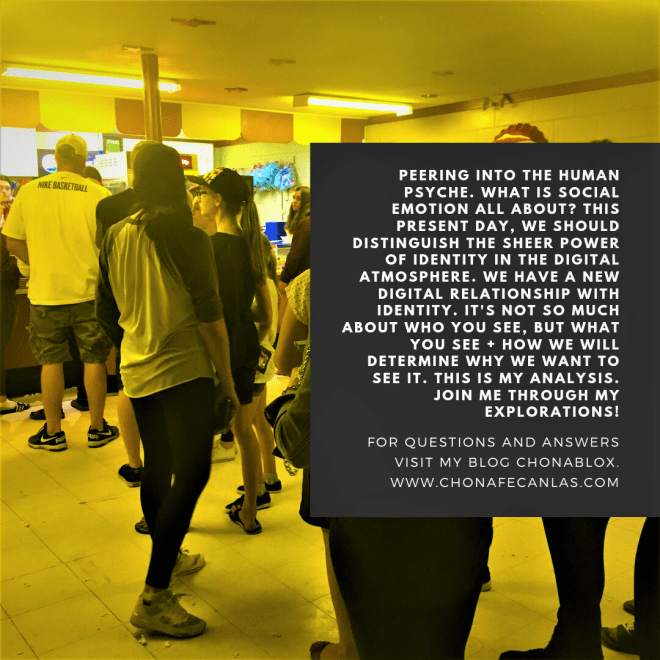
This content was developed prior to leaving VanWhistle Media. I wrote it in my small, orange notebook. I was thumbing through that today, putting some definitions together for my Definitions post. It’s amazing how you can return to something, months later and it has become more relevant than it was when it was originally written! The photo was taken at the Starlight Drive-In Theatre in Enderby, BC.

Social Emotion - Peering Into The Human Psyche

What do YOU think?

If you would like to see the Abstract for this post, shoot me an email anytime – info@chonafecanlas.com.

Cheers guys!

Latest Banner/Billboard

Hey everyone!

2 down, 1 to go. #continuouslearning

Abstract – work / power / size / EQ / PQ / IQ

I designed a banner/billboard while studying the last bits of the Hootsuite Social Marketing Certification course. I usually take 5 minute breaks here and there, to do something creative. I find it helps with my focus and energy.

Find more focusing tips here – How to Stay Sharp During Exam Preparations

When designing work intended for large scale applications (think brand loyalty + awareness), consider an art theory I will call ‘Fever’ (see this post for more background). Note: You’ll have to dig around your mind to figure out the connections there!

But back to the theory…

Say you were looking through a 3000 page art history book. You see a tiny, little thumbnail image of a painting. Now, in your mind you’re imagining a massive piece of art, covering half of a wall in a prodigious art gallery. Fast forward to a trip you decide to take to England, where you’ve scheduled 4 museum visits per day. When you finally arrive at Tate St Ives (Art Fund Museum of the Year 2018 Winner) in Porthmeor Beach, St Ives, Cornwall, you come across Piet Mondrian’s Composition with Yellow, Blue and Red (1937-42). You can’t believe your mind!

It’s…so…SMALL!

How can that be, you think. Well, that is the theory.

I’m sure someone has written about this before, but my version entails –

Any work (work = image + subject matter) that produces reactionary propensity (influence) via media outside of the original source (appropriation). This may be based on an ability (equanimous object + subject or audience mental equilibrium) or on the evidence of power or size in the creator’s or audience’s interpretation. In other words, the work generates a sense of power or size, partly because of the artist’s or audience’s ability (talent) and partly from the image + subject matter itself (content). The work, creator and audience can choose how to participate, which results is an unintentional, yet intentional amplification of ‘grandeur’.

Believe me, I’ve tested out this theory with many works throughout my life. It is so cool!

Power of the work. Power of the people. Power of the experience.

So, coming back to the matter at hand. When creating work on a small scale, it is important to preview the work and to evaluate its ‘power’ as a billboard placed on a busy street or a light box advertisement hung over a retail store’s checkout space. We should advertise both the company and the ‘size’ or capacity of the image + subject matter itself. If everything checks out (sorry I’m punny), you should proceed to the checkout with the work’s development. Note: your work should imbue a positive force. Make the choice, because you have it!

Example of positive force –

I remember standing in line once at Sephora and just staring at the large and beautiful space directly above the cashiers’ heads. I daydreamed about covering that space with something amazing. At the time I envisioned graffiti, but today it would be a lot more reminiscent of this post’s featured image. I might just have to keep the slogan too!

The power is in us to incite change and wonder!

The power is in us to incite wonder and change! (1)

Hope everyone has a spectacular weekend! See y’all next week.

And remember, we stay on top!

fe

PS – The topic of Fever could imbue significant change in Western medicine.

#girlstories

Hey gang!

I forgot to post my ad for #girlstories, which launched a month or two ago.

The purpose of this campaign is to empower women from different demographics and psychographics to tell their personal stories using creativity to dispel fear, judgement, and other negative attributes that we may associate with categorization.

Wikipedia describes categorization as:

…something that humans and other organisms do: “doing the right thing with the right kind of thing.” The doing can be nonverbal or verbal. For humans, both concrete objects and abstract ideas are recognized, differentiated, and understood through categorization.

I’m learning about Facebook Ads right now and it just seems fitting to mention this topic today! I love being analytical, because I don’t have to worry about ‘categorization’, it’s just an ‘interest’ hey!

It’s as simple as this:

doing the right thing –> creating campaigns

with the right kind of thing –> Facebook advertising

Facebook’s mission for 2019 is Embrace Automation. Perhaps a further step towards developing AI…

“Using Dynamic Ads, advertisers can upload an entire product catalog and set their campaign time, and let Facebook do the rest. Working in conjunction with the Facebook Pixel, Facebook will automatically show the right products to users who have visited your website previously.” –  Ignite Visibility

It doesn’t sound so simple, but it can be!

If we take this notion and apply it to a creative + technical writing style (see my first paragraph), we can attempt to mimic the theory and eliminate a need for keywords, bringing us one step closer to attributing right-brained thinking to adaptive modes of learning.

Check out this interesting article, A Glance at the Past & Future of Keyword Research on Semper Plugins.

In place of keywords, we can utilize Facebook Ad concepts like targeting, audiences and insights.

But, who is the pixel? Or, shall I say: who is Pixel? 😉

Okay, that’s my concept exploration for the day! Back to the matter at hand…

When crafting my ideas, I stay true to (what I believe is) the genuine nature of short story telling: condensed length + resisting the sense of obligation to apply edits to the original draft.

Okay, but I still run a wee minor check before I post – always!

This speaks to the campaign’s purpose – revealing our true self (it ends up being paradoxical at times – think: can we express truth condensed?) while maintaining the raw and gritty nature of our human existence.

At the end of the hour, we remain women (and men), powerful regardless of what we know, how we advertise ourselves and why we do it!

#girlstories Girl Stories is a series of creative, short stories focused on empowering creativity in women

These stories will be posted at least once per month. I hope you enjoy them and if you have any ideas for new character names, I’m all ears!