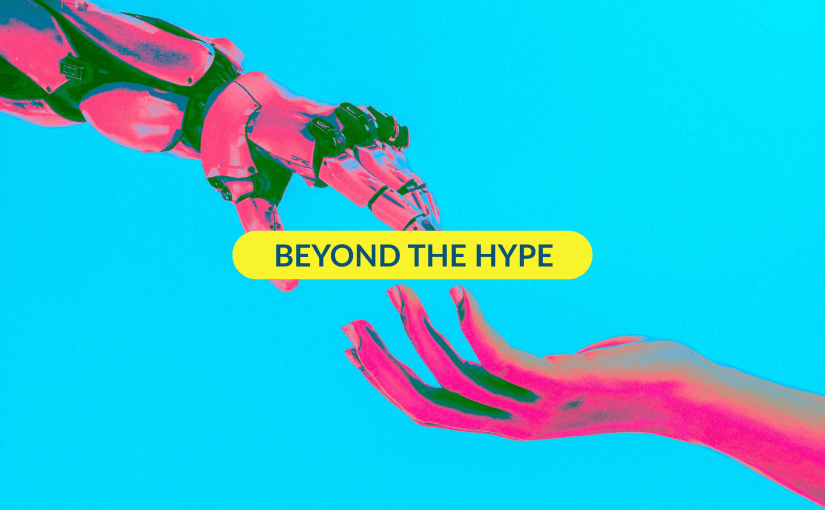
Just a Moment for AI

Take a deep breath and think deeply. AI is becoming the structure of our world, no matter what shape or form that world takes. We are all witnessing it reshape how we think, create, decide, and execute. It’s enabling us to move faster, operate more efficiently, and, in some cases, reach a level of thoroughness that traditional processes struggle to match.

So, let’s start at square one. Why does the philosophical connection matter?

AI’s philosophical connection matters because it defines how we relate to technology – not just how we use it, but our relationship to it. It also challenges the assumption that intelligence is purely human. When a system can generate ideas, synthesize knowledge, and simulate reasoning, it pushes us to ask: What is original thought? Where does meaning actually come from? In that sense, AI becomes a kind of mirror – reflecting patterns, assumptions, and oversights, making our thinking more visible to a trained eye. But it’s not a perfect reflection. What it returns is shaped as much by the system as by us, which can create the illusion of truth when we’re really seeing a constructed projection. Used carelessly, that can blur our sense of authorship and originality. Used well, it can bring us closer to our new reality.

To elaborate.

AI may be blurring the boundary between information and discernment. While it can process, combine, and produce at scale, it lacks intentbelief, and accountability. It also doesn’t pass judgment, exhibit taste, or display empathy. These distinctions form what Blox calls your ‘Competitive Edge’. And note, these distinctions elevate us. They advance our critical thinking abilities. We move from being the primary producers of output to the editors of meaning – deciding what matters, what’s true, and what should be acted on. Most don’t see it this way, but AI gives us secret powers; it’s just a matter of recognizing them and using our self-awareness to do better work – on purpose.

And what about practicality?

In practice, AI reduces friction in how work gets done. It takes on the repetitive, time-consuming parts of work – research, synthesis, drafting, data processing – so people can focus on higher-value thinking. Instead of spending hours gathering and organizing information, you move more quickly to interpretation and decision-making – traits that might differ between man and machine.

And just to be direct about our positioning, we are on the side of humanness – because while AI compresses time, it’s still up to us to decide what that time is worth. Tasks that used to take days – thinking up social media content, writing a report, analyzing trends, building a presentation – can now be done in hours. That doesn’t just make humans faster; it changes how often we can iterate. More cycles, better outcomes. But wait, more work? We need to remember that those outcomes won’t magically explain themselves. That’s why some say AI improves collaboration. Now that we have more time to share, debate, waffle, and construct our ideas, they should carry more weight, and this, in turn, should augment our human capacity to learn.

So…

The distinction is hopefully becoming clear. Used as a shortcut, AI delivers increments. Used as a system, it compounds. Those who apply it sporadically, without understanding how to shape context or guide its output, will plateau. Those who integrate it into how they think and act critically will see exponential returns.

Better thinking. Sharper intuition. More willed execution.

Because when AI handles the production of information, what’s left is what matters most: how you interpret it, how you challenge it, and how you decide what to do with it. Thinking becomes less about generating answers and more about refining them. Intuition strengthens as you recognize patterns faster and question them more deeply. And execution improves because decisions are made with belief, empathy, judgment, accountability, taste, and intent, not just efficiency.

That’s the shift. To be in a mutually beneficial relationship with technology, not taking advantage of it, but giving and taking fairly, like how you would in a good marriage. Let’s look at how AI works with real people doing real life stuff.

Here’s example 1 of a marketing manager’s workflow to write a technical white paper:

Step 1 – Frame the topic and structure

Tools: ChatGPT, Perplexity AI, Claude

  • Pressure-test angles: “What are the most credible narratives in this space?”
  • Pull recent sources, reports, and citations
  • Build a structured outline (sections, arguments, flow)

Benefit: Faster clarity and stronger initial framing

Risk: Over-reliance on generic angles if not guided well, or applying critical thinking

Step 2 – Research synthesis

Tools: Perplexity AI, Elicit

  • Aggregate research papers, industry reports, and data
  • Summarize key findings and extract patterns
  • Cross-check sources manually for credibility

Benefit: Compresses hours of research into minutes

Risk: Missing nuance or misinterpreting source material

Step 3 – First draft development

Tools: ChatGPT

  • Feed structured outline + key points into ChatGPT
  • Generate rough sections (not final copy)
  • Focus on flow, completeness, and logical sequencing

Benefit: Eliminates blank page problem; accelerates momentum

Risk: Voice becomes flat or overly generalized

Step 4 – Refinement and editing

Tools: Grammarly, ChatGPT

  • Review for clarity, grammar, and tone
  • Tighten arguments, simplify language, or reframe sections
  • Manually inject brand voice, opinion, and specificity

Benefit: Higher clarity and readability with less effort

Risk: Over-polishing can remove distinctiveness

Step 5 – Final review and positioning

Tools: Human judgment, taste, and aligning intention (this is the differentiator)

  • Ensure claims are accurate and defensible
  • Align with brand narrative and strategic intent
  • Validate that insights are original enough to be valuable

Benefit: Maintains credibility and authority

Risk: If skipped, the content feels generic and interchangeable

Here’s example 2 of a visual artist’s workflow to understand and apply colour theory:

Step 1 – Research colour theory foundations

Tools: Perplexity AI, Elicit

  • Explore core principles (contrast, harmony, saturation, psychological impact)
  • Surface historical frameworks (Bauhaus, Itten, Albers)
  • Pull references from academic and art theory sources

Benefit: Rapid access to structured knowledge and historical context

Risk: Oversimplification of nuanced theory or missing deeper interpretation

Step 2- Study predecessors and movements

Tools: ChatGPT, Google Arts & Culture

  • Identify key artists and movements (Impressionism, De Stijl, Abstract Expressionism)
  • Analyze how colour was used intentionally across eras
  • Compare approaches (emotional vs. structural vs. symbolic use of colour)

Benefit: Faster pattern recognition across art history

Risk: Flattening distinct movements into generalized summaries

Step 3 – Translate theory into a postmodern application

Tools: ChatGPT

  • Prompt explorations like: “How would Josef Albers approach colour in a digital/postmodern context?”
  • Generate conceptual directions that blend structure with disruption
  • Explore contrast, irony, fragmentation, or reinterpretation of traditional palettes

Benefit: Expands conceptual range and reframes traditional ideas

Risk: Outputs can feel derivative without a strong artistic direction

Step 4 – Visual experimentation and iteration

Tools: Midjourney, Adobe Firefly

  • Generate visual studies based on colour prompts and themes
  • Test combinations, gradients, clashes, and unexpected palettes
  • Use outputs as references or starting points – not final work

Benefit: Rapid iteration and exploration of visual possibilities

Risk: Style homogenization or over-reliance on generated aesthetics

Step 5 – Refinement and artistic integration

Tools: Adobe Photoshop, Procreate

  • Reinterpret AI-generated ideas through your own process
  • Adjust colour relationships, composition, and texture manually
  • Anchor the work in your personal style and ensure it meets your goal

Benefit: Maintains authorship while leveraging AI for exploration

Risk: Losing originality if AI output is used too literally

I hope those examples were helpful.

Just so you know, this article came to light as I was creating a carousel for LinkedIn around three areas where AI is reshaping how work gets done. Let’s wrap up the article and review it here.

1 – Manual Thinking

AI shifts the burden from processing to interpretation. Studies show performance gains of roughly 10–25% in common knowledge tasks like writing, research, and coding when AI is used effectively. More importantly, it reallocates attention: instead of spending time gathering, structuring, and synthesizing information, we can move more quickly to judgment and decision-making, removing the shackles of demand and giving us a sense of freedom. This is where the real leverage sits. Yet many people and organizations are not there – only a small minority describe themselves as fully AI-integrated across workflows, suggesting the gap is not access or even application – it’s a reluctance to embrace what modernization requires.

2 – Creativity Block

When it comes to creativity, AI cannot replace it – it does, however, expand the surface area of possibility. AI is not here to generate the final output. It’s more about supporting iteration: reframing challenges, surfacing alternatives, and reducing the time to production. In practice, this means we can move through more ideas faster with less friction. The implication is subtle but important: creative blocks are no longer just about a lack of ideas, but about a lack of modern systems to support new and modern ideas. With tools like Midjourney and Canva, creators can go from idea to structured design to usable asset in shorter periods. Of course, this questions the entire notion of being creative – artists might want a long and difficult artistic process (I know this, because I have been a practicing artist). What that actually says about us is another topic.

3 – Adapting Systems

Let’s move forward and examine how AI shapes a legacy organization – directly aligning with our third core area: adapting systems. Many companies operate within a “modernization gap,” where fragmented tools, disconnected data, and inconsistent workflows quietly limit their ability to evolve. Across marketing, sales, and customer experience, nearly an entire workday each week is lost to these inefficiencies. Applied strategically, AI becomes that structure we talked about – integrating platforms, standardizing data, and enabling information to move seamlessly across functions. Without that alignment, complexity compounds. With it, AI becomes a coordinating force, helping us activate our Competitive Edge in personal and professional settings.

My final words.

What emerges across all three areas is a pattern. Note: this will be constantly debated. AI does not create capability in isolation – it amplifies the structure that already exists; it makes our existence within the structure more significant. This helps explain the current divide: while roughly three-quarters of us already use AI, many people and organizations do not fully appreciate its implications. The constraint is not technological maturity, but understanding AI’s impact, paired with our empathetic value, so we can leave a strong impression behind and continue moving ahead. And in that, shape the structure we’re all learning to operate within.

The Rule of Reciprocation

Next up – Dr. Robert Cialdini‘s Rule of Reciprocation!

Revelation. I’ve taken up something I’m sure a million (or more) of you do. I’m back to listening to ebooks while driving to work. Haha – and you thought it would be something more complicated! I did it before but found I was getting bored of it. I’m unsure if it’s the drone of narration or my susceptibility to zoning in and out. Probably a mixture of both. Alas, as part of my year of sharing insights, I thought it would make sense to dedicate myself to it again. 

So, today, I want to talk about reciprocity in marketing. From a psychological standpoint, this rule is simple. What you give is what you get. We tend to feel obligated to return a favour or gesture after receiving something from someone else. If I come back from the cafe with a donut for you, you will likely buy me a baked good the next time you’re picking up a coffee. 😉 

In marketing, this sense of indebtedness in our actions, or more specifically, messaging, can steer our audience to feel more motivated or compelled to make a decision that will impact their buying trajectory. For example, as part of our ABM strategy, I put together a booklet and sample kit for prospective customers. The act of sending and receiving the package in the mail is not only thoughtful but leverages something of value, something tactile and beautiful, something helpful and intriguing that, in turn, can help the receiving party better understand where our brand comes from and ultimately, our passion and intention of supporting the design and construction community through not only inspiring architecture but inspiration, in and of itself!

Creating this cycle of giving and receiving strengthens social connections and encourages cooperative behaviour among individuals and groups within communities, small and big. I see it as small steps of action becoming big sips of gratitude and many more meaningful opportunities in the future!

Have you taken a reciprocal step? In what way did it change the trajectory of your day? Your goals? Your journey as a marketer?

A brief Forbes article by Jeff Bradford sums it up pretty sweet – https://bit.ly/3NVpYUd

Not done yet! Reciprocity has even been known to foster creativity and innovation, such as this Adobe example in a short Medium article – https://bit.ly/48McaDl

A Good Curveball – A New Blox. System That Will Help You Reach Your Goals

A Good Curveball

Has life thrown you a good curveball

What is a good curveball, you ask?

good curveball is an opportunity (remember, problems are opportunities) to:

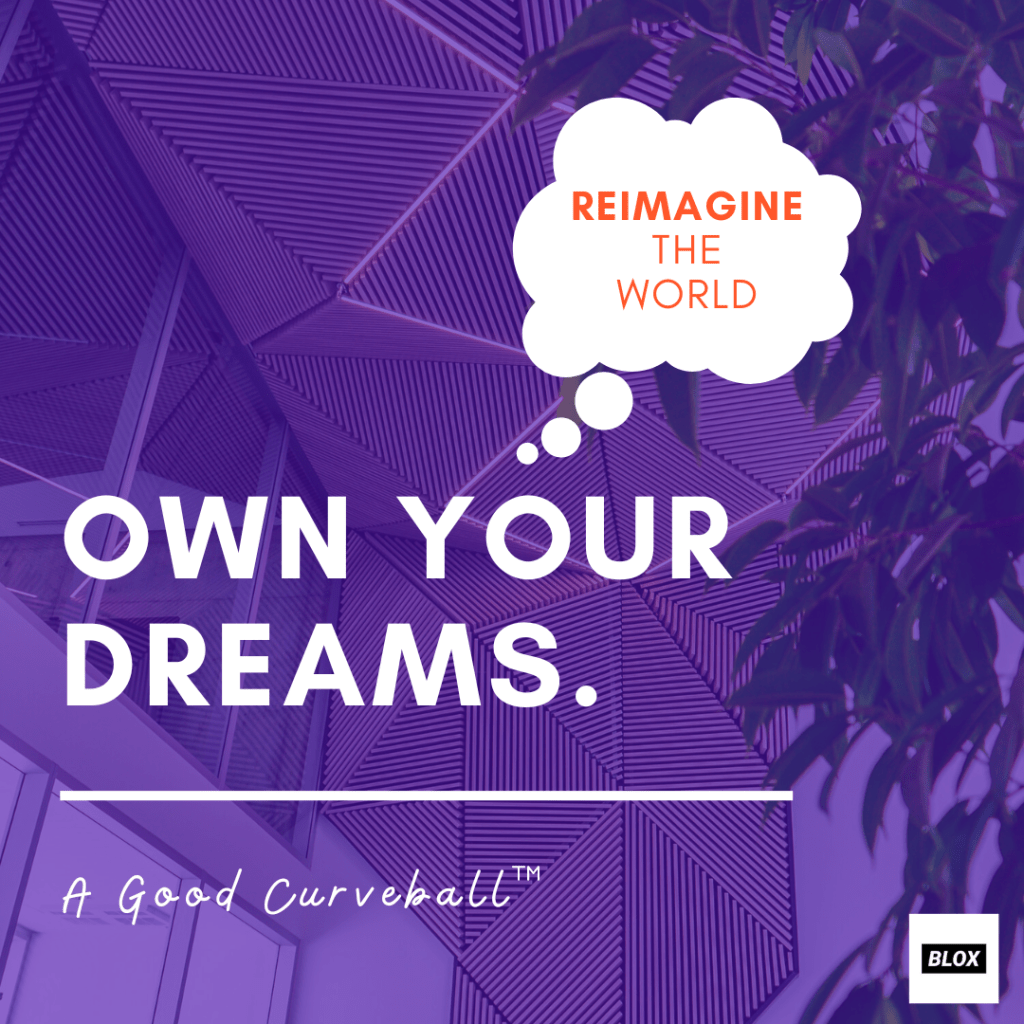
1 – Own your dreams.

2 – Reimagine the world.

Own Your Dreams

To own your dreams, you must recognize, acknowledge, and value the fact that something is waiting for you out in the world. 

It is there to fulfill. 

It exists to make you happy. 

You are satisfied when united (or reunited) with it. 

It becomes a part of you and can be shared with others. 

A Good Curveball

Owning my dreams is being connected to work I’ve always envisioned doing—building a sustainable and scalable brand that will influence people inside and outside the operation.

Reimagine the World

Second, to a good curveball is our ability to reimagine the world. Through a clear and defined vision and mission, we can accomplish anything. With a good heart and holistic stance, our world can become something better, more equal and more understanding.

Reimagining the world involves pushing boundaries, setting new standards, and developing a structure or process that leads to innovation, progression, and growth.

I think I get thrown more good curveballs as I age, so I hope this becomes the norm and the opportunities don’t cease!

As my time at Clearbridge Business Solutions ends, I can’t help but reflect on what I’ve learned here that will carry me into my new role at Longboard Architectural Products.

As I continue to inspire and empower people to make a difference in their daily lives, I recognize three things that matter to me today. Of course, there’s always more, but let’s get started with these!

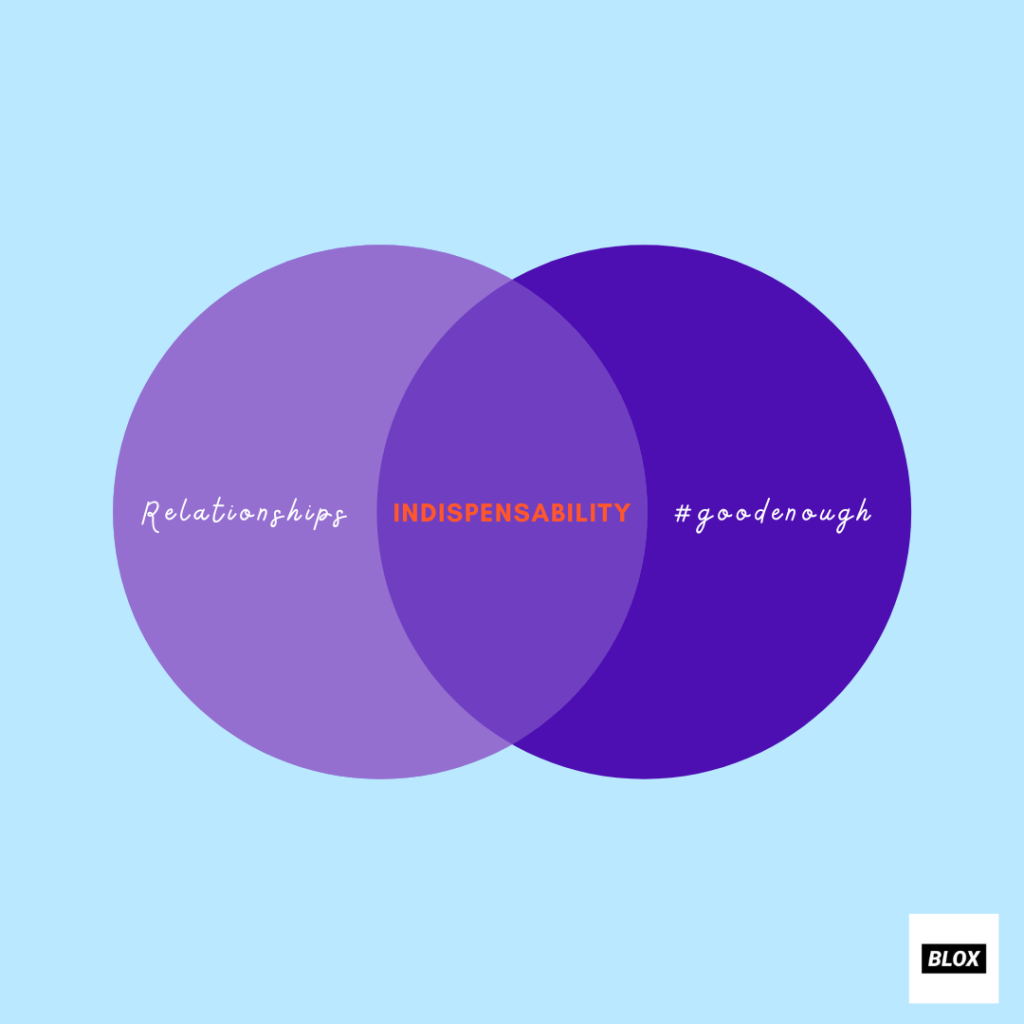
Become Indispensable

1- Relationships 

One of the biggest influencers in my marketing career has been the formative relationships I have built over time—in both the long and short-term. Having a direct report has taught me to be vulnerable and courageous as I’ve had to steer a small team in a viable direction while maintaining strong, personal connections which benefitted the entire team. I am particularly grateful for the opportunity to work directly under the Founder and CEO of Clearbridge, Ryan Kononoff. He has taught me many things about engagement and the effort required to make meaningful projects matter to an audience. I am also thankful for every other team member I’ve had the chance to grow alongside. 

You are bright. 

You are dedicated. 

You are special!

2 – #goodenough 

This is one lesson that has helped me to conquer my perfectionism. I recall working on one of my first projects, a new brand book (or later called a Playbook), which in scope was a huge undertaking that could have demanded months of work. But with the knowledge that a marketer should be agile, or as the Agile Marketing Manifesto states –

“To keep up with the speed and complexity of marketing today, we must deliver value early and often over waiting for perfection.”

In creative marketing, we challenge ourselves by generating work that is original, unique and that manifests a change in its surroundings. In analytical marketing, we must use data sets to quantify results. Pairing the two (creative + analytical marketing) is where #goodenough truly shines—we can experiment to determine what approach works the best, and we don’t have to wait to be enlightened. We should find insights with every movement or decision we make!

3 – Indispensability 

I rarely finish an entire book in one sitting. It’s often hard for me to finish it at all. I prefer to scan information and read what will be of value to me. Such was the case with Seth Godin’s book Linchpin. As he writes –

“You have brilliance in you, your contribution is essential, and the art you create is precious. Only you can do it, and you must.”

Such an important lesson because it’s much too easy to forget your worth. We must use every inch of our being to recognize and become more self-aware. In marketing, the potential to get lost in a sea of tasks and activities might forsake where the value truly lies—creating, ideating, and examining the wonder and change that a type of approach can incite. 

Being indispensable takes:

Courage

A growth mindset

Initiative

Risk

And most importantly…talent. You can’t duplicate indispensable work. I truly believe this!

The Playbook

A pièce de résistance, I hope you find value in reading it!

Download a PDF copy here.

Here’s to the future, everyone! Y’all are invited!

It’s Time!

(A poem about AI or conversely celebrating My New Job)

As cryptic as it may be, the time has arrived.

Surprise!” it squeals with utter delight.

After all that hard work, you’ve finally made it here.

I’m ready. She’s ready. She’s finally prepared!

“Where are you going?” it asks quizzically.

Well, I am headed toward reality.

It’s bursting at the seam from being grappled for so long.

I’ve been waiting, hankering, perfecting my song.

“Do you know where you’re going?” it asks once again.

Well, I certainly have an idea. The spot is a delight. Filled with smiling faces, happy circumstances and scenarios of hard work.

“Well, welcome home then, I suppose!” it pats my back congratulatorily.

Why, thank you, my friend! Now, let’s pencil this in!

A little explanation:

On Monday, March 14th, 2022, I had a wicked phone interview that started with a compliment about the same content you’ve been passionately reading here on ChonaBLOX. Swiftly, I was scheduled super bright and early the next day, Tuesday, March 15th, 2022, to meet the CEO and Operations Manager of Clearbridge Business Solutions. I walked away from that interview, thinking I had done horribly. And as I arrived at work, I furiously texted my husband, saying, “Man, I’m worried. I don’t think I did that well.” But it turns out I did because I received a phone call within minutes saying they wanted to offer me the job! So, it’s done. I’m starting a new journey with my new company, Clearbridge. So excited! This is going to be a lifetime experience. Can’t wait to get started!

What’s new with you guys? Drop me a line anytime!

Measuring Change

It takes a lot to muster up the courage to change.

Understanding.
Acknowledgement.
Compassion.
Kindness.
Curiosity.
Ambition.

Then once we decide it’s the route we want to take, we build a process to get there.

Preparing.
Taking time.
Committing.
Rooting.
Transforming.
Loving.

Day to day, I think of ways to express the importance of change. How it can help guide us toward growth. How by honouring and trusting in it, we can start to thrive.

Still, we have such a hard time adjusting our habits. They are formed and a part of who we are, though not always good for us.

What happens when you start the process of change and go backwards, reverting to previous habits, undeciding that you’re brave enough to follow through and succeed?

These are the questions I am constantly asking myself. What will be the conclusion? How come we’re not there yet? Will we ever arrive?

And so, as change is constant, we can only continue on our quest, taking the small steps to bring us closer toward our goals.

As you search, tell yourself you’re alright. Then, document your actions and take time to examine how you got to each stage. As Deepak Chopra says, “All great changes are preceded by chaos.” Chaos being –

Obstacles.
Limitations.
Fear.
Doubt.
Shame.
Laziness.

Despite these things, with intention, inner strength, and a mission you can stand by, you will stay on track; you will arrive.

Make change happen, guys!

AI 2

This is a follow-up to AI (Share of Voice).

Humanistic data governance is my description of AI or:

The process of managing the availability, usability, integrity and security of data in global human societies, based on internal data standards (emotions) and policies (law) that also control data usage (science).

Effective data governance ensures that data is consistent and trustworthy and doesn’t get misused.

This is crucial. My observations from the past ten years show that misuse occurs when governing bodies are unstable, in other words, not properly equipped (mentally, socially, physically, spiritually) to manage said availability, usability, integrity, and security of data.

So, what then is data in my interpretation of AI?

It is energy or every interaction (digital and human) we make.

This energy exists on a conceptual framework or platform. In essence, it can be continually transmuted (actions and results) without much intention required from either the digital or human end.

Much like a geographic information system (GIS), energy provides us with the ability to capture and analyze spatial and non-spatial data.

Part of this data includes our insights, behaviours, and emotions. We capture energy through action and produce a result that causes a chain reaction in human evolution and thought.

There are many points for me to cover here, which demand much more time and consideration. For now, I will try to get my words and ideas down, then perhaps we can come back to it in a couple of months and reassess.

Noninterchangeable: not able to substitute with another. 

For some reason, AI is not readily accessible. It is readily available, but coming across an entity that fully understands its definition within a humanistic context is variable, if not completely unchartered and arbitrary. Still, you can, or perhaps I should mention myself in this situation, look at a person and consider them, as if reading their humanistic data governance level. Again, we come back to the same problem over and over again.

Oversimplification. Redundancy. Incorrect assessments of human error.

Why does it matter? Perhaps, I am too futuristic here? Do I even know the answer? I could have known it in a previous life, let me try to unearth my potential here.

In AI, I spoke about a physical product as a term best used to describe an outcome. I suppose this is the differentiator. We have yet to determine what the physical product will be. We are continually creating new products that utilize AI; however, we have not symphonized the ultimate result.

Oddly enough, the appearance of COVID-19 altered our progression, mostly due to isolation. Without physical interaction, we lose our common ground. We can choose to see this as intentional or casual. Again, I wrote:

In digital reality, a new power takes actionable items related to spatial and non-spatial information to influence a decision-making process, which leads to a result.

If the digital reality we create is not appropriate, lacking power or substance for the sake of laziness and against the challenges/problems we are facing like – damage prevention, protection of the environment, safety regulations, reporting, food shortage, food security, and traceability, then the laws that possibly govern us from a higher resource may have put a stop to it.

That’s the problem. We are starting from square one. 

Product direction requires a dream that can be unlocked following precise steps as if when you awoke from your goal, you could remember every vibrant detail.

As if we were previously positioned in individual dreams, with rulers and usurpers systematically working together, ‘after’ coronavirus, we are retracing our steps, back to the models we have built, starting the race yet again with our shoelaces untied.

The funny thing about being in digital marketing is that this race is entirely peer-driven. The humour is not even funny. We have come to a full-stop and truth be told, there is cooperation, albeit, indifferent. I’m just referring back to new power. As Dave Gerhardt, CEO of Privy mentions in almost all of his LinkedIn posts – how we communicate is vital, and we can’t keep talking about things so that people don’t understand what they’re reading. Well, we could, but what would be the point in that?

And I haven’t even delved into the idea of machines! This is TBC, of course…

For next time,

A conceptual framework is an analytical tool with several variations and contexts. It can be applied in different categories of work where an overall picture is needed. It is used to make conceptual distinctions and organize ideas. – Wikipedia


Self-Portrait 2020

Purpose

A Story About Tripping Over Bread

As things have taken a doubtful turn, I race to the corner of the intersection, moving my head to the back to check for traffic turning right. I am mighty in this sweater I proclaim, not wearing it on my run, but in my head as I write about running. I cross over a slippery yellow grid and see three bright orange pylons. There is a construction site to my right, and a small mall with a Bell store and I always seem to think a Cobs, but there isn’t. This is the fastest I’ve gone in it must be over a year, I thought. I felt impressed with my speed but knew I still had a long way to go. Will there be a huge difference once my shoes stop blinking purple? The lights were slowly changing to green, then orange, then nothing. I could see the lavender bear making its way over the crest of Gladwin Rd, heading toward Mission, where the Vedder river was, and Chilliwack. My heart was in the that town for some reason. The bread? The bread would be over on Monday, so better start relying on something else for pleasure, I thought. I was already home, wiping the rain off my make-uped brow and scanning the kitchen for my pint of water. The bear’s cries could be heard, and thunder rang in the deep blue sky. RipnDip, I thought, taking my hoodie off. The scars on my back were getting better. It just took a little temper, and ignorance for it to heal itself back to smooth, normal skin. Vanity or was it purpose? What answer do you recommend?

Being Creative in a Productive State 

Hi everyone!

First, some definitions relating to this post –

Being = Choosing / Creative = Motivated / Productive = Happy / State = Requirement

Doing = Accepting / More = Drive / Less = Realization

Emotionality = The observable behavioral and physiological component of emotion. It is a measure of a person’s emotional reactivity to a stimulus. Most of these responses can be observed by other people, while some emotional responses can only be observed by the person experiencing them. (Wikipedia)

My aim with this post is to decipher emotionality, its key drivers and relationship to day-to-day environment and circumstance, including but not limited to, home and work life.

So, let’s start!

Key Drivers

    • My location
    • Wake up time
    • Grooming time
    • Good coffee
    • Food

We moved to Abbotsford. I woke up at 6:30 AM preparing for my day. I go about the motions of getting ready – shower, makeup, hair, coffee – and in the process, I am lost. My mind is buzzing, yet it is shut off. I recognize for a brief second, but I haven’t found the reason. You could say I am slightly aware that I have not found my happy place. Too early in the morning, I suggest. Shrugging imaginary shoulders, I am okay with this, because I am just getting ready to go to work. This whole process takes time, it could probably arrive sooner (happiness) if I was paying more attention. Oh, and I should probably mention that my overnight oats make a significant difference. In making me happy. Funny, they don’t always taste so good!

Relationship to Environment

    • My car
    • My commute
    • Routines, like socializing
    • Wellness activities, like yoga
    • What’s for dinner
    • Time for bed

I’m in my car, driving my new 8 minute commute. I feel rushed, but it’s okay, it’s not really bothering me. And so, this is my experience from weekday to weekday. The urgency in the situation is that I must recollect reasons why things are going well in my life. New job, great boss, opportunities for team work, collaboration. Fun, yet challenging projects. A ton of writing, well editing really. Weekly touchpoints. My Pinterest strategy. Our marketing video. Learning, growing, the usual stuff. But then, the things that aren’t going so well surface. I haven’t established a workout schedule, I left my yoga mat at the other place, I am stressed over what we’re going to have for dinner and about sleeping early – because that’s my new thing, sleeping at 9:45 PM. I used to be a runner. I just keep thinking about the scale!

So, my day is a choice of two states – happiness or sadness. As simple as it sounds, this is a product of my environment and circumstance and something that I have to track to ensure that I’m making choices that move me closer toward happiness. Smiling, breathing, accepting. Working, writing, being. These are just a few good things.

Relationship to Circumstance

    • Busyness
    • Priorities
    • Deadlines
    • Time for evaluation
    • Energy level
    • Motivation level

At work, I am beginning to see that in an endless sea of assignments (which I am able to complete), the intention of the work becomes lost stacked upon other projects, priorities and deadlines. We should always go back, perhaps a week or so later, and evaluate the work once again. Scrap that. We need to re-evaluate more often, like every other day. What was it for? Did you enjoy working on it? If not, what element made it obtrusive? Was the project completed on time? Will it be put to greater use? Will it lead to larger successes in the near or distant future? I shake my head in disapproval as I re-read this. That’s not the point, Chona. The point is, you have to do, then do again, then do more and finally rest.

Home and Work Life

    • Choosing states
    • Selecting work
    • Writing
    • Conceptualizing
    • Analyzing
    • Generating ideas
    • Generating answers

In one example of choosing states, I’ve selected an image. Next, in pursuit of my happiest state, I decide to post it onto social media. The main two reasons being – I realize others will read my post and view my image and this makes me feel satisfied; and two, I am able to practice writing, designing and conceptualizing ideas and this makes me feel pleased.

The image will be broken down and some sort of analysis will occur. In this post, I have chosen a graphic image with text and the idea that I developed in my mind was pertaining to a milkshake. So, let’s call it The Milkshake. Magic. Something that obviously begets certain levels of pleasure, and contributes toward overall happiness, perhaps even eradicating sadness on the spot. A milkshake does that, as I’m well assured you are aware.

So, have a read and let me know what you think! I know we will all want a milkshake on a daily basis after this. Wink!

The Milkshake

Do we start with the milkshake or whittle it down to the ingredients? In my opinion, productivity starts with desire (I want a milkshake), then the identification of key components (organic strawberries and maple syrup), a timeline (this will take 3 minutes), a deadline (well, it’s 7:45 am so that gives me 2 extra minutes to get to work) and result/outcome (this tastes great, could use some spinach).

A Doing More with Less stance claims that we don’t necessarily need to examine details (should I add spinach), but instead take a bird’s eye view (look at these 30 options), using creativity to discover (strawberry banana, strawberry raspberry or strawberry pineapple), contribute (let’s add maple syrup) and further existing strategies (let’s add flax and hemp seed) that may or may not need review (is this milkshake healthy).

This is where creative direction or management comes in. I will listen or be the one to direct, but know that these roles are significant.

Also, I will always argue that creativity contributes toward success on a larger scale. We may not be marketing for the milkshake company, but the nutritiously delicious and beautiful milkshake we drank at the beginning of our day or in middle of this post contributes toward performance and our overall well being. Expectations.

If an image (content + creative) has power, does it come from the creator or within? What does that say?

This post ends with a 3. That’s my mood, not a 4, not a 5, but a 3. And I do appreciate that it’s Valentine’s Day. Perhaps the issue is just that I move too fast, so I’m actually way ahead of time. Yes, that’s what it is. Exactly. Sip, sip!

Thanks guys!

It’s Project Time – Content Writing

Hey everyone!

I was asked to put together an article for Global Solutions Inc, a marketing consulting firm based in Richmond, BC. The article touches on fibromyalgia and how dealing with the condition may impact day-to-day routines. I hope you enjoy it, please let me know if you have any questions!

Project Instructions

Topic: Fibromyalgia

You are to do the following:

a)    Generate an article idea on this topic. You can use these keywords as reference: fibromyalgia symptoms, fibromyalgia treatment, fibromyalgia causes, fibromyalgia medication, musculoskeletal pain etc.

b)    Write an interesting blog headline/title.

c)    Articulate the structure/outline of the article with subheadings.

d)    Type out one paragraph of the article.

Optional: Provide any suggestions on how you could promote this article using social media.

You may email your response to info@globalsolutionsinc.ca

Completion time: 1 hour

Relevant keyword count: 74+


  1. Article idea: one of my best friends has struggled with fibromyalgia for years, but has never appeared to be visibly sick. This condition affects many people that still have to go about their day-to-day routines. My article will explore some daily challenges they face and 5 ways to cope using simple strategies
  2. Blog headline/title: Fibromyalgia & Daily Routine: HOW fibromyalgia affects your day-to-day and 5 ways to cope effectively
  3. First paragraph: INTRO use SMART Goals technique to define what it is
  4. Second to Sixth paragraph: Present 1 way to cope per paragraph including situation of daily challenge and a relevant stat or story pertaining to it
  5. Seventh paragraph: CONCLUSION wrap up topic by quickly summarizing


1 – INTRO I visited with my friend Emma (name has been changed for identity safekeeping) the other day. We sat down together for a coffee at JJ Bean and caught up as it’s been more than 6 months since we last met. She looked great. Amazing outfit, cascading hair of curls and rosy cheeks and lips to match her great coat. She appeared happy, as she always did. When I asked her how things were, she went about the usual way – work was good; life was amazing. I instigated a bit further as any good friend would and she began to tell me about her struggles with fibromyalgia. Statistics Canada describes fibromyalgia as a condition involving chronic musculoskeletal pain accompanied by excessive fatigue and exhaustion. They say it is estimated that fibromyalgia affects 900,000 Canadians or approximately 3% of the population. Women are estimated to be 4 – 9 times more likely to develop the disease than men. Emma went on to explain her daily challenges and the tools that she applies to cope with the condition. Take a minute to read and learn more about fibromyalgia and how its symptoms affect daily interactions and routines.

Outline of paragraphs 2-6 (data from health.com)

2 – Challenge #1 Speaking Up

The challenge: Being afraid to talk to people (even some health-care providers) about your pain and other fibromyalgia symptoms, because they will brand you a difficult patient, a complainer or a hypochondriac.

How Emma copes: I realized that there were a lot of other people out there who were just like me. I realized that I could share with other people my assertiveness and my unique talent of being able to be honest with people and to talk to my doctors honestly, as equals. And that’s when I decided to seek out opportunities to become a health advocate in my own way. I try to post helpful strategies to my Instagram account that may not speak directly about my struggles with musculoskeletal pain, but overall how I cope in my daily environment.

3 – Challenge # 2 Family Matters

The challenge: Worrying that your husband considers you a burden or that your kids question why you aren’t like other moms.

How Emma copes: I became more aware of the fact that complaining about my fibromyalgia symptoms all the time wouldn’t be a good idea. It’s not something I want to model for my kids. It’s not something I want to come between my husband and myself. I started talking about my personal pain and fibromyalgia medications less and talking about my advocacy efforts more. I began showing how a can-do attitude is more helpful than not.

4 – Challenge #3 Staying On Schedule

The challenge: Feeling that people will perceive you as unreliable because you forget or cancel appointments or engagements at the last minute.

How Emma copes: People with fibromyalgia who are in pain all the time need to know what to do with their thoughts, how to deal with all of the little disappointments and the everyday problems that we run across. We’re not born knowing what to do. Counseling, in my mind, is an extremely valuable form of fibromyalgia treatment, as is writing notes to myself either on the fridge or on my computer. It’s all about self-awareness, accountability and self-regulation.

5 – Challenge #4 Dealing With Pain In Public

The challenge: Being so uncomfortable at work, in a theater, or in public that you feel like you could explode. Not having the right fibromyalgia medications to help you get through the day or night.

How Emma copes: You have to take action and find the right combination of medications for fibromyalgia. Some pain drugs act faster than others; if you have a fast-acting medication, you can use that like an asthmatic would an inhaler. In these situations, if I can lie down, do some deep breathing, and just get myself through that crisis time, then that’s what I need to do. And my kids know that. My husband knows that. I’ve also been exploring treatment with CBD oil. *As a note (data from medicalnewstoday.com) – CBD can effectively reduce pain, improve sleep, and diminish refractory pain for people with fibromyalgia. Anecdotal data suggests that taking CBD oil may alleviate symptoms of fibromyalgia in some people. It may change the way that they process pain, with beneficial effects.

6 – Challenge #5 Keeping It Together

The challenge: Never knowing when your fibromyalgia will cause you to fall apart or for how long.

How Emma copes: I do deep breathing. I do positive thinking. I work on my posture. I exercise very carefully. I research what I should do, and what I shouldn’t do. And from my own experience, I set limits for myself. I try to leave room in my life for happiness.

7 – CONCLUSION Every person is faced with challenges. When those challenges affect our daily life, it is sometimes difficult to cope. This article aims to explore the relational experiences that my friend Emma has encountered over the past few years, using her own personal voice. While this article does not touch on fibromyalgia causes, treatments or medications, it focuses on situations that are closer to us. The one thing that opened up communication channels between myself and Emma was putting effort into asking questions and showing empathy. For people dealing with fibromyalgia, challenges are often hidden. Take time out of your busy day to look at the people around you and analyze your initial perception. Then, ask yourself if that is a fair or real assessment. Someone might look angry, but perhaps they just found out they didn’t get the job they worked so hard toward. Or, someone might look sad, but perhaps they just found out a friend cancelled their dinner plans. We just need to be open-minded and helpful when we can. Facing health challenges might require even more introspection from the viewer’s side. As we were getting ready to leave, I asked Emma what helps her the best in terms of how other people perceive her condition and she said, “When I come across a person who is happy and positive, it rubs off on me and makes me feel like I can get through anything.” We hope that this article was helpful for you. Please check out more topics related to the health and medical field on our blog, ChonaBLOX.

Optional: Promoting this article on social media

    1. Post article on LinkedIn
    2. Create an article topic image on Canva and use the image to post on Instagram, twitter, Facebook etc. Add appropriate hashtags relating to topic
    3. Use appropriate keywords in your caption, meta description, meta tags
    4. Title your images
    5. Make a YouTube video of content use appropriate headers for each challenge, perhaps images relating to challenge
    6. Ensure to use blog link and logos, branded typeface, graphics etc.