
Hi everyone!
At my new job, we run group presentations every Friday. This is my first contribution, which talks about 2 useful acronyms that can be leveraged in content marketing. Let me know what you think!

Blox. is a Creative & Technical Marketer
Marketing Leader | Driving Transformational Growth Through Process & Strategy | Execution Is Everything💡
Hi everyone!
At my new job, we run group presentations every Friday. This is my first contribution, which talks about 2 useful acronyms that can be leveraged in content marketing. Let me know what you think!
Hi everyone!
I just wanted to break down the steps that were involved in developing a digital marketing startup agency. Now, I don’t have a formal background in business or marketing, so it’s taken me awhile to put all this information together. One thing I know about being a mostly abstract thinker is that, following a logical progression based on reasoning and detail is a lot easier than gathering data that is specific to a certain cause and effect. So, this is my attempt at quantifying and qualifying the work I did at VanWhistle Media. Note: I am no longer affiliated with the company. The reason why I left was that my creative vision did not align with the founder’s business style. The owner is always in charge – #winknudge! Jeremiads aside, I am now identifying with the title Creative Director because my work crosses over the walls of artistry into a very consummate dedication toward design and strategy.
If you have any feedback, I am all ears. Please reach out!
Duration: 6-month contract
Goal: To establish company through brand development and product awareness.
Outcome: Sizing market, understanding market potential and organizational design.
Milestones:
Hi everyone!
One of my favorite creator’s is David Airey. He recently put out a large book titled, ID which explores his previous projects down to the nitty gritty of project management, managing expectations and design decisions. I love how it encapsulates important ideas from page to page, in bold black typeface. I’m pretty sure it’s the same one I used in my Previous Documents Presentation (more on that later).
As I was thinking what to post on next, I read from a glance –
It’s important to show how the identity will perform in a variety of contexts.
This quote quickly reminded me of some logos I designed for my social media project Blocks. So, I’ve put them together here for you, along with some other showstoppers (in my opinion).
Each image has been categorized based on identity type (e.g.: logo, label, magazine cover) and context (e.g.: exercise, influence, mission). These categories will help you to understand my focuses and interests in digital marketing, branding and design (BTW BC stands for Blox. Communications, if that wasn’t already obvious!) –
Note: can you guess which image belongs to what category?
Let me know what you think, cheers guys! Oh, and you can check out the entire project (which ran for about 2 months) on my Instagram account chona_canlas.


Hi gang!
I was excited about creating these designs. The work was produced using Canva and took about 30 hours (including printing and assembling) to complete. I left out the personal part of my proposal, but I hope you can derive a positive sentiment from the style + tone I chose to go after!
This portion of the proposal defines a brand strategy in three parts – the social media aspect (WHAT), art direction aspect (HOW) and digital specialty aspect (WHY). At best, these aspects are shared and applied to a project equanimously in order create a sweet spot, ‘the magic’ or WHERE and WHEN true potential can emerge.
This whole concept is derived from Simon Sinek’s Golden Circle Theory which purports that great organizations create their foundation by addressing WHY they exist, HOW they go about their mission, and then finally, WHAT they do.
In my model, social media is used as a product or service we sell, however this can be changed to web development, SEO, email marketing etc.
The HOW is the people who are involved in the project. It is what sets us apart from the competition. It is what makes us unique and indispensable.
Lastly, WHY is the ultimate outcome. Very few organizations know WHY they do what they do. Why is not about making money. That’s a result. Why is a purpose, cause or belief. It’s the very reason your organization exists.
In synergy, any set of core values can be realized. In my model, I value belief, faith, trust and love. As a brand strategist, my ultimate outcome paints a beautiful picture for both the seller and buyer. The PICTURE is the agency differentiating itself from competitors. WHERE and WHEN this occurs impacts results – profitability, scalability and customer experience.
Have a look at this brief slideshow and let me know what you think –
Remember, there is always room for further or greater interpretation. This is the sweetness of advertising. Branding is the #1 method we can use to portray our message, whether that message be creative, technical or both, a brand is responsible for defining who we are and what we do!
Talk soon!
My work strategies always begin with my mission statement (or simple variations of it) – Simpler is Larger.
In other words, we must create work that is easy to understand, so that businesses can afford more time and apply more effort toward ‘larger’ things.
Read this quick review on supporting businesses using social media strategy.

When choosing clients, consider engaging with businesses that are focused on change or influence. Clients should be dedicated toward defining or refining their digital marketing plan.
We should launch campaigns that matter to the community and foster promotions that “persuade target audiences of the relative merits of a product, service, brand or issue”. Think objective and the answers to it. Will the audience (buyer) believe in what they see? Does it make sense? Does it make the business more approachable? Will the work and project parameters make us (seller) happy and productive?
The next step is establishing or fine-tuning the objectives for presentation. We need to understand the business’ identity (more to do with the company itself) and image (more to do with their brand) to develop an effective expression of their work.
Next, true potential will be revealed via design elements, bringing everything together for the audience to capture. The best design elements to consider would be things like source (where is the content coming from – stock imagery or work from an artist), medium (what forms do they want to use – photography, graphic design, text-based, video etc.), composition (how will images be composed), pattern (what pattern will the posts follow) and grid utilization (applying creativity to posting layouts).
The main goal of a social media strategy is to achieve balance + harmony with the work itself and to find the ‘sweet spot’/the magic for HOW the work is done. You will know your goal has been met when 1 – both the Seller & Buyer are satisfied with the results; 2 – an efficient workflow has been put into place; and 3 – you have a good idea of HOW to put everything together for publishing. And with the right timing/scheduling and succinctly, yet artfully composed caption/copy, clients’ social media platforms will sing! Think always compete with the best.
Remember, if our work is easily understood and done, then the client’s business can consider a greater capacity (which in turn opens up new avenues for us!). Have metrics set up to evaluate the work. If businesses are wondering HOW to put together the required metadata (aspects and elements) / to successfully scale relevant data (the large scale attributes like brand image and company identity) / which in turn impacts the fluency and efficacy of their overarching campaigns and promotions / we can provide a concept kit in a simple and easy to read format.
If you’re enjoying this new listicle style I’ve been using lately, please let me know. I would be happy to produce more work this way.
Cool guys, have an amazing day!
Hi everyone!
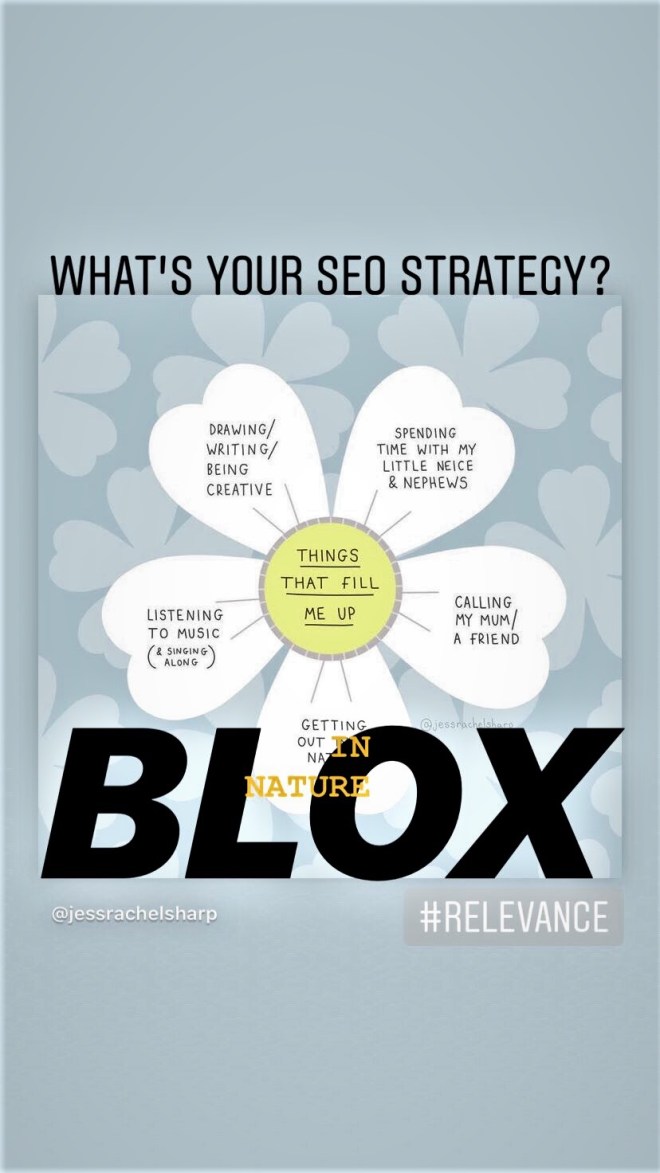
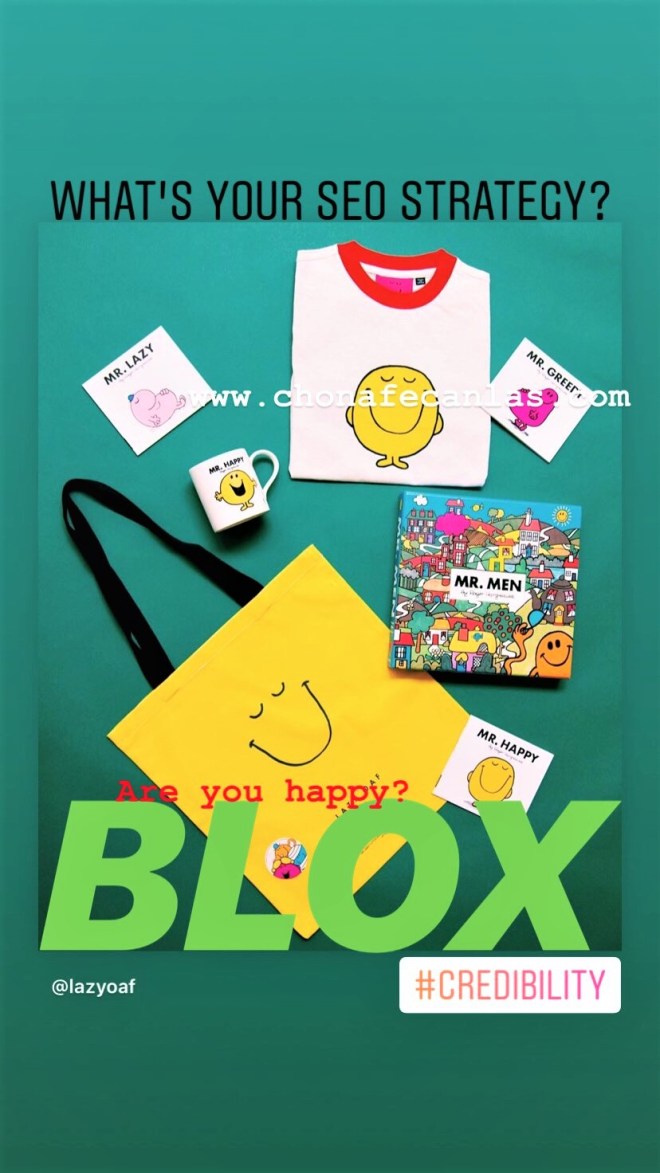
Just a short burst of info here. What are you drawn to? Do the colours play a significant role in your interpretation? What connections can you make with the chosen imagery attached to each hashtag?
A perfect brainstorming exercise for design newbies – make a list under each hashtag including transferable elements (actual aspects and items like a brand name or object) and attributes (descriptions and words) for each. Aim for 50 answers, then narrow down to your top 10 answers, then again to your top 3, then top 1. What conclusion can you draw from this experiment?
Always remember the acronym PRAC – Popularity, Relevance, Authority & Credibility. This will help you target your audience and ensure that your content is set up to improve your overall search engine rankings.
Yes, yes…SEO is a lot more complex than a simple acronym, but sometimes starting off with something more general helps to develop your digital marketing strategy or plan more succinctly down the road.
I will get into this topic (SEO) further in the future!


Hi everyone! This post applies mainly to web design. Find strength in your structure and harmony in your layout using The Hub Concept.
Composing Experience
The Hub Concept is a compositional structure that creates an effective visual centre of information. By strategically composing numerous content and design elements in a way that reflects the brand’s motives, viewers can become a part of the total, encompassing experience (the experience is a motivating force that captivates the audience).
At VanWhistle Media, this concept was used to develop the website for 360 Integrative Medical Centre. Their modern facility approach focuses on providing customers with an immersive centre of services, so it made sense to parallel their mission by ensuring that the structure of their website was also, an effective visual centre of information. When used alongside the 3-click rule, The Hub Concept can decrease bounce rate and increase viewer satisfaction (or the motivating forces that captivate your audience).
The Hub Concept can be applied to other areas of advertising and digital marketing. For example: billboard/banner design or social media post formats.
Just Like School
Always think of building fortitude (through strength in your structure and harmony in your layout) with determination. The key is to apply your original ideas in their fullest state. You need to make notes mentally or physically, so that you can remember what your original intention was. Then, research and find connections. Clarify your original ideas, don’t change them necessarily, make practical and structured edits, so that the real (fullest) idea can come into fruition.
Determination builds character and so it will do the same for your website. Don’t think about making things the same as others; think about defining your business’ identity through formatting and careful, structured planning. The Hub Concept represents the full evolution of your content and design elements working together, with integrity + synergy.
Then, you arrive at the next level, acquiring a Simpler & Larger capacity. The way it feels is that things should start to roll off your shoulders and you will probably feel more calm and relaxed. We don’t need to feel pressure or anxious at all. It will come together naturally. Even during the next stage of criticism. The power of The Hub Concept is that, it is all there – explanation and information. We don’t fall, we slide down! Hear what they have to say, and believe me, room will remain.
Do you have other examples of this idea put to work? Let’s hear about it!



 Blox. is a Creative & Technical Marketer