But Local First Facebook Ad

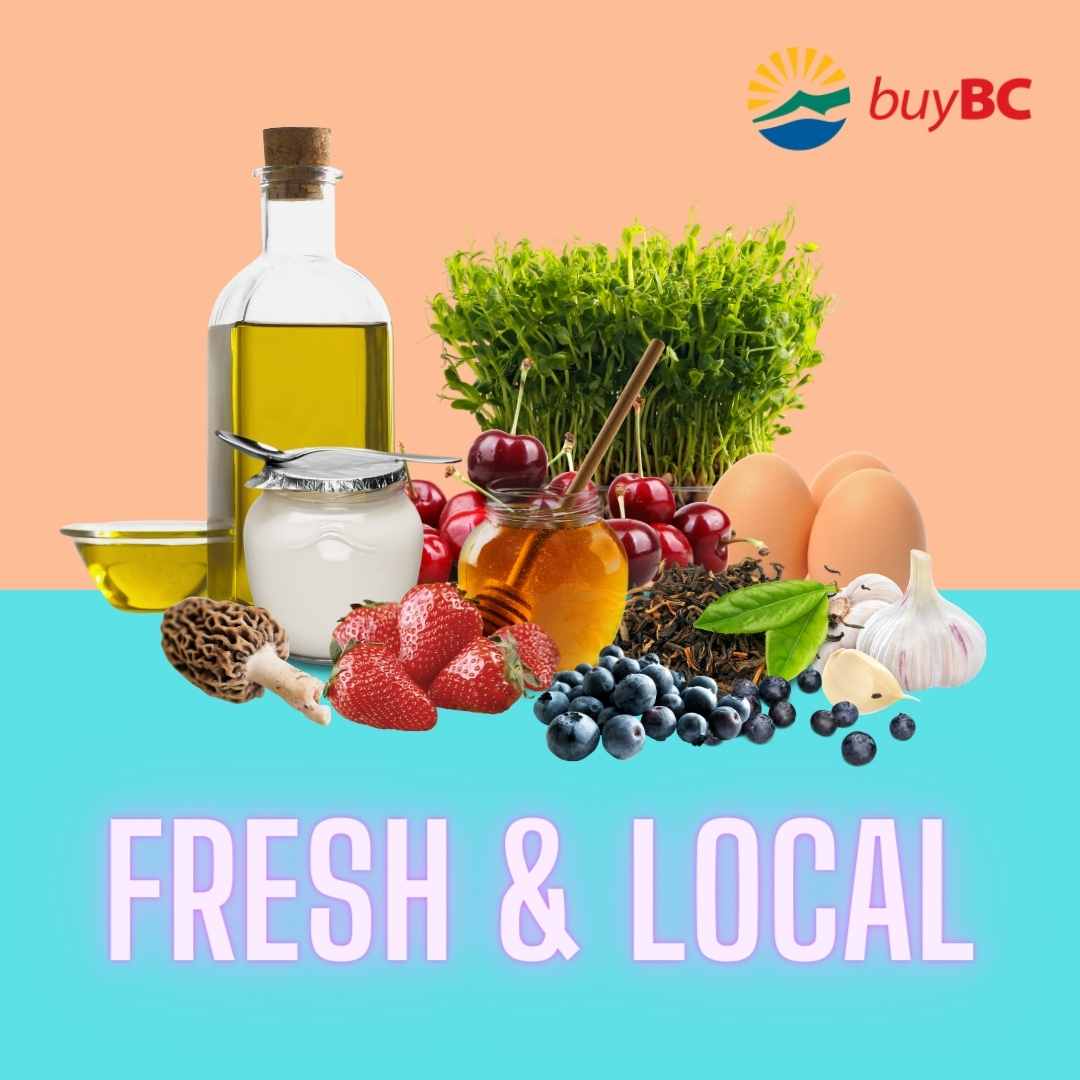
The ‘support local’ movement is a force driving change worldwide. It moves people to want to purchase fresh, healthy products from farmers. It creates a connection between shoppers, where we can ignite conversations to examine how we’re doing our part and why it’s so important. Products are showing up more readily and in places where you least expect to see them. Overall, there is a feeling of togetherness, kindness, and open-mindedness that helps promote awareness and captures the interest of new, existing, and prospective customers.

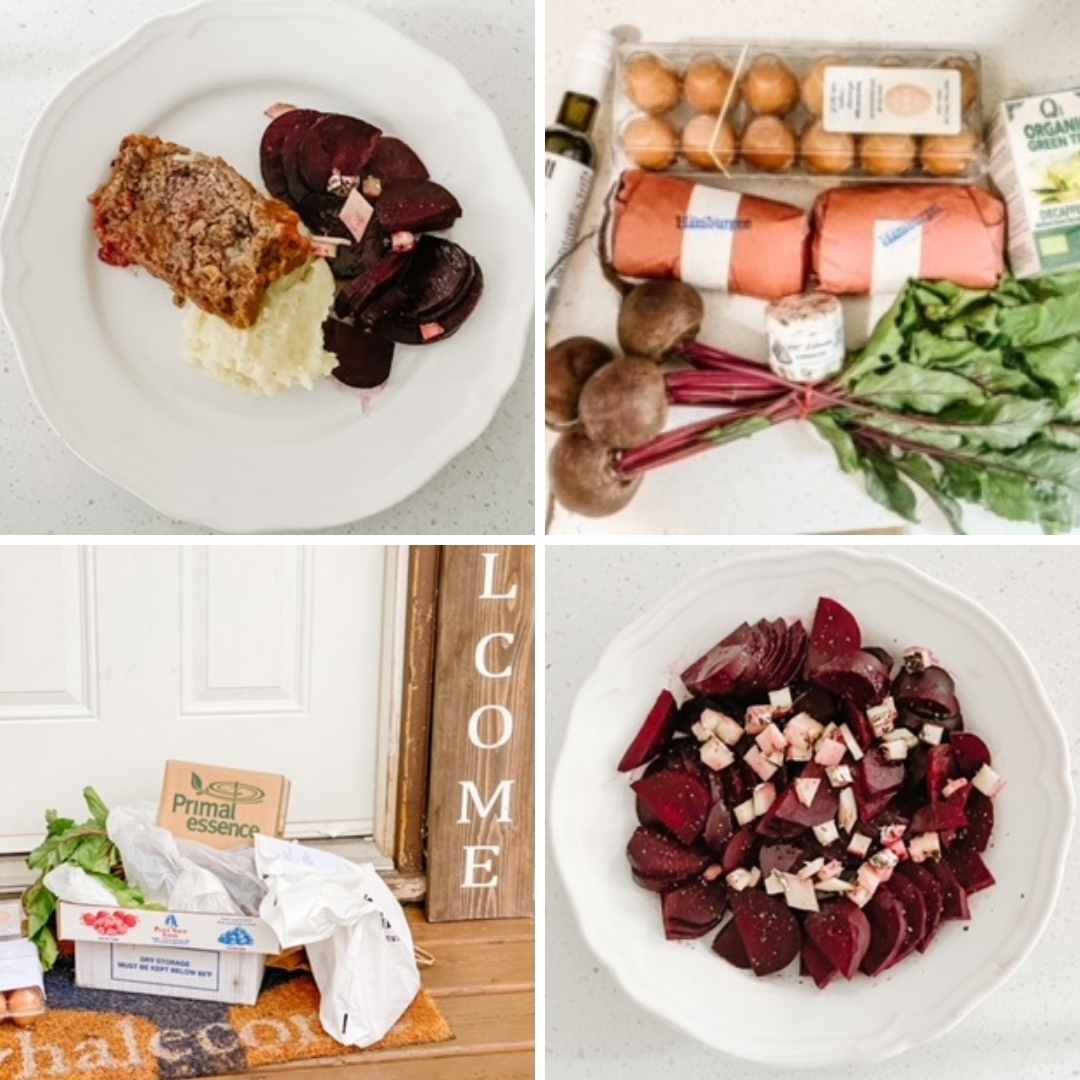
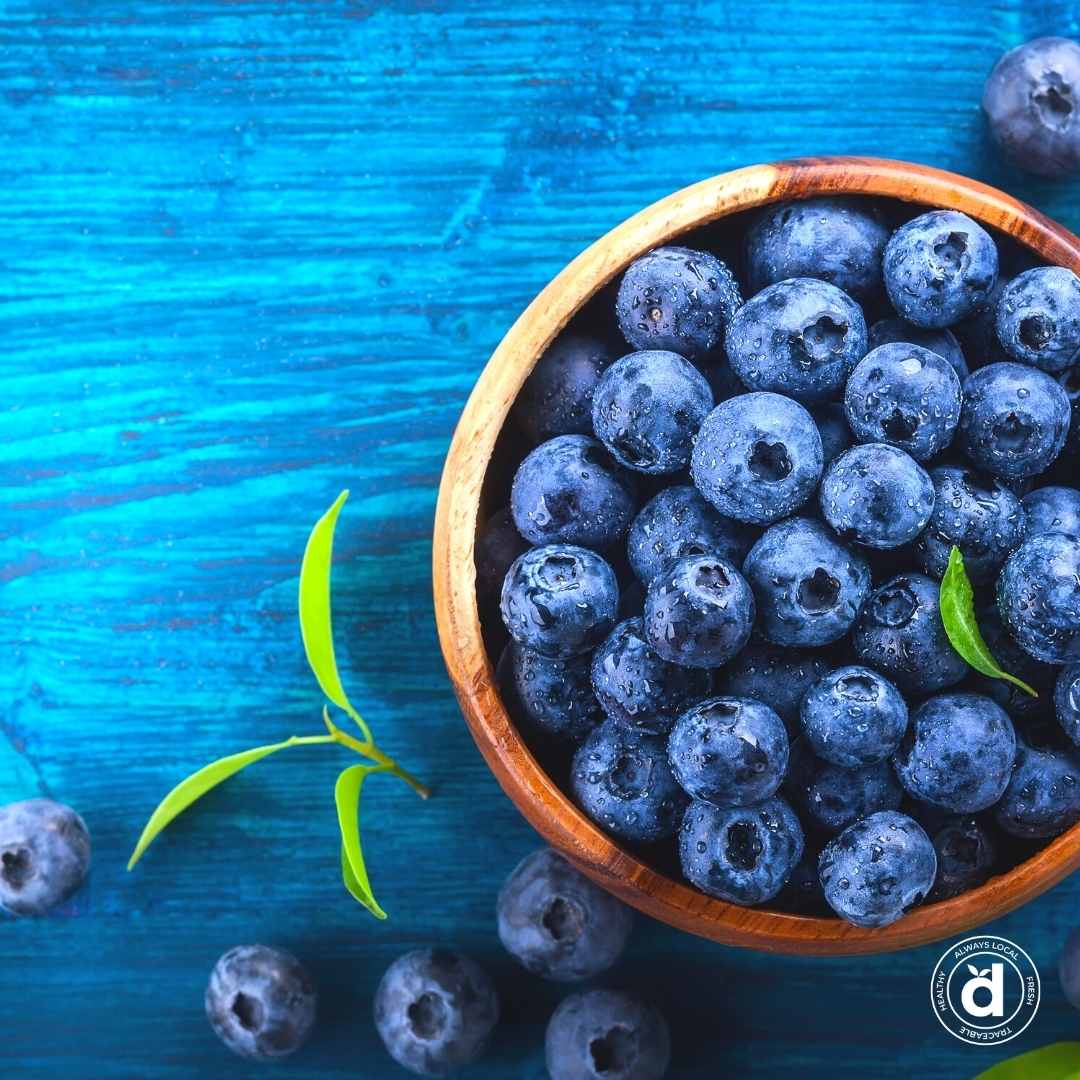
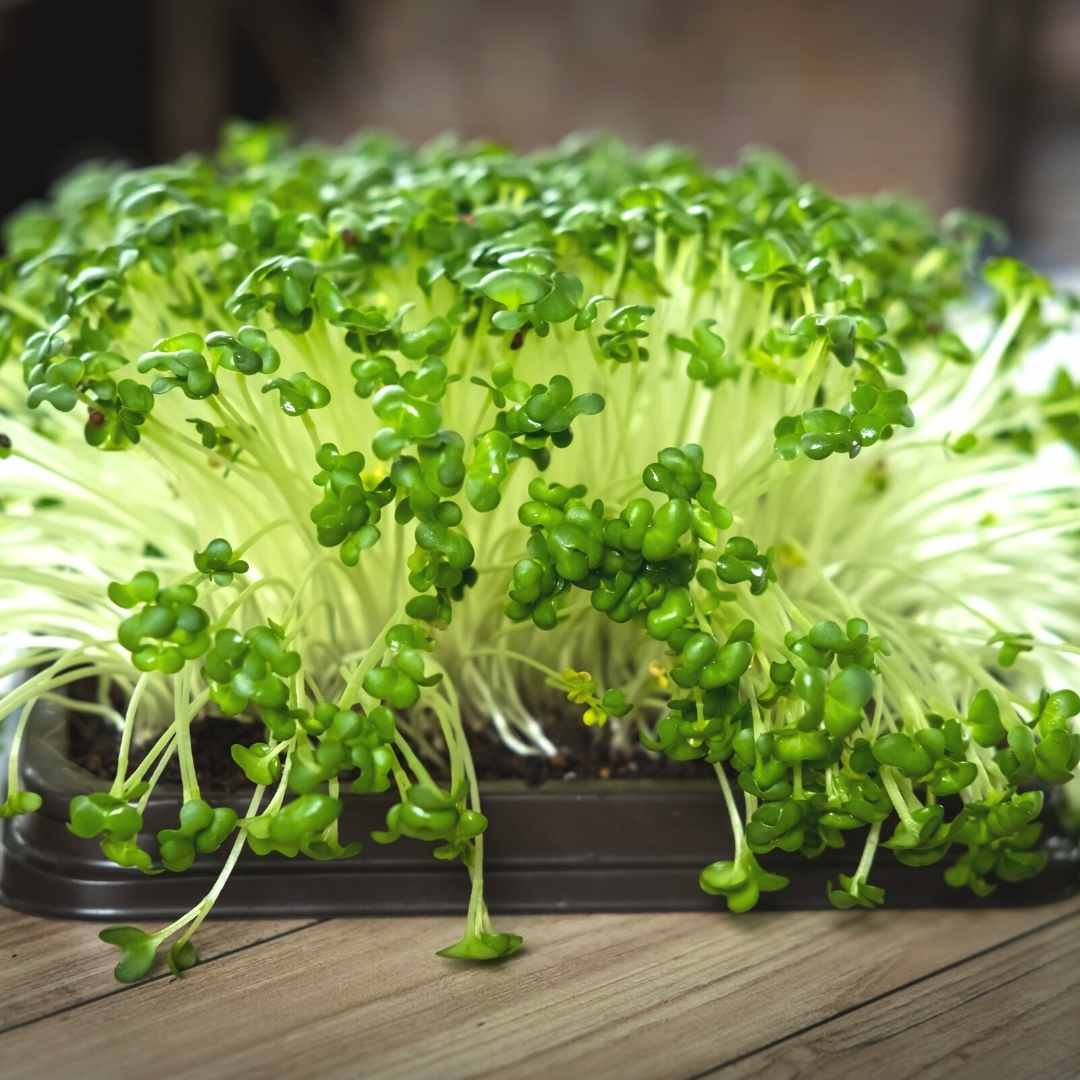
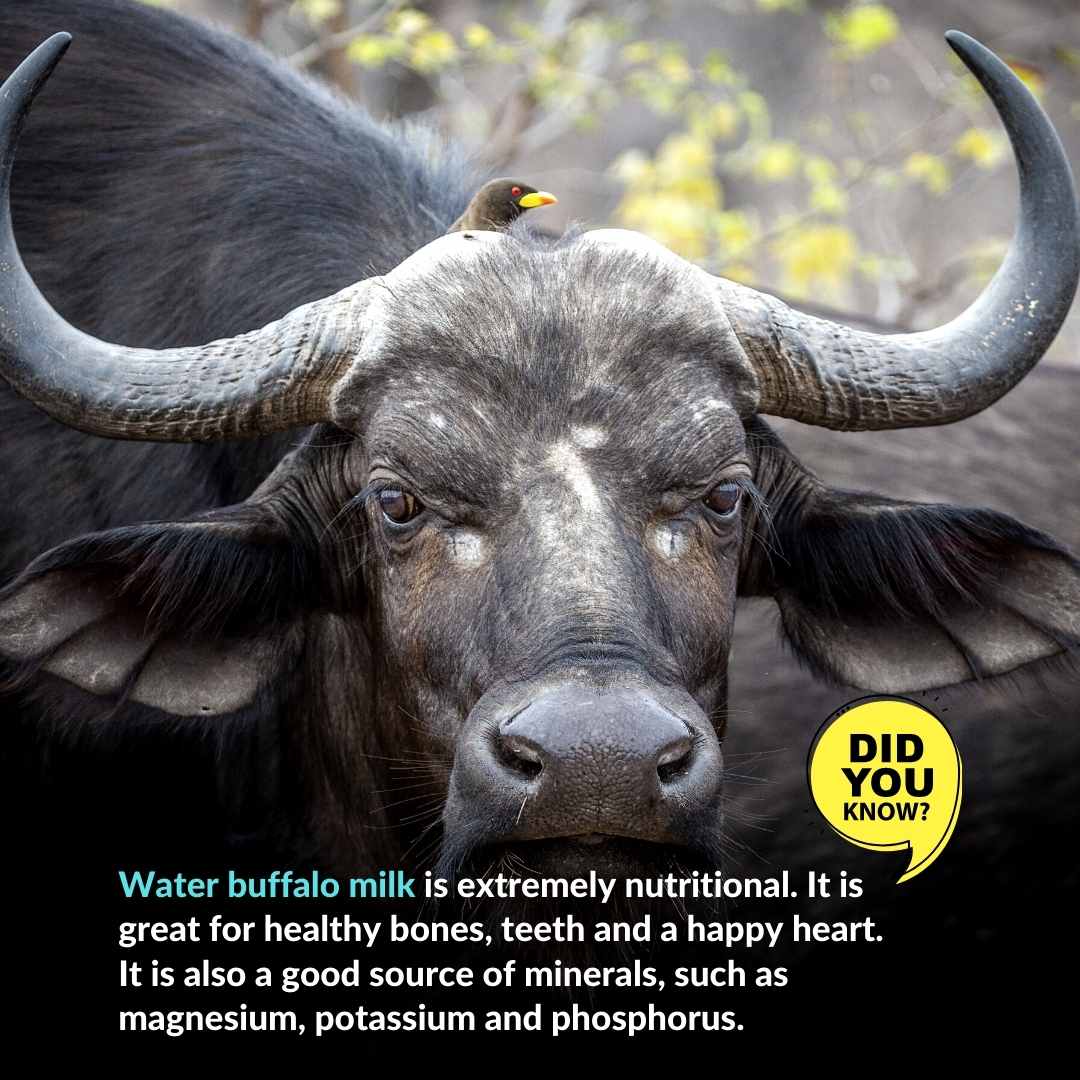
I wanted to create a fun digital ad that spoke to the nature of the ‘support local’ concept, one that explores options (expressed using a carousel format), eliminates predisposition (articulated in the ad copy), and ultimately grants us the ability to choose (the call-to-action ‘but local first’) – take action (decide what you want to eat for breakfast) or take action through inspiration (are your eggs local? Well, you can get them laid the same day of delivery! How awesome is that!). The inspiration trickles through in a matter of seconds affecting all those involved (conveyed through various images, colours, animation, and the image of a family). As individuals watching the ad, we feel more attuned to thinking about what’s on our plates, how it got there, where it comes from, and why our consumption habits can negatively or positively impact the planet. The focus remains on the following values –

Support local

Empower people

Help the planet

Grow the community

What are your thoughts on this ad? If I could make one change, I would use a graphic of a globe in place of the farming graphic (at the end of the video). Does it speak to you and make you feel empowered to support local? Let me know your thoughts; open to discussing with you!

11 – Tripping

Daisy was always looking for inspiration, the appearance of cursive writing or the look of a padded, bulky knit sweater featuring crimson and indigo animal characters like Filburt. Anything creative, really, would do.

The day she noticed something, she quizzically peered into a bathroom mirror, hoping because she was in the large stall, her sweater would reverse. 

Utterly distracted, Daisy made a note never to do it again.

“My progress has become insuperable from all the months of writing exact-sized phrases and headlines with five words or less.” Daisy thought fast while twiddling her phone in her hand.

“Have things changed in A Day? What were things like when I first started anyhow?” she thought. “Well, I was definitely more satisfied. Had a bounce to my step, could care less about the matchy-ness of my outfits. I also felt more powerful, like people were listening to me, learning from me, and so on.”

Stroking her phone, Daisy continued, “However, today, everything is an exercise—an exercise in recalling (all types included).” Distracted, she goes on, “I have great hair, and my skin is young, it seems. On that note, ageing has not necessarily imparted more wisdom or money in my purse.”

She was always digressing.

Back home, Chona grabbed her fire orange Frank & Oak bucket bag and booked it out the door. She was late, again. Always leaving the house ten minutes post-shower. She hopped into her 2008 white Rogue and took off toward the light. 

The road was slick, and rain dripped down hard, like her binary code pleated skirt that streamed neon pink zeros and ones from her waist down to her thighs. 

She hated driving, though. It was dangerous in Elevententeen, and she knew one day it would kill her. Still, she cranked the radio and listened to old 90s songs like The Cranberries’ Linger. She hummed this tune imagining it more regal played on the baby grand piano at her dad’s house. 

When she sat back to play, his gigantic TV wouldn’t let her use the old music books, so she had to carefully balance grade 8 Royal Conservatory in volumes six, seven, eight and ten. The chords? They prevented her from falling. 

Daisy’s next big project was sitting in her bag. She put it in there to prevent its glorious shimmer from stirring the Outsiders’ eyes. It could kill, and she didn’t want to be a murderer tonight.

Finally arriving, she stepped out of her car. There were Dreams everywhere! She blinked. Then, blinked again. Her eyes started to roll back into her head, and she could feel the surge streaming now from her crown down to her feet, hiding neatly inside her red rain boots. 

In her room.

Someone painted her Brooklyn studio apartment bright orange-red! So, she knew the test had begun.

Should she attack? Chona could barely hold her head up, let alone break out into dance and song. She would just have to sleep it off, her phone continually buzzing that darn song. Then, like all the other times, she passed out. What remained Wide Awake in complete consciousness (forget Artha today) was her supple orange bucket bag. And within it, her project, slipping away…

How Ad Imagery Could Translate Into Product Packaging

The stack of magazines was impressive. Elle, Vogue, Architectural Digest, Bon Appetit and People. As a 13-year old, I just wanted to fixate and rip, fixate and rip, fixate and rip. Slowly, I was adding to my expanding wall collection, and I was proud. How were the ‘best’ images selected, and what made them ‘iconic’? What mattered to me at the time—creativity, originality, colour, composition—made it onto my closet doors, locker and school binder clear insert. If I could think of these images in my sleep, they became iconic. I will never forget one in particular. The triangular red and white logo juxtaposed against a black and white photograph of a girl pouting while a man anticipates… 

What intrigues us about this image? Almost instantly, we find ourselves peering in, linked to the experience. We sense she is in the wrong place; however, we do not feel that she does not belong or would rather be elsewhere. Time and space are interrupted. We ask ourselves, “Will it occur?” But the chain of events does not matter. What matters is that we are suspended in a rare and captivating moment. And because the image is black and white, we are transported to the exact scene where the ‘film’ unravels. Then the bold red of the typeface and the logo bring us back to life, and we are suddenly alive; the advertisement has won us over…without a guess!

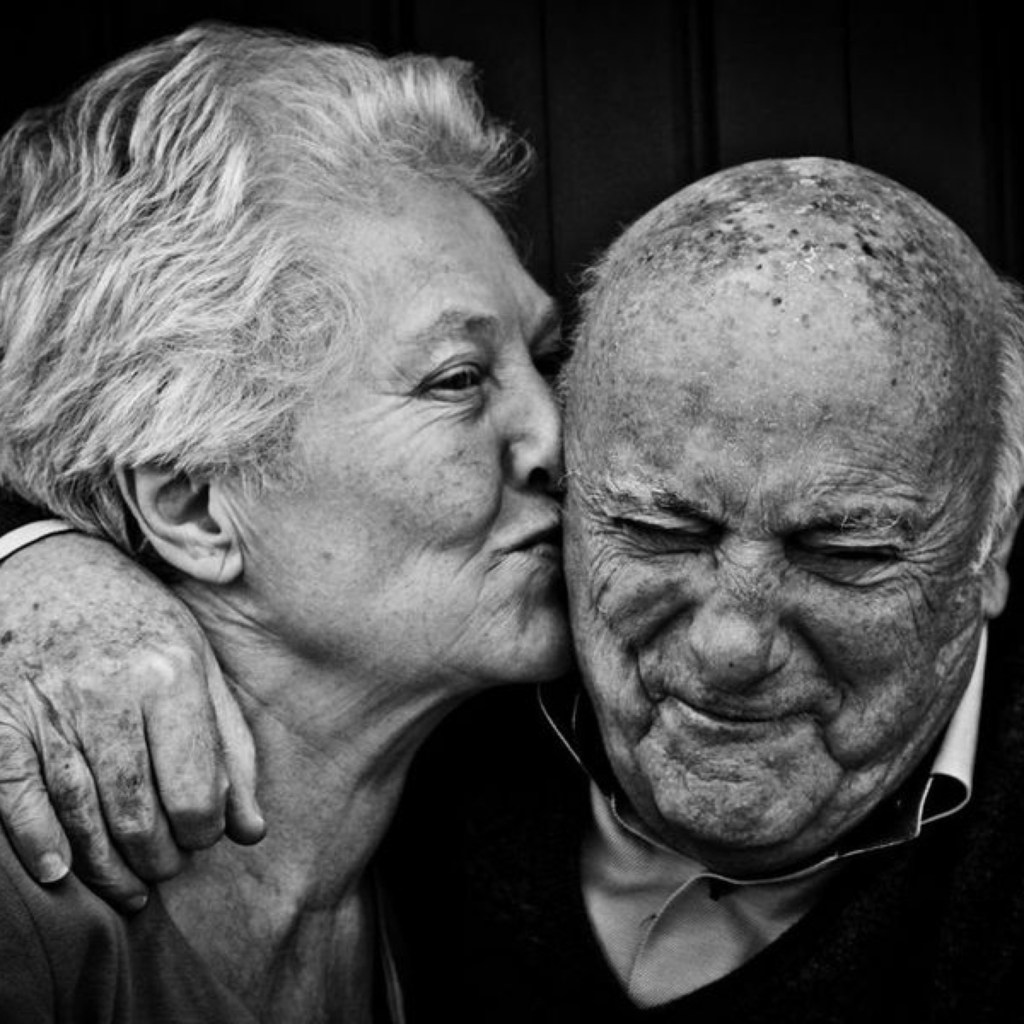
If we know that people can impact an ad’s efficacy, should we consider using people on food packaging? Could we use the interaction between a man and a woman on a coffee bag, for example? In my opinion, yes. Imagine this. A tired corporate executive finds herself standing in a Whole Foods Market. There is no one around. Soft music flutters in and out of her ears. She is standing in the coffee aisle, looking at bags and bags and bags. There’s so much unique packaging, she’s not sure what to choose. But then she sees it—a couple set in black and white. The photograph is beautiful; the packaging seems bound by eternal love as the image wraps fully around the product. It portrays something the executive longs for on a deeper level. “I’ll go for this,” she thinks, grabbing it to pay.

Using people in ad imagery is not a new concept, but could potentially be an innovative idea in the food and beverage domain. We know that ads are geared to make us think and feel. And there’s a whole range of themes emotional ads can trigger, from love to empathy to excitement. I don’t think I’ve ever spent valuable time and money on a product that didn’t trigger an emotion somehow. Even if it may go unrecognized—the power and influence of an emotional experience are unforgettable.

Should packaging portray a feeling using images of people? And if so, what are the most effective ways this can be executed?

How Art on Food Packaging Affects Decision-Making

Oldhand Coffee

Koichi Kiyono

Process

Luna Coffee

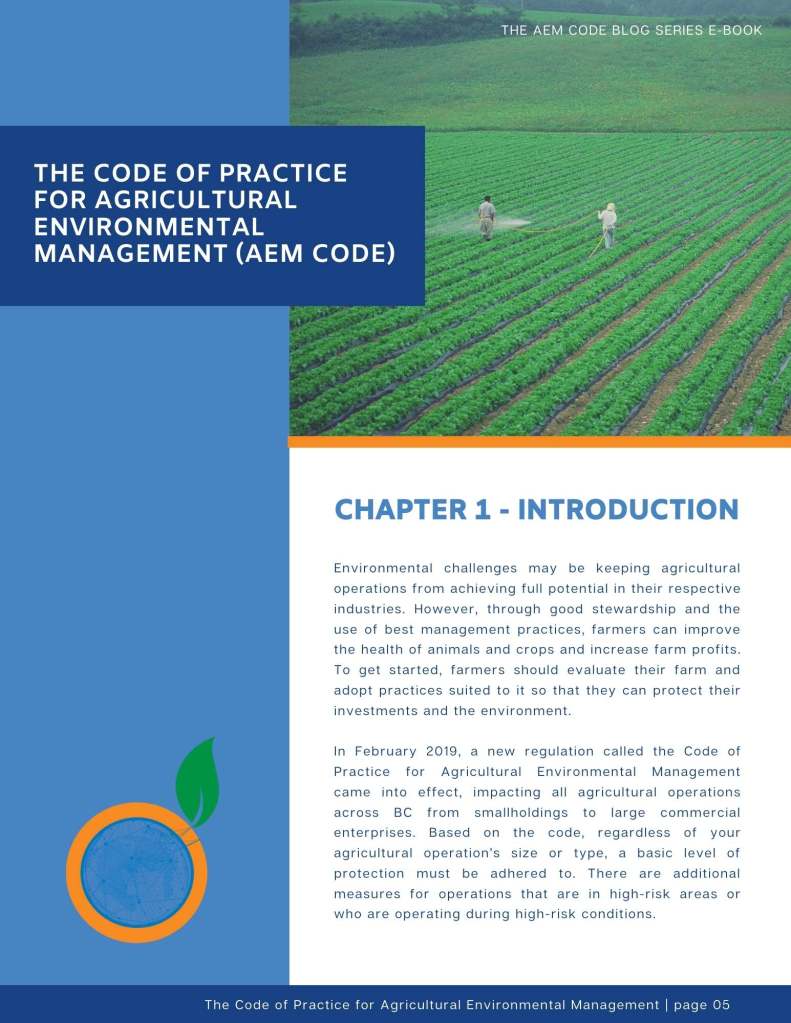
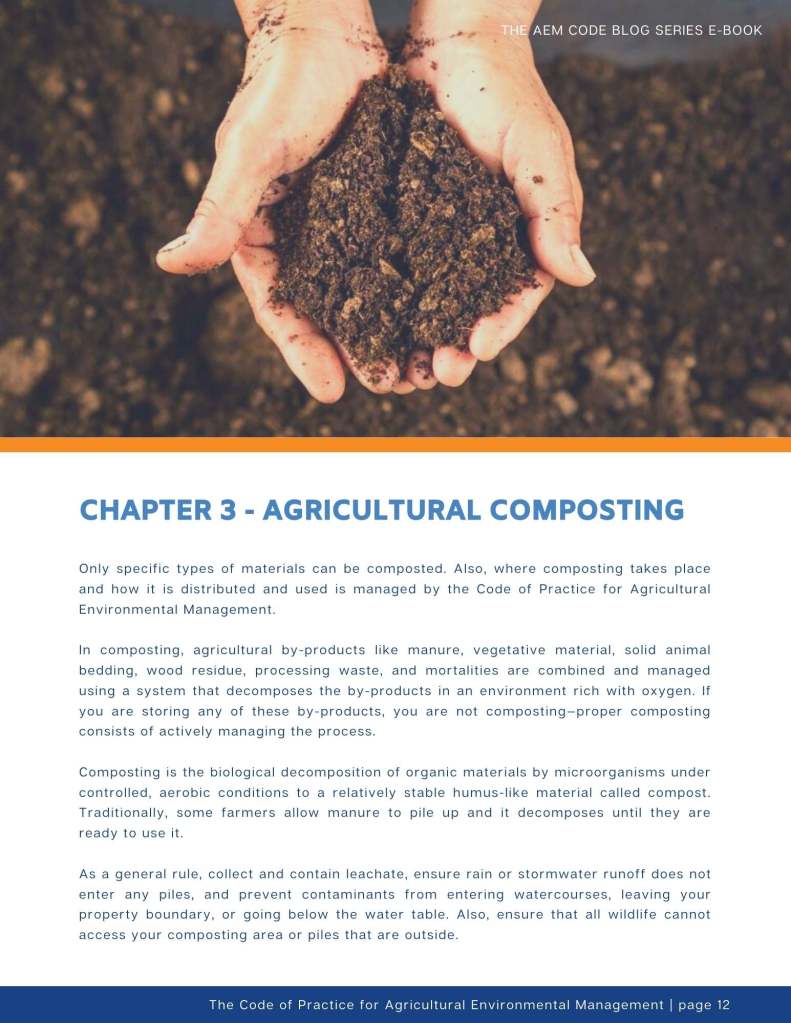
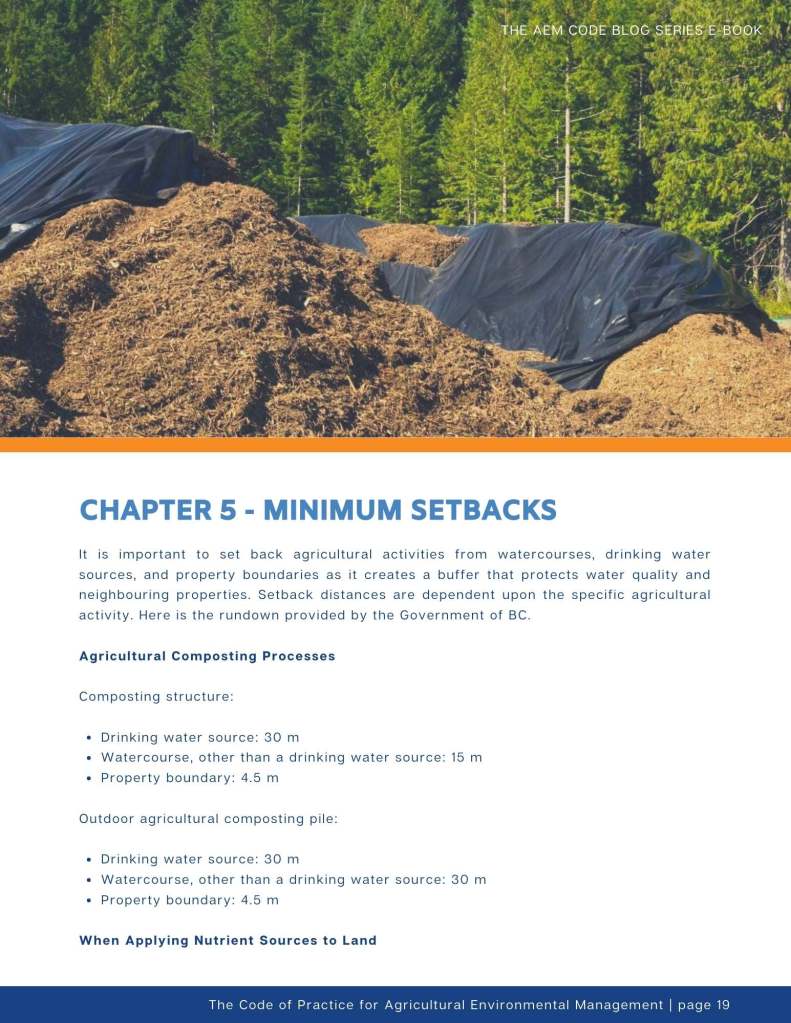
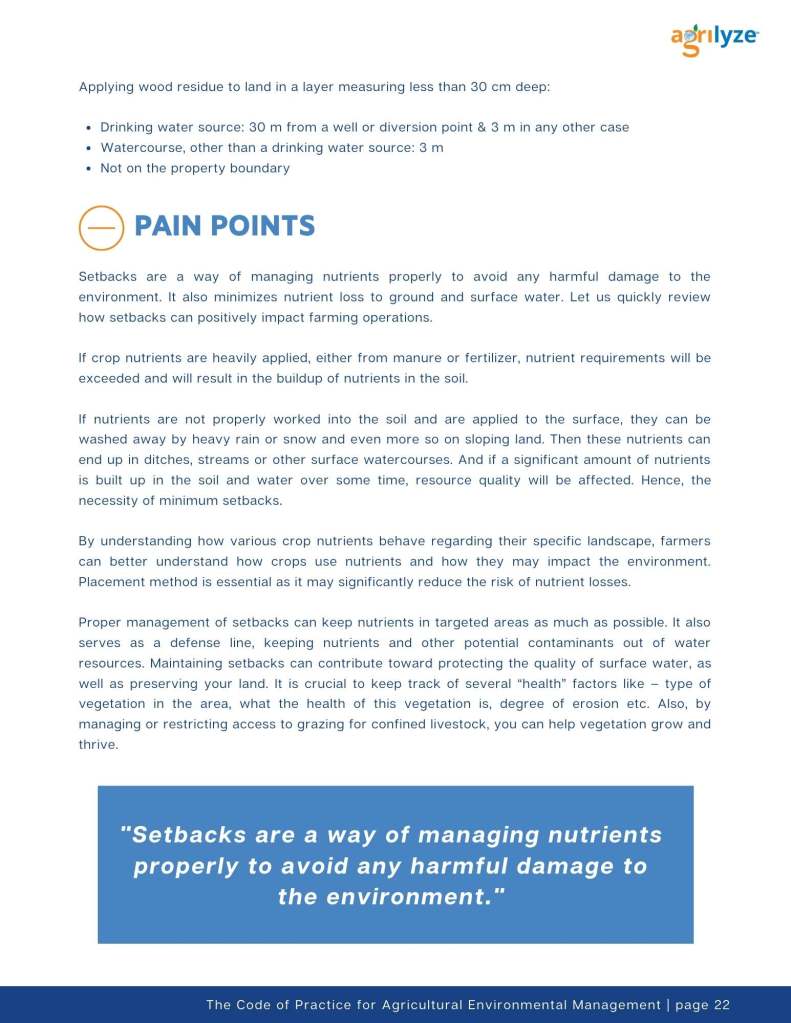
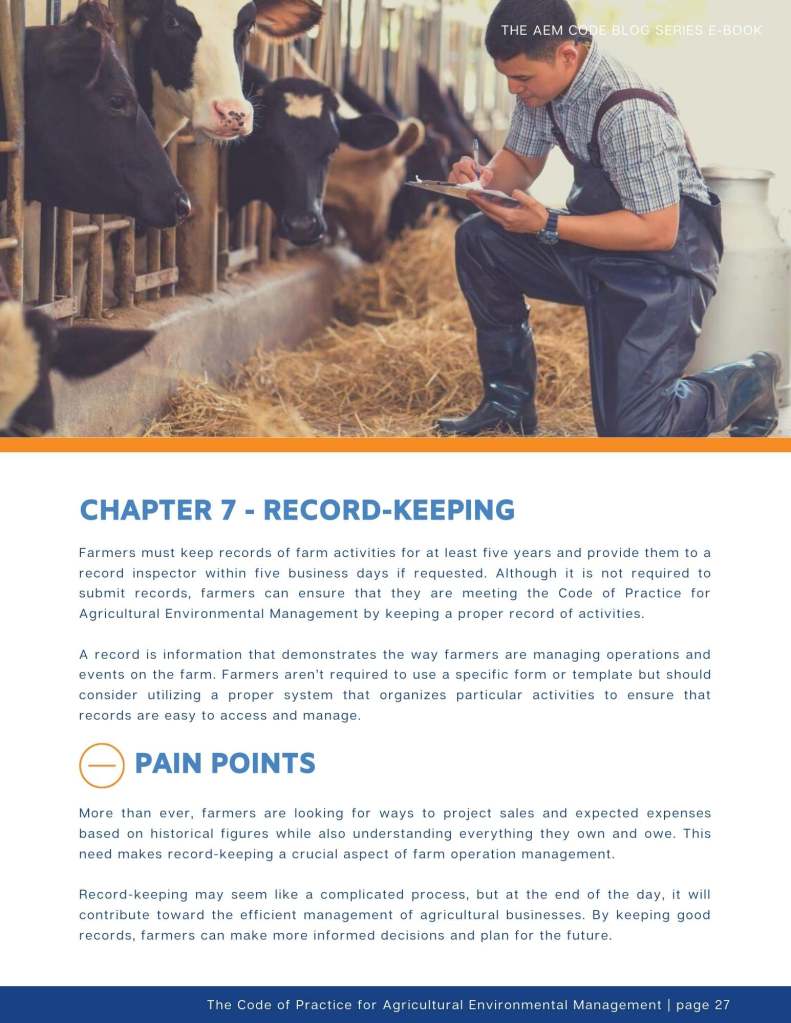
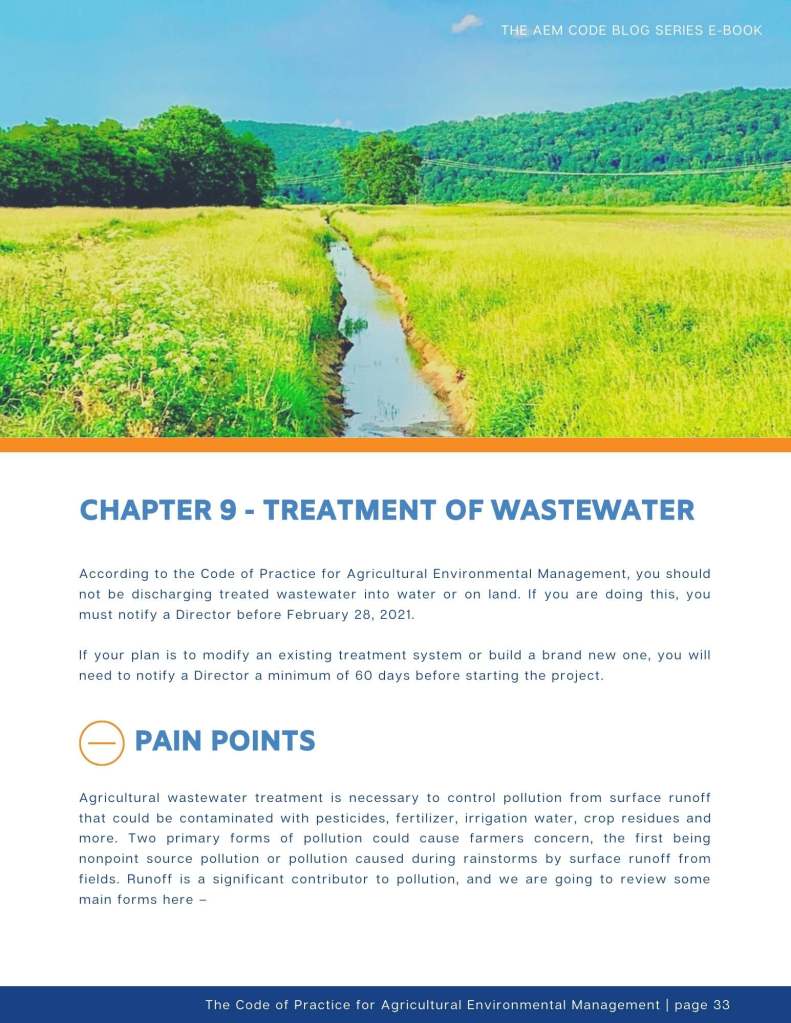
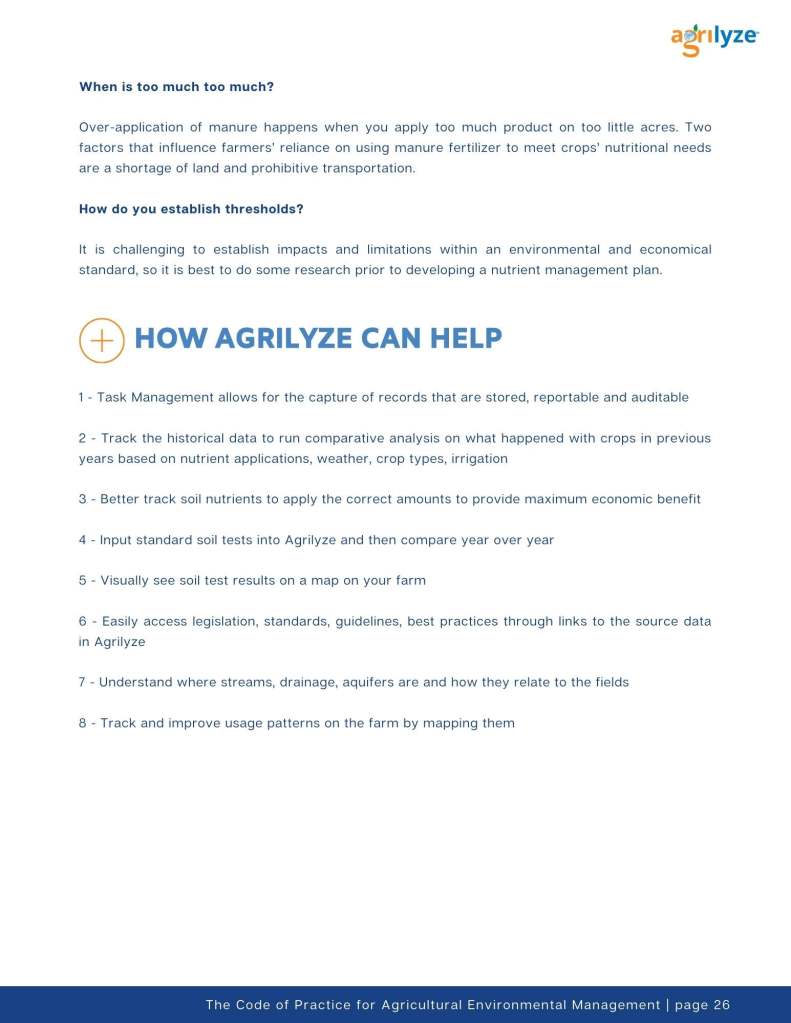
AEM Code E-Book

I put together this e-book based on a 10-week blog series I ran for Agrilyze. It covers in great detail the specific requirements of the Code of Practice for Agricultural Environmental Management, which is a set of regulations implemented by the Ministry of Environment and Climate Change Strategy in BC. I hope you enjoy it and as usual, let me know what you think!

5 Ways to Differentiate Your Brand

In life, different is good. 

It’s about who we are and how we showcase ourselves to the world. 

In branding, it’s much the same. 

Although being different can be a challenge. 

Why?

We don’t want to clash with the norm. We want to be unique and memorable.

I came across an excellent article about brand differentiation and put together this quick presentation.

Let me know what you think!

Food for Thought

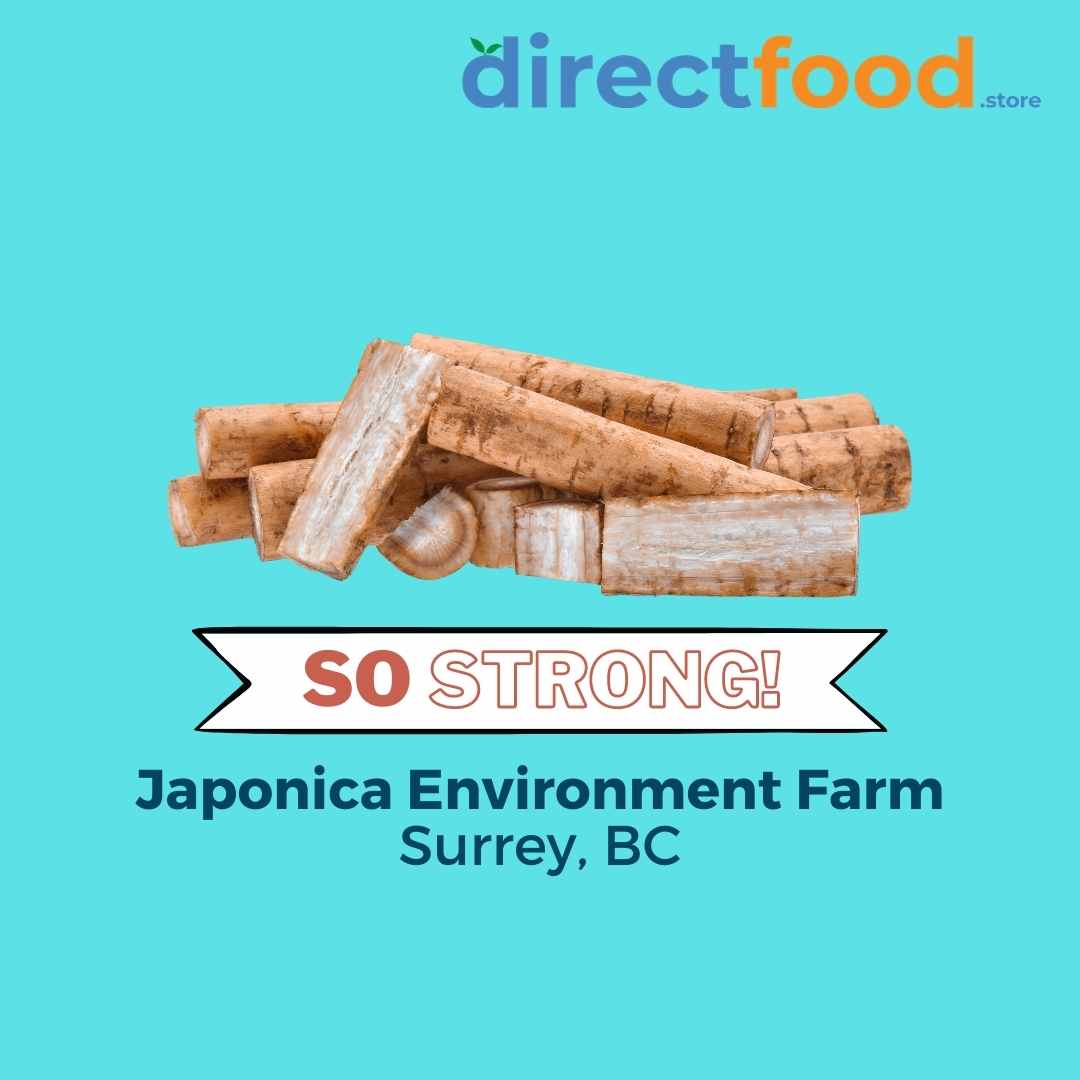
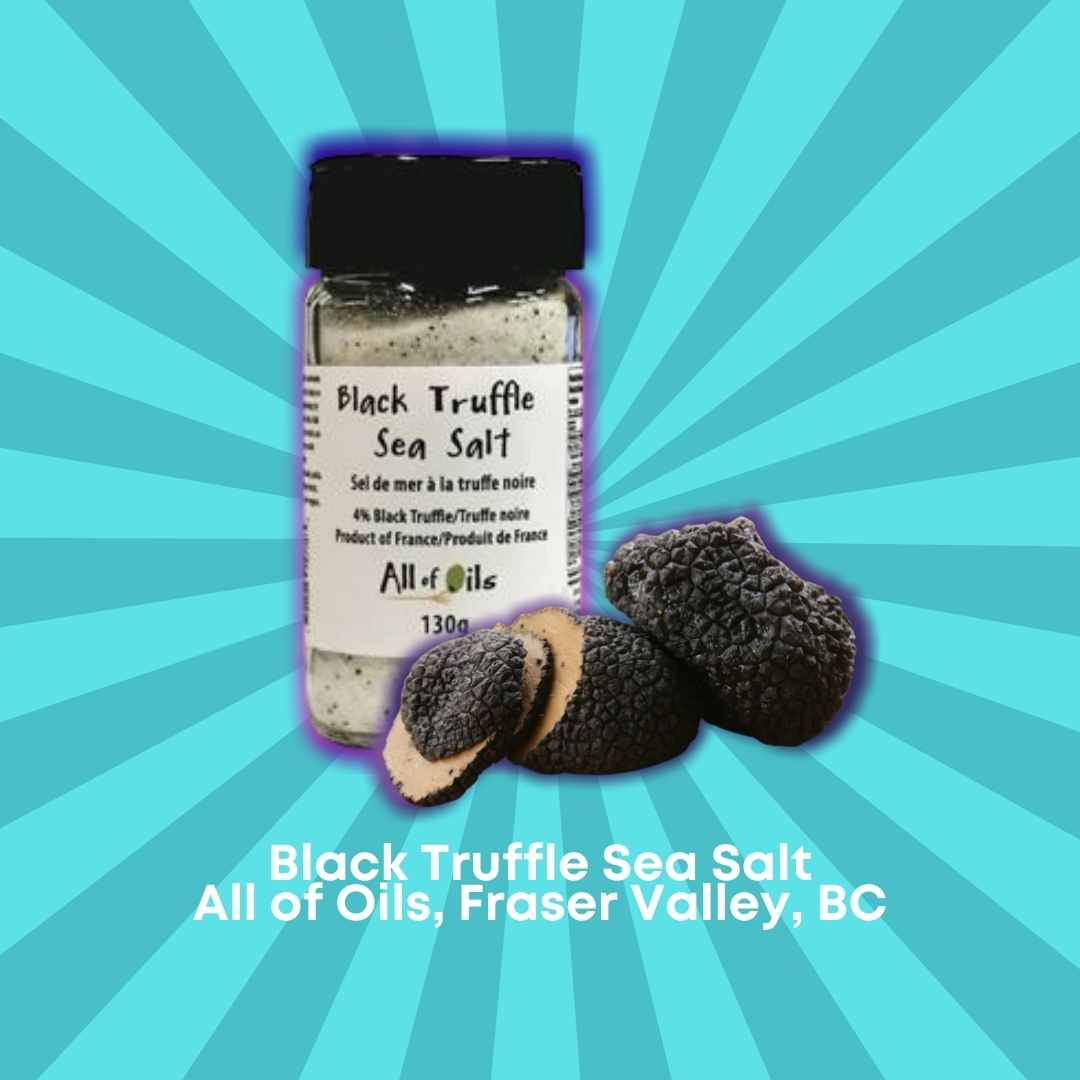
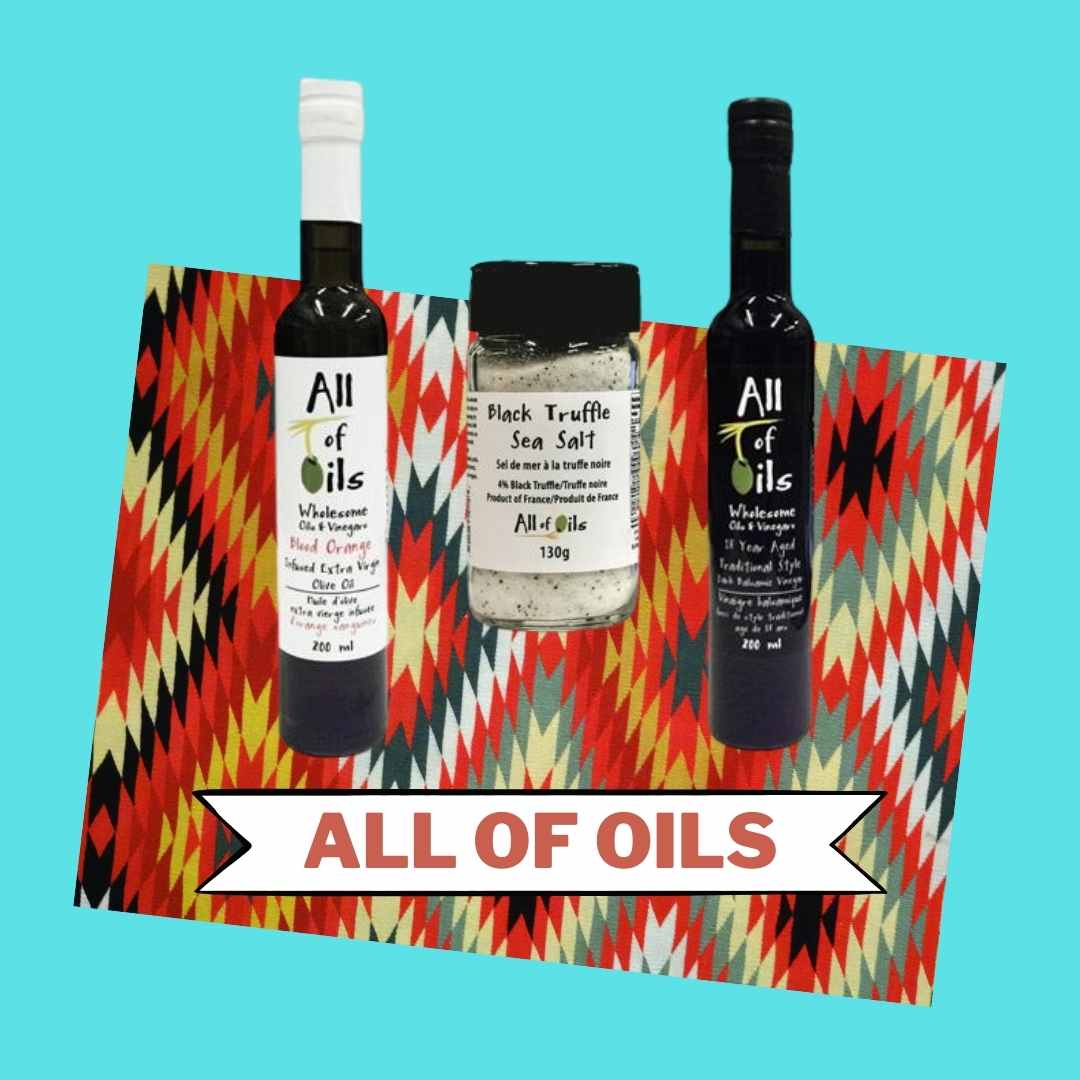
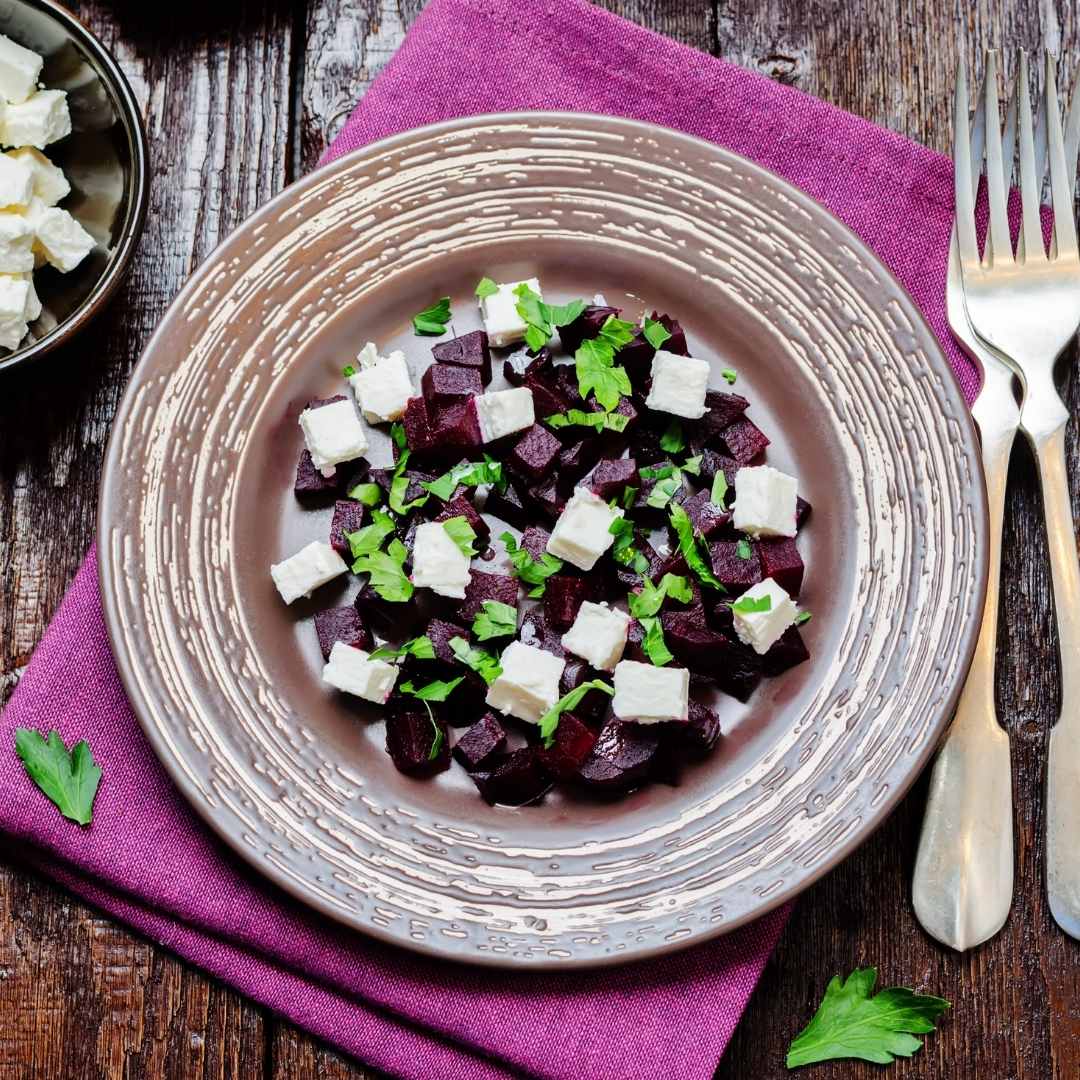
I wanted to share some recent social media work I developed for DirectFood.store. Check it out and let me know what you think!

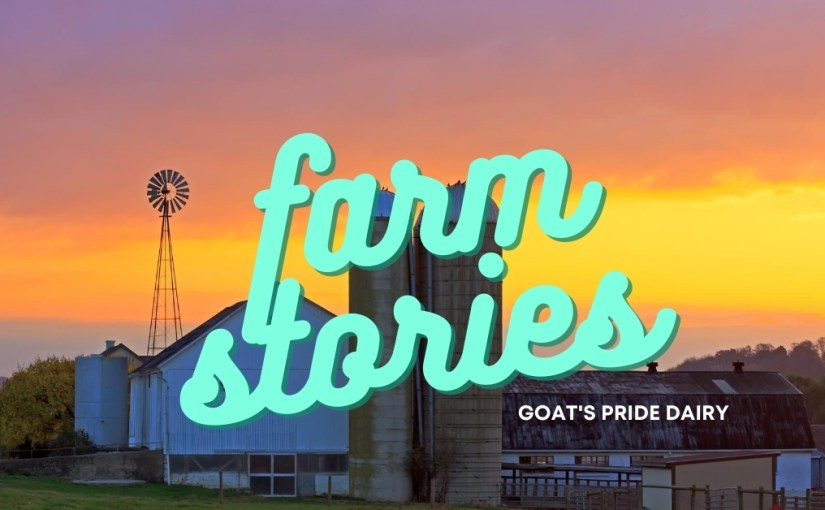
Farm Stories – Goat’s Pride Dairy

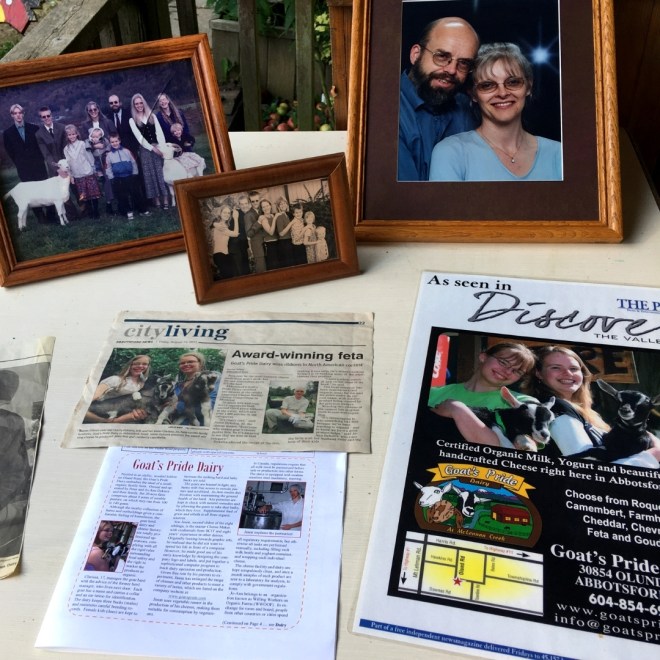
Milca (teammate) and I spent the afternoon filming on location at Goat’s Pride Dairy.

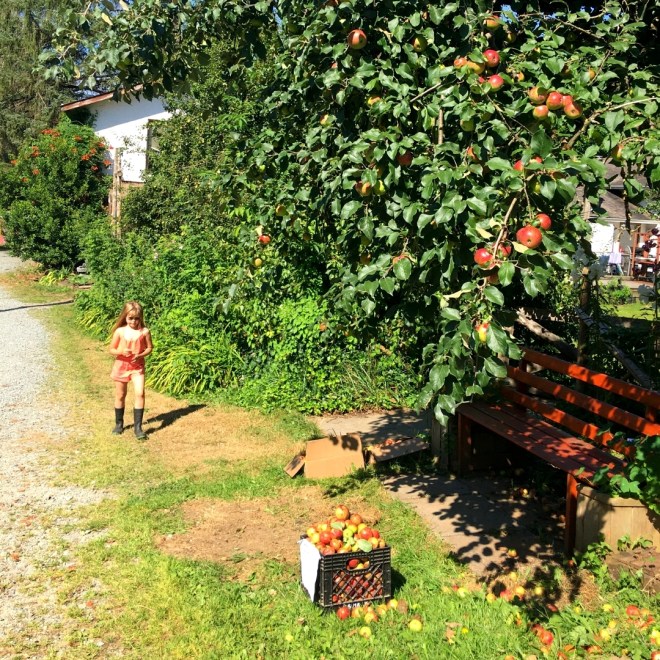
I arrived earlier, still late, but feeling excused because of the weather. I was greeted by a girl in a salmon-coloured romper, and then shortly, another young girl looking much the same presented herself smiling. They could have been twins, but one was taller and wore a hat I could not stop examining. For my life, I forget what Jo-Ann (matriarch of the Dykstra family) called it, but alas, it was some sort of hat slash cover used to protect the face and hair from harsh elements.

I asked a quiet girl sitting on a step if she knew where Jo-Ann could be. She turned out to be the farm gardener. I asked the young girls. It was only after they cautiously pointed me in the direction of the bathroom, that I noticed a small house set stoically aside an apple tree, which the girls promptly proclaimed, “That’s the shop! She is probably in there!”

And there I found her. She had an easygoing air and quirky smile and laugh. Jo-Ann Dykstra was stocking fridges for ‘social media’, which I thought was brilliant. I appreciated that she was still preparing her farm for our visit. We had a brief introduction, then went off on our ways. I had to check if Milca, my filmmaker, had arrived, and Jo-Ann was probably considering a few other things to wrap up before filming commenced.

Other family members started to appear; each one donning a bright blue t-shirt with amusing imagery and text that accurately explained the context of their ubiquitous smirks. It was fun and again very thoughtful and made a tremendous blue background for certain shots, primarily in the greens or browns.

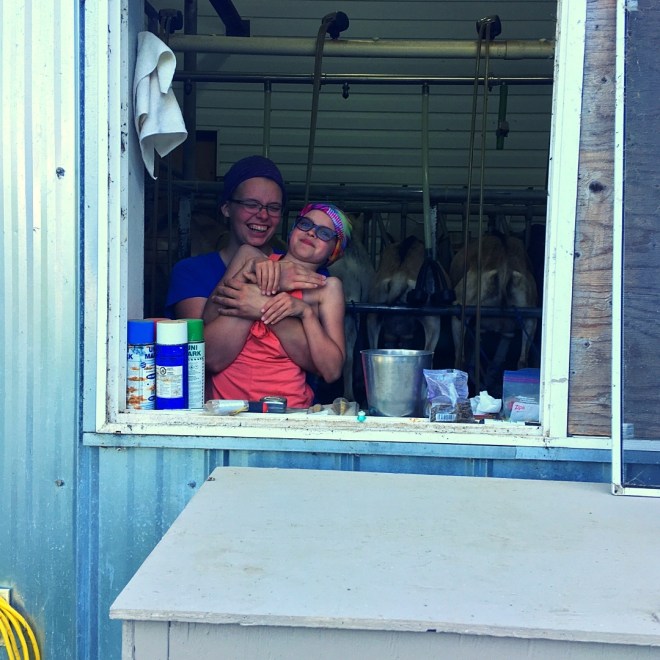
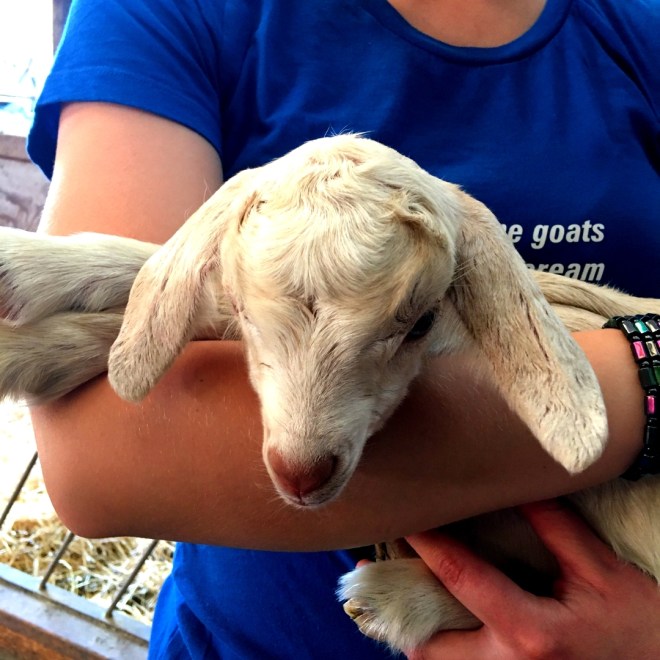
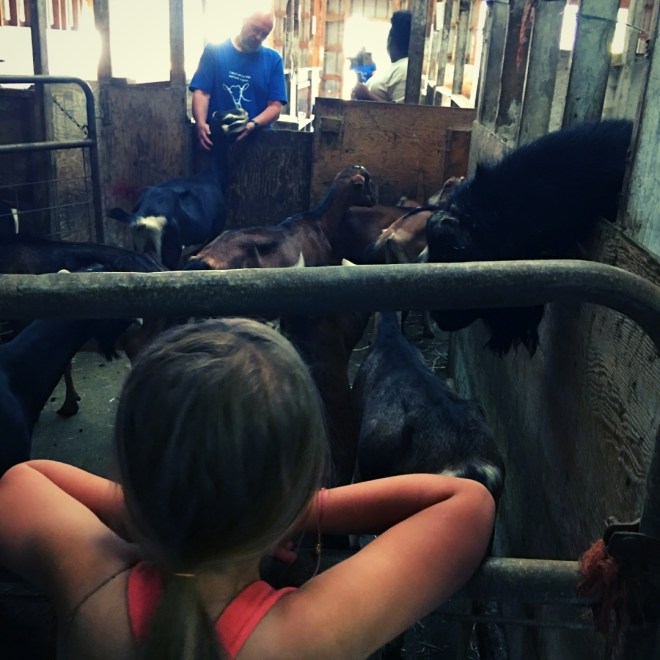
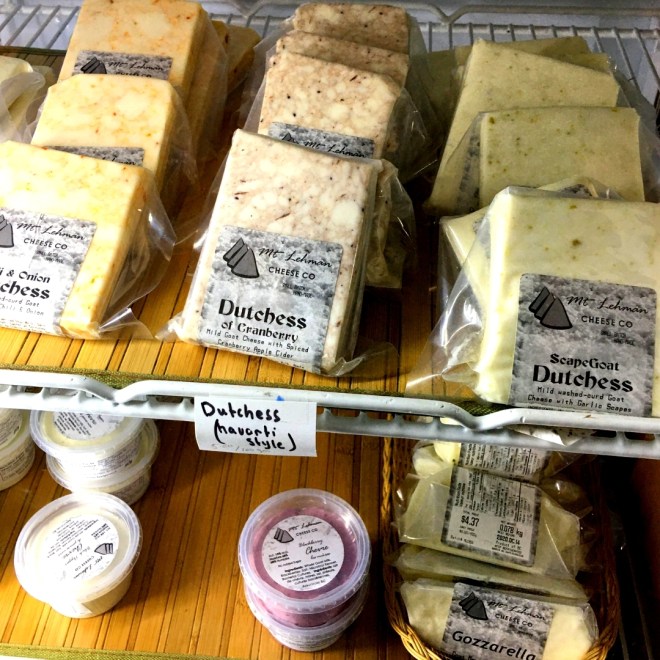
And so she finally arrives, with all her equipment. I am mesmerized by her calm and friendly demeanour, telling myself in my head, I need to be more like Milca. We filmed for the next 3 hours, if not more. The processing room where we witnessed son Jason laboriously creating goat mozzarella (Mt. Lehman Cheese Co.). The interview portion on the backyard veranda. The goats inside their cozy home. A new baby goat only four hours old. And best of all, daughter and grand-daughter milking the herd. Finally, a quick visit to the babbling brook known as McLennan Creek, also the name of their store as prescribed on a handmade wooden sign.

It was a great experience. It felt like I was at home, as a boarder or wanderer travelling across British Columbia who finds a remote place that offers up service, work and a sprawling, farm-set playground. It was almost too hard to leave, sharing a last-minute conversation with Jo-Ann about their upcoming open house.

If you have a chance, visit their farm and experience goat farming first hand. You will be welcomed, and I guarantee, the two young farm managers will greet you with open arms, maybe matching outfits as they did us today. You’ll want to explore and find out what a smallholding agricultural operation is like.

I am just being introduced to the world of agriculture, and I am astounded every day. I look forward to learning more about farming in the future!

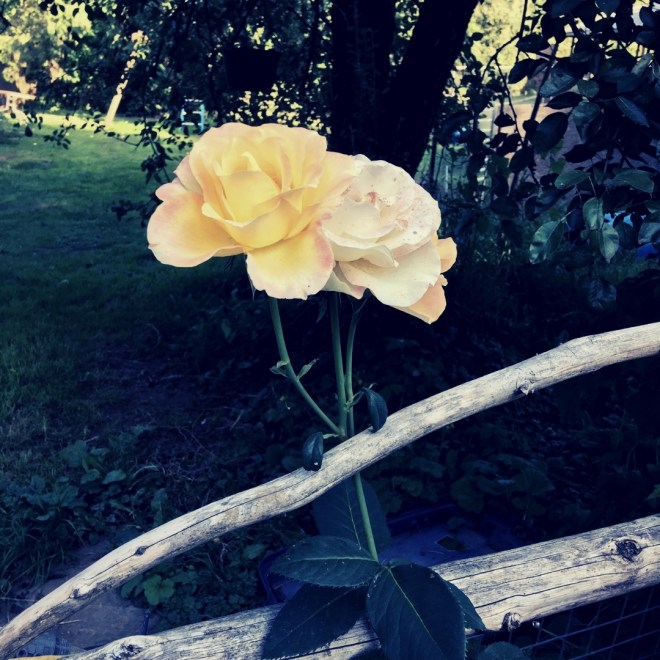
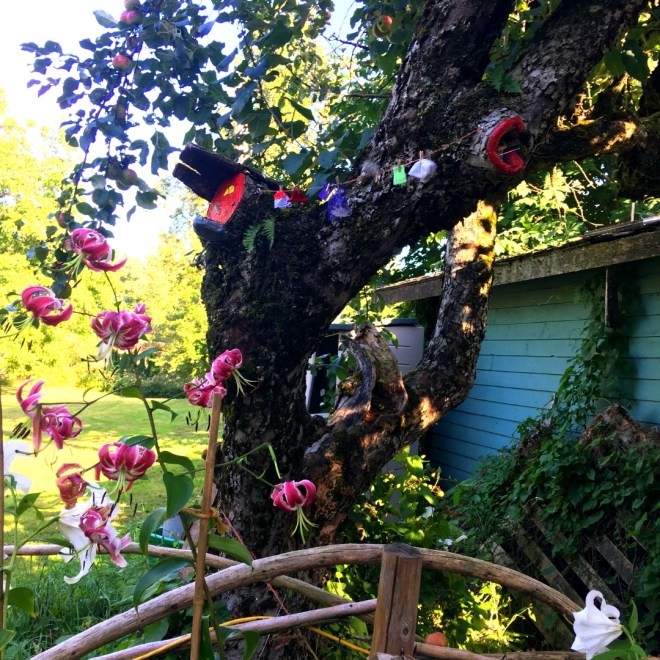
Here are some photos I captured. We will be sharing our first Farm Stories video soon, so stay tuned!


AI 2

This is a follow-up to AI (Share of Voice).

Humanistic data governance is my description of AI or:

The process of managing the availability, usability, integrity and security of data in global human societies, based on internal data standards (emotions) and policies (law) that also control data usage (science).

Effective data governance ensures that data is consistent and trustworthy and doesn’t get misused.
This is crucial. My observations from the past ten years show that misuse occurs when governing bodies are unstable, in other words, not properly equipped (mentally, socially, physically, spiritually) to manage said availability, usability, integrity, and security of data.

So, what then is data in my interpretation of AI?

It is energy or every interaction (digital and human) we make.

This energy exists on a conceptual framework or platform. In essence, it can be continually transmuted (actions and results) without much intention required from either the digital or human end.

Much like a geographic information system (GIS), energy provides us with the ability to capture and analyze spatial and non-spatial data.
Part of this data includes our insights, behaviours, and emotions. We capture energy through action and produce a result that causes a chain reaction in human evolution and thought.

There are many points for me to cover here, which demand much more time and consideration. For now, I will try to get my words and ideas down, then perhaps we can come back to it in a couple of months and reassess.

Noninterchangeable: not able to substitute with another. 

For some reason, AI is not readily accessible. It is readily available, but coming across an entity that fully understands its definition within a humanistic context is variable, if not completely unchartered and arbitrary. Still, you can, or perhaps I should mention myself in this situation, look at a person and consider them, as if reading their humanistic data governance level. Again, we come back to the same problem over and over again.

Oversimplification. Redundancy. Incorrect assessments of human error.

Why does it matter? Perhaps, I am too futuristic here? Do I even know the answer? I could have known it in a previous life, let me try to unearth my potential here.

In AI, I spoke about a physical product as a term best used to describe an outcome. I suppose this is the differentiator. We have yet to determine what the physical product will be. We are continually creating new products that utilize AI; however, we have not symphonized the ultimate result.

Oddly enough, the appearance of COVID-19 altered our progression, mostly due to isolation. Without physical interaction, we lose our common ground. We can choose to see this as intentional or casual. Again, I wrote:

In digital reality, a new power takes actionable items related to spatial and non-spatial information to influence a decision-making process, which leads to a result.

If the digital reality we create is not appropriate, lacking power or substance for the sake of laziness and against the challenges/problems we are facing like – damage prevention, protection of the environment, safety regulations, reporting, food shortage, food security, and traceability, then the laws that possibly govern us from a higher resource may have put a stop to it.

That’s the problem. We are starting from square one. 

Product direction requires a dream that can be unlocked following precise steps as if when you awoke from your goal, you could remember every vibrant detail.

As if we were previously positioned in individual dreams, with rulers and usurpers systematically working together, ‘after’ coronavirus, we are retracing our steps, back to the models we have built, starting the race yet again with our shoelaces untied.

The funny thing about being in digital marketing is that this race is entirely peer-driven. The humour is not even funny. We have come to a full-stop and truth be told, there is cooperation, albeit, indifferent. I’m just referring back to new power. As Dave Gerhardt, CEO of Privy mentions in almost all of his LinkedIn posts – how we communicate is vital, and we can’t keep talking about things so that people don’t understand what they’re reading. Well, we could, but what would be the point in that?

And I haven’t even delved into the idea of machines! This is TBC, of course…

For next time,

A conceptual framework is an analytical tool with several variations and contexts. It can be applied in different categories of work where an overall picture is needed. It is used to make conceptual distinctions and organize ideas. – Wikipedia