In a world where businesses fight for attention, inception marketing can cut the noise. This unconventional technique aims to implant desire into your buyer’s mind, subconsciously intriguing them to make decisions.
But how would you approach this?
As per due course, identifying and understanding your target audience is fundamental. Perhaps serendipitously, knowing who your ‘people’ are is riff with classification – demographic, psychographic, and so on. But how do you distinguish character? Dreams? Accomplishments?
Wear their shoes!
Imagine what it’s like to be a member of your target audience. Consider their daily routines, challenges, aspirations, and sources of joy. Empathize with their experiences, and you can gain valuable insights into what motivates them and how your product or service can address their needs.
I’m not saying it’s going to be easy work. It will take time, bottomless curiosity, and creativity to craft compelling buyer personas that will make a difference in your pursuit of growth. You might even have to look the opposite way. Envision your competitor knocking at your door. How would you understand them? What questions would you ask? Then, alas, you can ask the grand question – what message and associations do you want to embed in your target audience’s psyche?
Your answers should create a deep, emotional connection and tap into their subconscious desires, beliefs, and aspirations.
Remember, storytelling is the key.
Evoke sentiment and eagerness and delve into universal themes that address the human experience.
And sometimes broad is better. Subtle and indirect. The goal is to make a long-lasting impact, build brand affinity, and, most importantly, influence their attitude toward your brand in the long term.
Somehow, it’s an arduous undertaking that I would prefer to leave to my more inclined husband. But tonight, I took it on with confidence.
Lo and behold! I opened her bathroom drawer to reveal not one but three containers of toothpicks. I could smell the faint glimmer of mint, and as I observed the labelling on the bottles, I discovered three different flavours altogether – mint, cinnamon, and KOKESHI.
Now, I presumed that the flavour on the label would match the scent of the toothpicks. So began the exercise. My daughter and I smelled each bottle. Mint, yup mint. Cinnamon, oooh that’s cinnamon. Kokeshi? My daughter inquisitively smelled the toothpicks in the distinct red-orange packaging. Smells like flowers, Mom! I took a whiff and debated, no no, I don’t think so.
I peered through the cheap plastic receptacle and saw that the toothpicks were a different shape. I uttered to my daughter, must be because of this. I pointedly placed the bottle in front of her eyes. We weren’t satisfied. They did look different from the others, looking fancy for picking up appetizers. So, my daughter proclaimed, check Google! Check Google! And with the swipe of a finger, the answer arose –
Kokeshi
Kokeshi are simple wooden Japanese dolls with no arms or legs that have been crafted for more than 150 years as a toy for children.
They are symbols of hopes for bountiful harvests, wishes for good luck and fortune and embody an appreciation for craftsmanship and culture.
Now, this would have been a great answer, but in our case, it was REVELATORY.
I looked in front of me.
Standing peacefully erect on my daughter’s bathroom counter for as long as I can remember was…a…KOKESHI.
Not any kokeshi. A doll I lovingly received from my mom’s very close Japanese girlfriend, Misuko, back in 1985.
My daughter and I squealed with delight. The happenstance was nothing short of extraordinary! And to think, it only took 38 years or five times the length of my daughter’s life to discover it.
Sometimes, life throws you curveballs. Most of the time, you catch the ball like any other ball, on any other day, with the same approach and sentiment. But other times, life passes you inexplicable gifts—gifts that bring light and love into every inch of your being.
As marketers, throw and catch balls. But once in a while, BE the ball and notice the infinite bubbles of gratitude that permeate your life.
A fighter brand is when a company introduces a new, lower-priced product or brand to compete directly with its own existing products or with those of its competitors.
The purpose of a fighter brand is to target price-sensitive consumers who may otherwise choose a competitor’s cheaper alternatives, thereby protecting the company’s market share and overall brand image.
Pros
Market Segmentation: A fighter brand allows you to target different market segments simultaneously. It enables you to cater to both price-conscious consumers and those who are willing to pay a premium for your main brand, thus widening the client base.
Competitive Advantage: By offering a lower-priced option, you can directly challenge your competitors on price. It can capture clients who prioritize cost savings without undermining the reputation or sales of your higher-priced main brand.
Risk Mitigation: In the face of tough economic conditions or fluctuations in consumer preferences, the fighter brand can act as a buffer for your overall performance. If consumers tighten their budgets, they may switch to the more affordable fighter brand, maintaining sales for you.
Brand Loyalty: Clients who begin their journey with the fighter brand may eventually move up to your main brand if they have a positive experience. It can create brand loyalty within the client base, potentially increasing long-term client retention.
Cons
Cannibalization: One of the significant risks associated with fighter brands is the potential for cannibalization of sales. If the fighter brand draws clients away from your main brand without attracting new clients, overall revenue could suffer.
Brand Dilution: Introducing a lower-priced brand may lead to a perception of reduced product quality or brand dilution. If not managed carefully, it can negatively impact the image of your main brand, especially if clients associate the fighter brand with inferiority.
Marketing Costs: Successfully launching and maintaining a fighter brand requires investment in marketing and advertising. If the returns on this investment are not significant, it could strain your financial resources.
Logistical Complexity: Operating multiple brands can add complexity to your supply chain, distribution, and inventory management processes. It requires careful coordination and management.
Impact on a Growing Company:
For a growing company, introducing a fighter brand could have several implications:
Competitive Edge: In a competitive market, launching a fighter brand could help you gain a competitive edge by offering a more affordable alternative to your existing products and those of your competitors. This could attract budget-conscious clients and win market share.
Revenue Stability: Economic downturns or fluctuations in any industry can affect purchasing behavior. The fighter brand could help maintain revenue stability during challenging times by capturing price-sensitive clients.
Customer Acquisition and Loyalty: The fighter brand can act as a stepping stone for clients who are initially hesitant to invest in your main brand’s premium products. If they have a positive experience with the fighter brand, they may become loyal clients and eventually upgrade to the main brand.
Product Diversification: Introducing a fighter brand allows you to diversify your product portfolio and address the needs of a broader client base. This diversification can reduce reliance on a single product line and expand market reach.
Challenges in Brand Management: You must carefully manage your marketing and positioning of the fighter brand to avoid brand dilution and cannibalization. Clear differentiation between the fighter brand and the main brand is essential to maintain their distinct identities.
Operational Considerations: The introduction of a new brand may require adjustments to your processes, supply chain, and distribution channels. Proper planning is necessary to handle the increased logistical complexity.
In summary, a fighter brand can be a valuable strategy for a growing company. One main benefit of developing a fighter brand is that clients who initially purchase from the fighter brand might be enticed to upgrade entirely to or add-on different products and services as their needs and budgets evolve. This can foster long-term client loyalty (a longer term marketing strategy). To solidify a fighter brand’s market position, you would need to develop a clear communication strategy to explain the relationship between the main brand and the fighter brand to avoid confusion among clients.
I’m going to share more explorations on brand types in coming posts, so stay tuned!
Member A – Marketing is a constantly evolving landscape.
Member B – Ideas ignite and fizzle away.
Member C – A structured and creative ebb and flow transpires.
Member D – New campaigns take flight.
.
.
.
.
.
.
Evolution.
We seek out different and diverse points of view, embrace and respond to change, and plan only to a level sufficient to ensure effective prioritization and execution. We find ourselves encountering a phenomenon called—CRITICAL MASS.
Akin to when celestial planets align, critical mass is that single yet multifarious moment when our efforts transcend the ordinary and catapult into the extraordinary. It’s a transformative point when our brand’s message resonates with such force that it achieves unstoppable momentum, similar to a cascading waterfall or an awe-inspiring avalanche.
Achieving critical mass can ignite a spark in the collective consciousness of a team, sparking a wildfire of enthusiasm that spreads contagiously through diligent becomings – social networks, word-of-mouth, and media channels. One clever idea can transform into an iconic cultural touchstone, etching your brand’s identity into the minds of engaged onlookers everywhere.
When an idea reaches critical mass, it propels forward and impacts a team’s ability to meet goals.
Here are some ways your team can make that impact based on some common marketing objectives –
Boost Brand Awareness
As your name, products, and services become more recognized, brand awareness will naturally increase. When your brand reaches a certain level of visibility, popularity, or adoption, it triggers a self-sustaining momentum (critical mass), fostering a positive feedback loop that fuels growth and solidifies your brand’s position in the market.
Obtain New Clients
Your team can focus on targeted campaigns to showcase your USP (unique selling proposition) and differentiators while also highlighting your clients’ success stories and effectively communicating the value of your product to attract a steady stream of interest (demand generation), then ultimately converting that interest into actual sales and new clients (client acquisition).
Strengthen Relationships with Existing Clients
You can contribute to this effort by implementing a preferred client program, personalizing your internal and external communication via channels like social media, email, and content, and creating a detailed plan and strategy around launching new products that address client challenges, needs and pain points.
Increase Sales
As your market presence and brand awareness expand, so does sales potential. A larger customer base combined with the effective execution of a strategy will lead to more opportunities. Your marketing team can collaborate closely with your sales team to generate and nurture high-quality leads, provide sales enablement materials, and optimize the customer journey to convert prospects into loyal clients.
So, what do you think?
Critical mass is a powerful catalyst for any growing team. By reaching this point of substantial growth and influence, your team’s efforts – recognizing ‘critical mass’ as it occurs and creating models to emulate its course – become pivotal in driving continued success.
Inspiration can be a behemoth, and it is waiting for y’all!
Hey everyone! My gosh, has it been a long time! I’ve been so busy working on my career that I haven’t had two seconds to post on my personal website. Transparency aside, I wanted to share a new series based on a weekly project I run at work called Social Media Update. In this series, I touch on social media and general marketing strategy, and I thought it would be great to share it with you all.
I’ll work my way back to when I started at Longboard, so here is our first instalment! Have fun with it, and if you have any questions, feel free to reach out at info@chonafecanlas.com.
Finding the ‘intriguing angle’ is the idea that we can focus on big-picture topics like our core aspects (innovation, sustainability, quality) to create compelling content that impacts our target audiences.
When creating social media content, we can ask and answer a couple of questions:
Q: What is a significant concern for our business and other businesses today?
A: Our audience demands a greater understanding of where and how our products are sourced and manufactured.
Q: What approach can we take?
A: We can and should comment on sustainability by promoting a transparent and traceable approach. This entails a mix of carefully curated messaging that effectively positions our differentiators while driving an emotional reaction from our audience.
For example, we could share that all production is on-site and that we have an incredible production team that helps to build our premium products. We would also mention that we pursue responsible consumption and production, which helps create sustainable architecture that positively impacts the environment and the communities around us.
Our team is mindful that we must not fall into the trap of hoping word will get out and the customers will come. Through proactive and strategic messaging, we can understand why we do what we do, and share that message with the world.
So, what did you think of that? Do you feel inspired to identify some core aspects of your business, then do a deep dive into how they can impact your target audience? Please share your thoughts!
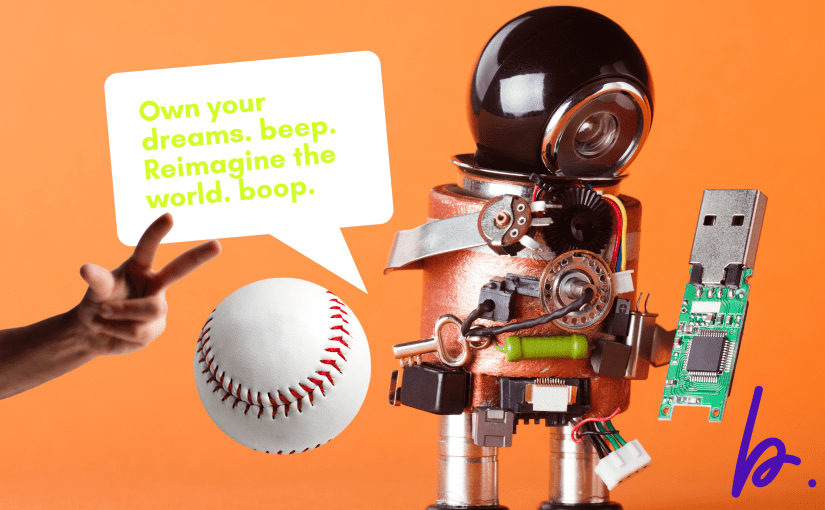
A good curveball is an opportunity (remember, problems are opportunities) to:
1 – Own your dreams.
2 – Reimagine the world.
Own Your Dreams
To own your dreams, you must recognize, acknowledge, and value the fact that something is waiting for you out in the world.
It is there to fulfill.
It exists to make you happy.
You are satisfied when united (or reunited) with it.
It becomes a part of you and can be shared with others.
A Good Curveball
Owning my dreams is being connected to work I’ve always envisioned doing—building a sustainable and scalable brand that will influence people inside and outside the operation.
Reimagine the World
Second, to a good curveball is our ability to reimagine the world. Through a clear and defined vision and mission, we can accomplish anything. With a good heart and holistic stance, our world can become something better, more equal and more understanding.
Reimagining the world involves pushing boundaries, setting new standards, and developing a structure or process that leads to innovation, progression, and growth.
I think I get thrown more good curveballs as I age, so I hope this becomes the norm and the opportunities don’t cease!
As I continue to inspire and empower people to make a difference in their daily lives, I recognize three things that matter to me today. Of course, there’s always more, but let’s get started with these!
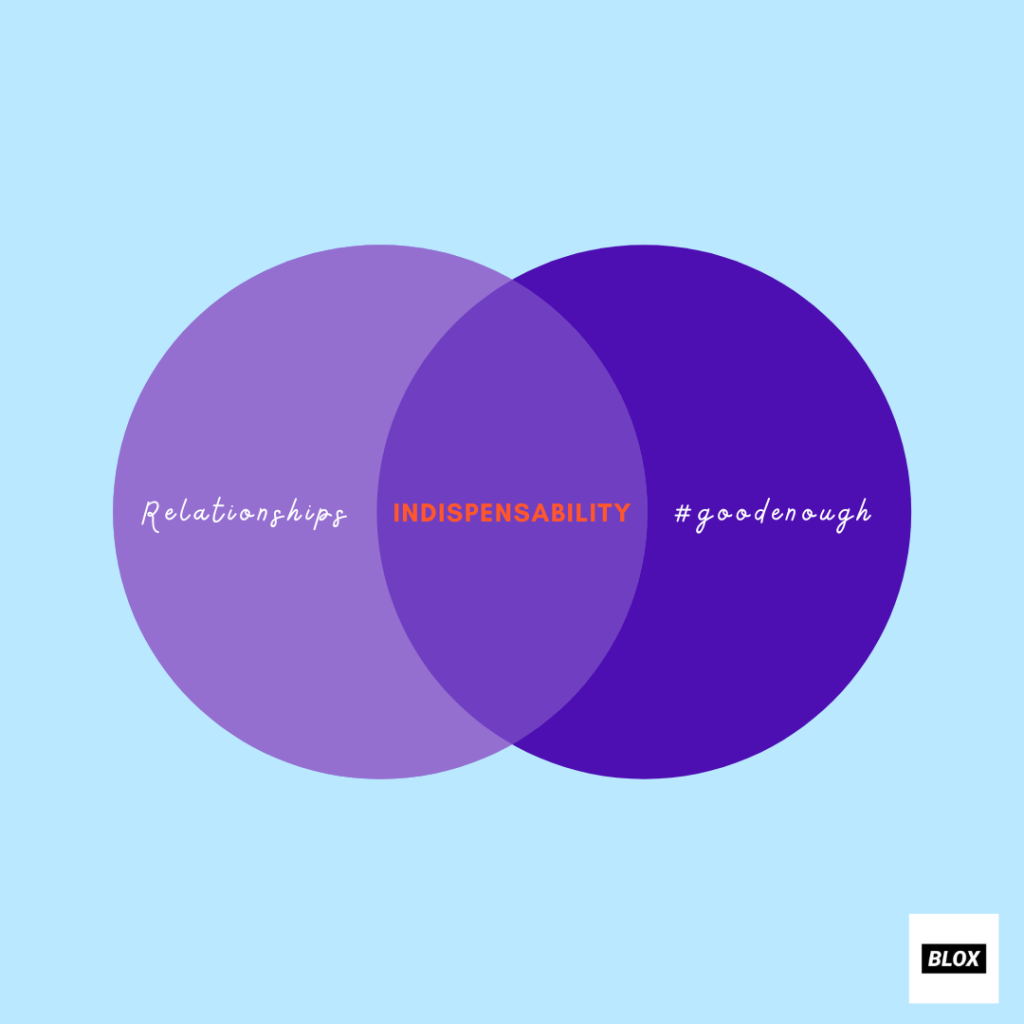
Become Indispensable
1- Relationships
One of the biggest influencers in my marketing career has been the formative relationships I have built over time—in both the long and short-term. Having a direct report has taught me to be vulnerable and courageous as I’ve had to steer a small team in a viable direction while maintaining strong, personal connections which benefitted the entire team. I am particularly grateful for the opportunity to work directly under the Founder and CEO of Clearbridge, Ryan Kononoff. He has taught me many things about engagement and the effort required to make meaningful projects matter to an audience. I am also thankful for every other team member I’ve had the chance to grow alongside.
You are bright.
You are dedicated.
You are special!
2 – #goodenough
This is one lesson that has helped me to conquer my perfectionism. I recall working on one of my first projects, a new brand book (or later called a Playbook), which in scope was a huge undertaking that could have demanded months of work. But with the knowledge that a marketer should be agile, or as the Agile Marketing Manifesto states –
“To keep up with the speed and complexity of marketing today, we must deliver value early and often over waiting for perfection.”
In creative marketing, we challenge ourselves by generating work that is original, unique and that manifests a change in its surroundings. In analytical marketing, we must use data sets to quantify results. Pairing the two (creative + analytical marketing) is where #goodenough truly shines—we can experiment to determine what approach works the best, and we don’t have to wait to be enlightened. We should find insights with every movement or decision we make!
3 – Indispensability
I rarely finish an entire book in one sitting. It’s often hard for me to finish it at all. I prefer to scan information and read what will be of value to me. Such was the case with Seth Godin’s book Linchpin. As he writes –
“You have brilliance in you, your contribution is essential, and the art you create is precious. Only you can do it, and you must.”
Such an important lesson because it’s much too easy to forget your worth. We must use every inch of our being to recognize and become more self-aware. In marketing, the potential to get lost in a sea of tasks and activities might forsake where the value truly lies—creating, ideating, and examining the wonder and change that a type of approach can incite.
Being indispensable takes:
Courage
A growth mindset
Initiative
Risk
And most importantly…talent. You can’t duplicate indispensable work. I truly believe this!
The Playbook
A pièce de résistance, I hope you find value in reading it!
(A poem about AI or conversely celebrating My New Job)
As cryptic as it may be, the time has arrived.
“Surprise!” it squeals with utter delight.
After all that hard work, you’ve finally made it here.
I’m ready. She’s ready. She’s finally prepared!
“Where are you going?” it asks quizzically.
Well, I am headed toward reality.
It’s bursting at the seam from being grappled for so long.
I’ve been waiting, hankering, perfecting my song.
“Do you know where you’re going?” it asks once again.
Well, I certainly have an idea. The spot is a delight. Filled with smiling faces, happy circumstances and scenarios of hard work.
“Well, welcome home then, I suppose!” it pats my back congratulatorily.
Why, thank you, my friend! Now, let’s pencil this in!
A little explanation:
On Monday, March 14th, 2022, I had a wicked phone interview that started with a compliment about the same content you’ve been passionately reading here on ChonaBLOX. Swiftly, I was scheduled super bright and early the next day, Tuesday, March 15th, 2022, to meet the CEO and Operations Manager of Clearbridge Business Solutions. I walked away from that interview, thinking I had done horribly. And as I arrived at work, I furiously texted my husband, saying, “Man, I’m worried. I don’t think I did that well.” But it turns out I did because I received a phone call within minutes saying they wanted to offer me the job! So, it’s done. I’m starting a new journey with my new company, Clearbridge. So excited! This is going to be a lifetime experience. Can’t wait to get started!
A United Nations report declares we have reached “a breaking point”.
So, what does that mean?
With almost 10% of the 8 billion people living on this earth suffering from malnutrition, 3 million lacking healthy diets, and climate change issues rising to the forefront, it is no surprise that we are in desperate need of a way to produce more food without harming the environment.
The report reviews a few critical ‘climate change impacts’ like reversing water degradation by choosing smart technologies and sustainable farming practices or sequestering greenhouse gases emitted during agricultural activities by employing regenerative farming principles.
And perhaps the most critical solution of all? Deploying technology to enable a more connected agriculture and food industry. In my opinion, we can become powered by data and collaboration, putting us in a better position to come up with answers to big global problems and, in the long term, create a more resilient economy.
Still, to make an impact today, we need to understand the challenges and realities that farmers face now. So your first stop is here.











 Blox. is a Creative & Technical Marketer