🚀 Embrace Innovation + Disruption = A Lesson for Every Marketer
I downloaded a new app called Headway. It’s a great way to learn about new books, and I recommend it to anyone. Here are some of my learnings over the weekend.
The main idea is that creating a new market poses less risk than entering an established market. It is also more rewarding. Nonetheless, small new markets can barely satisfy the required growth requirements of larger businesses.
In other words, businesses may overlook game-changing opportunities because their model is primarily to maintain the status quo. 🛳️ To lead the pack, marketers must be forward-thinking, disruption-leaning changemakers.
Here are a couple of definitions to start –
Innovation: In marketing, this is the fusion of creativity and strategy. Innovation is our ability to craft compelling narratives and experiences that captivate audiences, redefine brands, and transcend conventional boundaries.
Disruption: Closely connected to the above, disruption in marketing is the radical departure from norms, leveraging innovative approaches to challenge conventions and reshape audience/buyer behaviour on a larger scale.
So, what’s the takeaway for us marketers? Here are a few key points to keep in mind:
🔍 Stay vigilant: Keep your eyes peeled for emerging trends and technologies, even if your first inclination is to tell yourself it’s too small or too niche of an idea. Do you want to cross over strategy between industries? Why not see how it fits? Run some experiments to test the waters – but before you launch anything, earn buy-in from your team. Your role will be to convince them with supporting data.
💡 Think like a startup: Embrace agility and experimentation. Don’t get too comfortable with your current strategies. See the value for your audience. How does that influence business outcomes? And if there is a misalignment, you might focus too much on activities and output. Your strategy must respond to change, not be static or a quest for perfection.
🗣️ Listen to your audience/buyers, but watch the market too: While meeting current needs is significant, don’t ignore opportunities outside your existing customer base. Seek out different and diverse points of view. Your creative director friend? He might have some powerful assertions worth exploring. Always carry paper and a pen as it provides immediate focus and stimulation – good stuff for your head.
⚡ Be proactive: Don’t wait for disruption to hit you—seek ways to innovate and stay ahead of the curve. And you can do it by yourself! Self-learning can help learners become more autonomous, organized, self-disciplined, and able to communicate. Just remember – cross-collaboration over silos and hierarchies.
What are your thoughts on innovation and disruption in marketing?
Marketing is an environment defined by complexity and constant change.
For example, AI has automated and streamlined processes such as social media management and content creation. Similarly, over the past five years, the world of SEO has shifted away from simply keyword tactics to a more holistic approach involving the rigorous understanding of user intent and experience.
A recent McKinsey study found that 77% of CMOs believe their role has increased in complexity over the past five years, while other research consistently highlights the importance of integrated, customer-centric approaches for increased growth and revenue.
Amidst this frenzy of marketing metamorphosis, we can now say that leaders need more than campaigns. They need systems. They need ways to leverage digital ecosystems while maintaining a hyper-vigilant approach to customer needs and overall growth. That’s where the 9-Point Channel Strategy comes in.
Delving, Developing, and Deducing
This complexity was not theoretical for me – it showed up daily during my Longboard days, when I was part of a small yet mighty team.
A few months into my role, I began to dream about creating a strategy that could answer some of the challenges our team was experiencing – a lack of organization due to poor project management skills, limited human resources to handle social media and email marketing tasks, and most importantly, misalignment and miscommunication with leadership, as well as missed opportunities to collaborate with cross-functional departments.
I wrote a business case and presented it to the CEO.
In my study, I explored all the potential projects and campaigns we could launch if only we were more organized and had more structure to our efforts. It was also the catalyst for doubling our team’s size. After a quick presentation of my findings, my request was quickly approved. I finally had the go-ahead to develop the strategy that had been rattling about in my brain.
A Holistic View
The lack of a holistic view is one significant challenge that spurred the need to develop the 9-Point Channel Strategy.
In holistic marketing, departments and the strategy work together to accomplish shared goals and support an overarching purpose. A holistic stance paired with a transparent purpose is pivotal to scaling efforts and driving incremental volume and revenue.
It allows you to step back and review your work, gaining a deeper and clearer understanding of how inputs influence outcomes. With this perspective, you’ll be better prepared to make thoughtful, proactive decisions. Once you develop a holistic view, you can begin shaping content and messaging that resonates across physical, emotional, social, and even spiritual dimensions. At its core, this unification can lead to outcomes that stand out and make a lasting impact.
The 9-Point Strategy
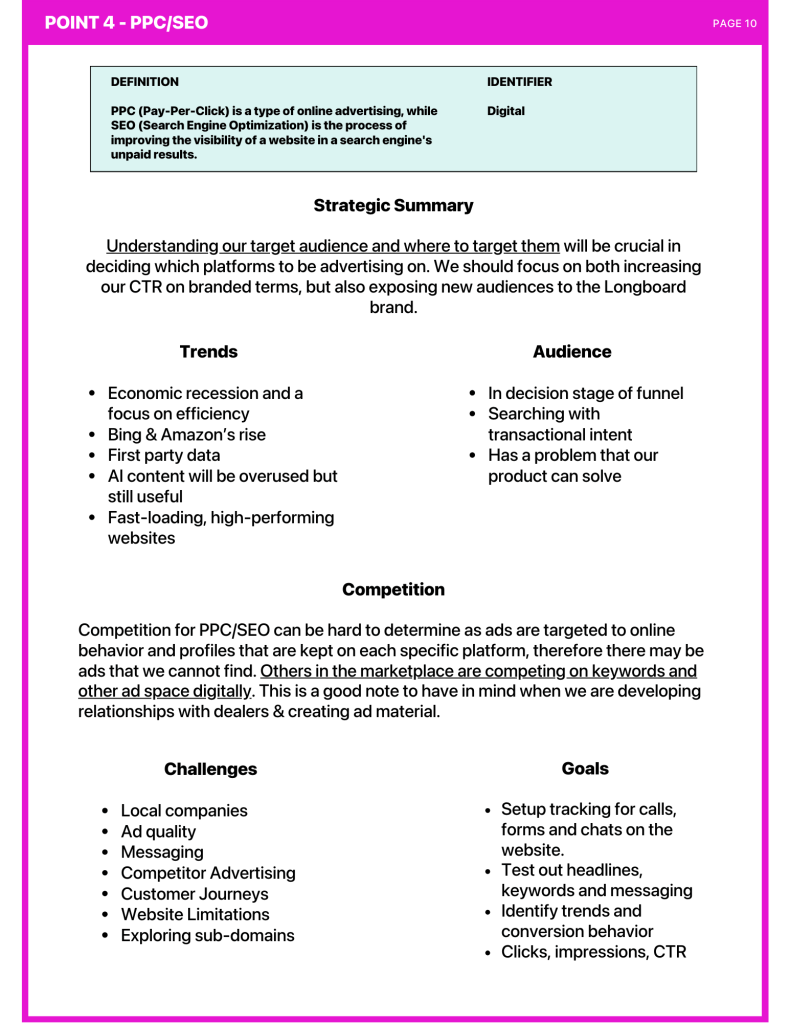
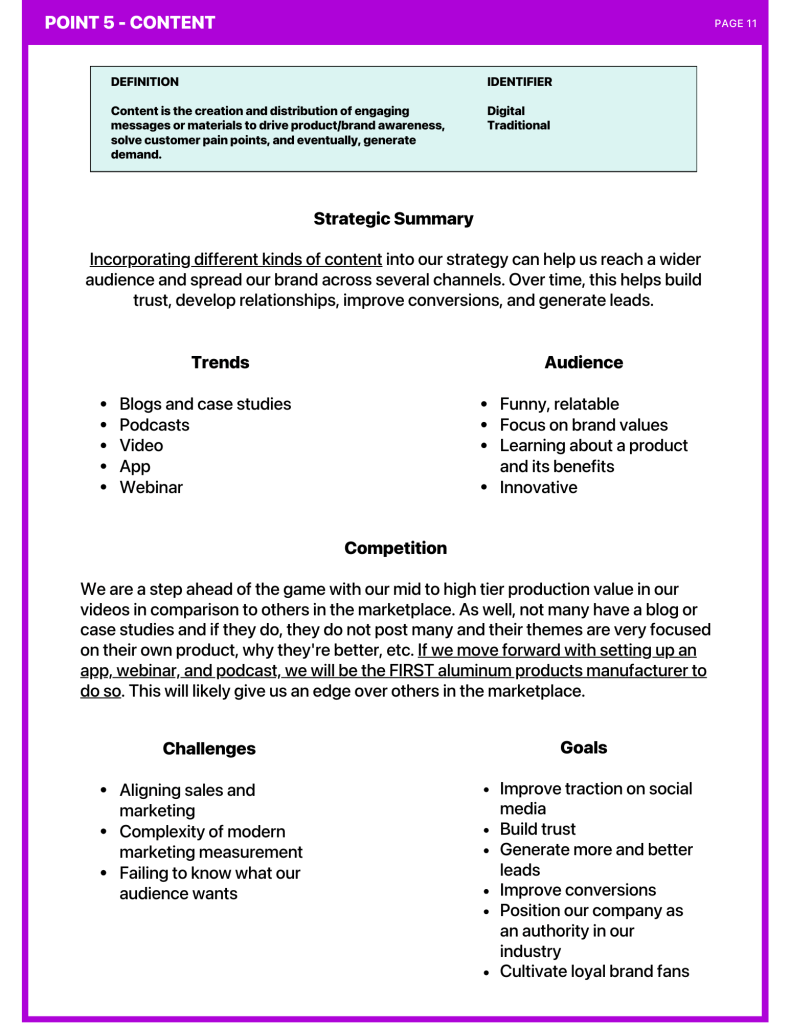
The 9-Point Channel Strategy is an integrated approach to channel marketing where the primary goal is to understand your market segments and audience so you can deliver campaigns and projects that will produce results, all while driving your mission and vision forward.
By organizing each channel according to activity and assigning roles and responsibilities to the team (RACI chart), you can plan your delivery and create an inspiring experience that results in alignment between identity, delivery, and experience. This framework provides marketing teams with a structured, repeatable approach to align business goals, customer engagement, and brand growth across traditional and digital channels.
The 9-Point Channel Strategy model resembles a rotary phone because every channel (digit) must be dialled deliberately, in a sequence, and through a central hub (budget + analytics) to connect the organization to its customer outcomes (the call).
Why Structure Matters in Marketing
Most marketing teams suffer from one of two extremes: ad hoc creativity with little consistency, or rigid planning that fails to adapt to market shifts. Neither delivers sustainable growth.
The 9-Point Channel Strategy strikes a balance.
At its core, it emphasizes organization, planning, and resource allocation. These are not administrative details; they are the foundations of scaling. A Harvard Business Review study found that companies that link project management discipline with strategy execution are 70% more likely to outperform their peers.
By organizing around nine integrated channels – SEO/PPC, Content, Swag & Signage, Communications and Relationship Management, Tradeshows & Events, PR & Media, Website & Apps, Email Marketing, and Social Media – companies create a roadmap that both grounds their brand and gives teams the agility to respond to change.
From Brand Awareness to Measurable Revenue
Marketing is not just about visibility. Done right, it drives the business. Done wrong, it can degrade the brand and dislodge the customer journey.
So, it’s vital to understand how each channel works singularly and in groups (Channel Groups). Research by Nielsen shows that brands with strong integrated campaigns achieve 31% more effectiveness than those using single-channel approaches.
The 9-Point Channel Strategy is designed to move organizations along this path. It improves:
Brand Awareness: By consistently activating channels that reinforce identity and voice.
Customer Engagement: Through storytelling, dialogue, and relationship management across touchpoints.
Sales Impact: By aligning marketing activity with measurable outcomes such as lead quality, conversion rates, and pipeline growth.
For example, when I applied this framework in past roles, companies saw up to 600% growth in engagement and $25M in new business pipeline opportunities.
It’s critical to understand that this doesn’t just happen out of sheer application – it’s the targeted execution that matters most. It’s like a causeway. You can allocate resources to support your teams, all while understanding your business needs more accurately.
Furthermore, the 9-Point Channel Strategy guides the creation of marketing and sales materials, the development of strategic regional campaigns, and the collection of valuable data using the software and tools you have in place. By investing more time into understanding the potential of your market and the journey your clients take, you can influence product development, boost brand recognition, and more.
You will also improve your breadth of knowledge and meet changing client requirements more quickly and effectively. Client satisfaction will rise, as will your future revenue and profitability. Your reputation will grow as you raise awareness for your company and industry.
The Agile Imperative
No framework survives long if it can’t adapt. The 9-Point Channel Strategy incorporates principles from the Agile Marketing Manifesto, which emphasizes experimentation, cross-functional collaboration, and responsiveness to change.
Five rules serve as guiding pillars:
Focus on client value and business outcomes over activity and outputs.
Deliver value early and often, rather than waiting for perfection.
Learn through experiments and data, rather than opinions and conventions.
Collaborate across functions, not just within silos or hierarchy.
Respond to change by following a static plan.
This isn’t just philosophy. According to AgileSherpas, 42% of marketers now practice some form of Agile marketing, and those teams are twice as likely to report success as their non-Agile counterparts.
To put agility into practice, leaders need guiding principles that balance flexibility with discipline.
Principles for Execution
To embed agility within structure, leaders must:
Align closely with internal and external stakeholders through transparency and trust.
Encourage diverse perspectives to fuel creativity and innovation.
Operate at a sustainable pace, balancing urgency with long-term growth.
Empower small, cross-functional teams who are motivated and trusted.
Continuously refine brand and channel fundamentals—because agility alone is not enough.
The best marketing programs are not built on one-off bursts of inspiration but on disciplined iteration. As Reid Hoffman, LinkedIn co-founder, once put it: “If you are not embarrassed by the first version of your product, you’ve launched too late.”
The Call to Leaders
The 9-Point Channel Strategy is more than a checklist – it is a system for growth in an unpredictable market. By combining structure with agility, organizations can achieve clarity, consistency, and measurable outcomes while staying aligned with their mission, vision, and values.
In an era when customer attention is fragmented and competition is fierce, the companies that win will not be those who do more, but those who do better. Integrated and agile marketing is no longer optional – it is a prerequisite for sustainable success. The 9-Point Channel Strategy offers a path to do just that – driving clarity, consistency, and sustainable growth.
If you’d like to explore how this strategy can work for your business, feel free to reach out to me anytime – info@chonafecanlas.com.
Thanks for reading,
Blox.
PS – Below is an example of a preliminary exploration I did for a company. Let me know if you’d like to chat more about it!
Capturing imagery + text in an intertwined relationship is fascinating work. There’s something about mingling elements, contrasting colours, and purely expressing a message that excites me.
Infographics are a great example of this type of communication. Well done work leaves me breathless (in a good way). So, to jump right into it, here are some things to consider when creating powerful infographics.
An infographic (information graphic) is a representation of information in a graphic format designed to make the data easily understandable at a glance.
Why do we use them?
Infographics are a great way to communicate ideas quickly and effectively. They help to simplify the process of presenting a message or data and help to establish connections, patterns, and relationships that allow us, as the viewer, to gather specific information.
Anything that’s too wordy, difficult to understand, or mind-numbingly full of roundabout detail. And it’s not about getting a quick fix. Some of us—me on occasion—enjoy digesting a mouthful of words. Still, no one can deny that pictures make everything easier to take in!
In 2019, 74% of marketing content contained a visual element. That’s not surprising, considering a whopping 90% of all information transmitted to the brain is visual.
Leaving us to believe that when you come across visually appealing content, you are much more likely to retain it. You might even share it with someone else after you’ve frolicked in its delight.
Taking inspiration from that which is shareable is also a thing.
I often create based on how much I liked LOVED something. I am graphically illuminated so much easier these days with all the impressive infographics to learn from!
They’re important, guys, for so many different reasons. But to summarize—infographics are important because they help us tell a story in a way that’s accessible to our audience.
Just the words below will let you know why.
Words that your infographics should be –
What’s the blox. way to create infographics?
Follow these steps:
1 – Find an appropriate ‘chunk’ of content you would like to translate pictorially, or that is so dang interesting, it’s already sparking imagery in your head.
2 – Follow your brand guidelines—typeface, colour, spacing, tone etc.
3 – Create to your heart’s content but make sure each element flows into the next. Continuity is critical, or you risk altering the message or even worse, spreading an inconsistent idea.
4 – Aim to make your infographics attention-grabbing and playful. People are much more likely to engage if they’re looking at something that incites positive emotion.
5 – Incorporate text carefully and precisely The text you add should uplift and reinforce your main message. Make sure it supports the imagery you are using!
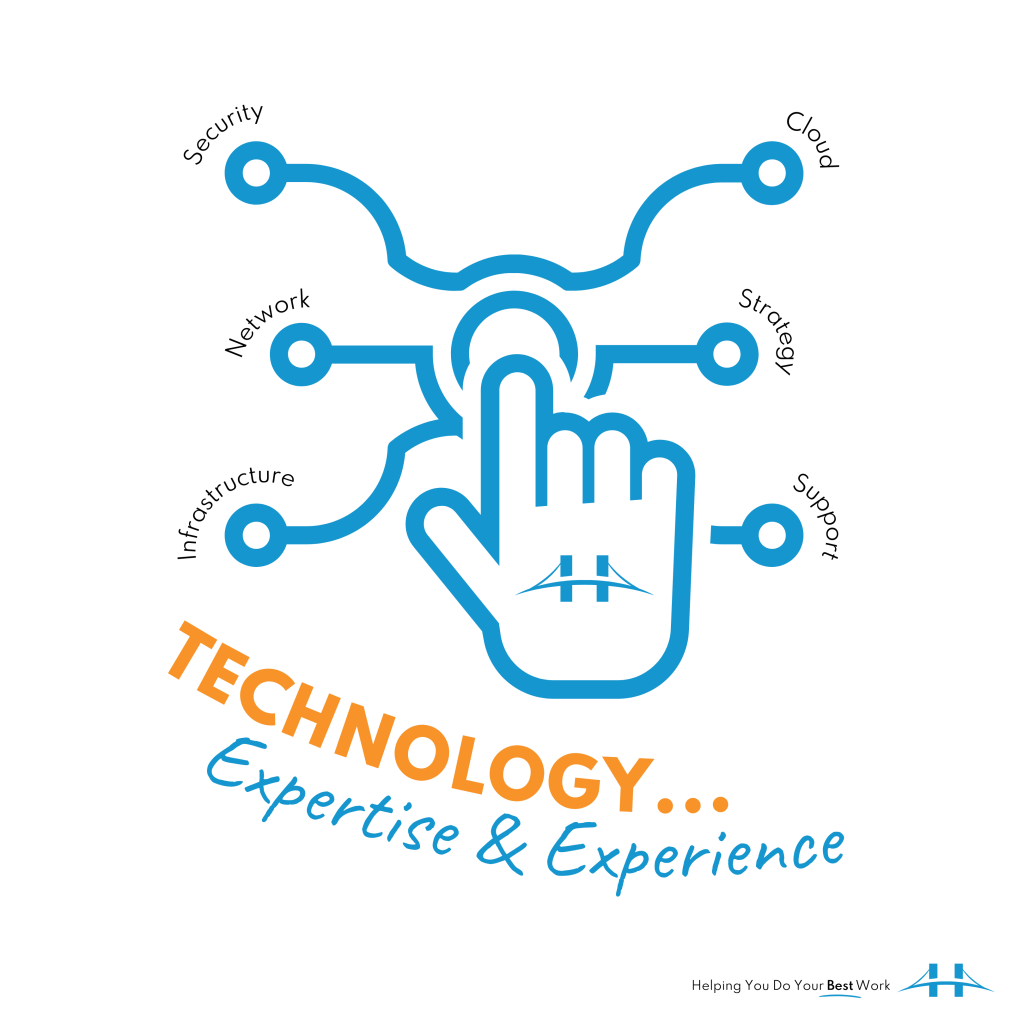
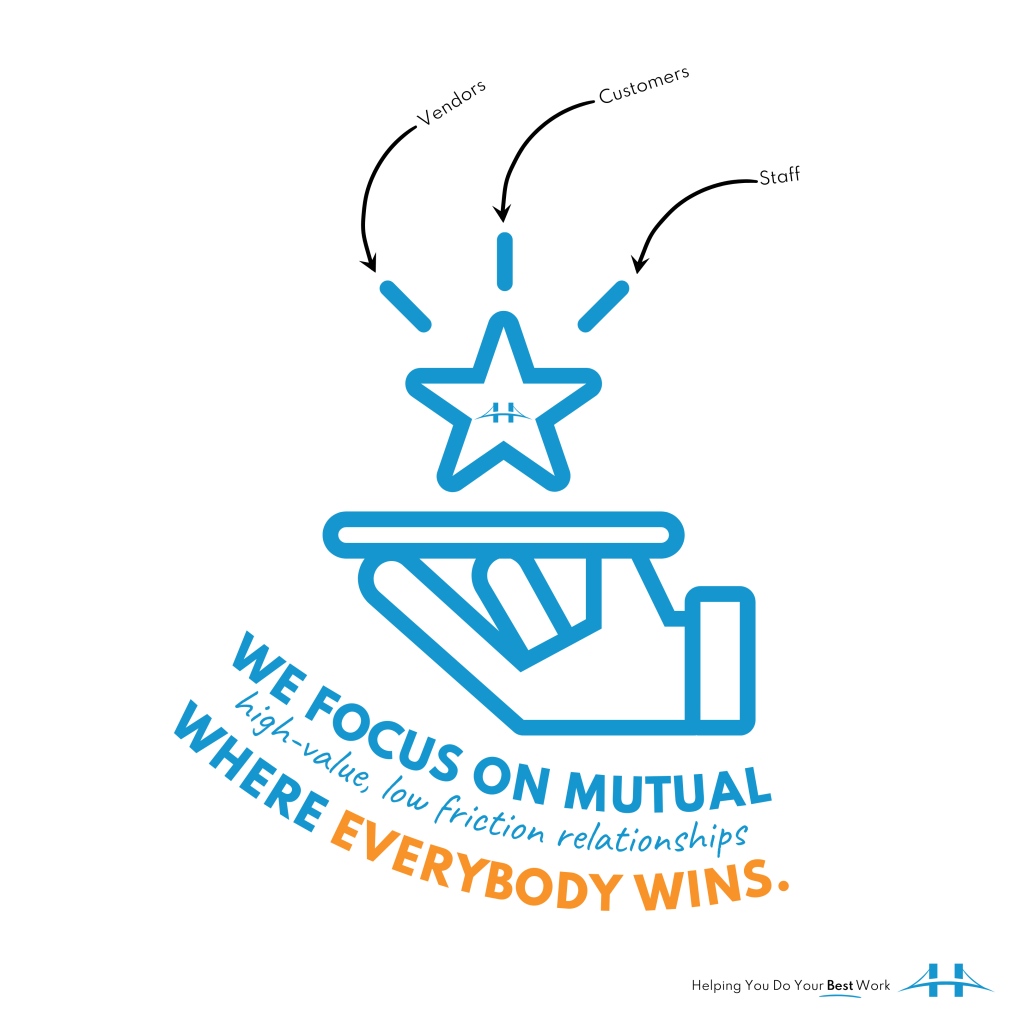
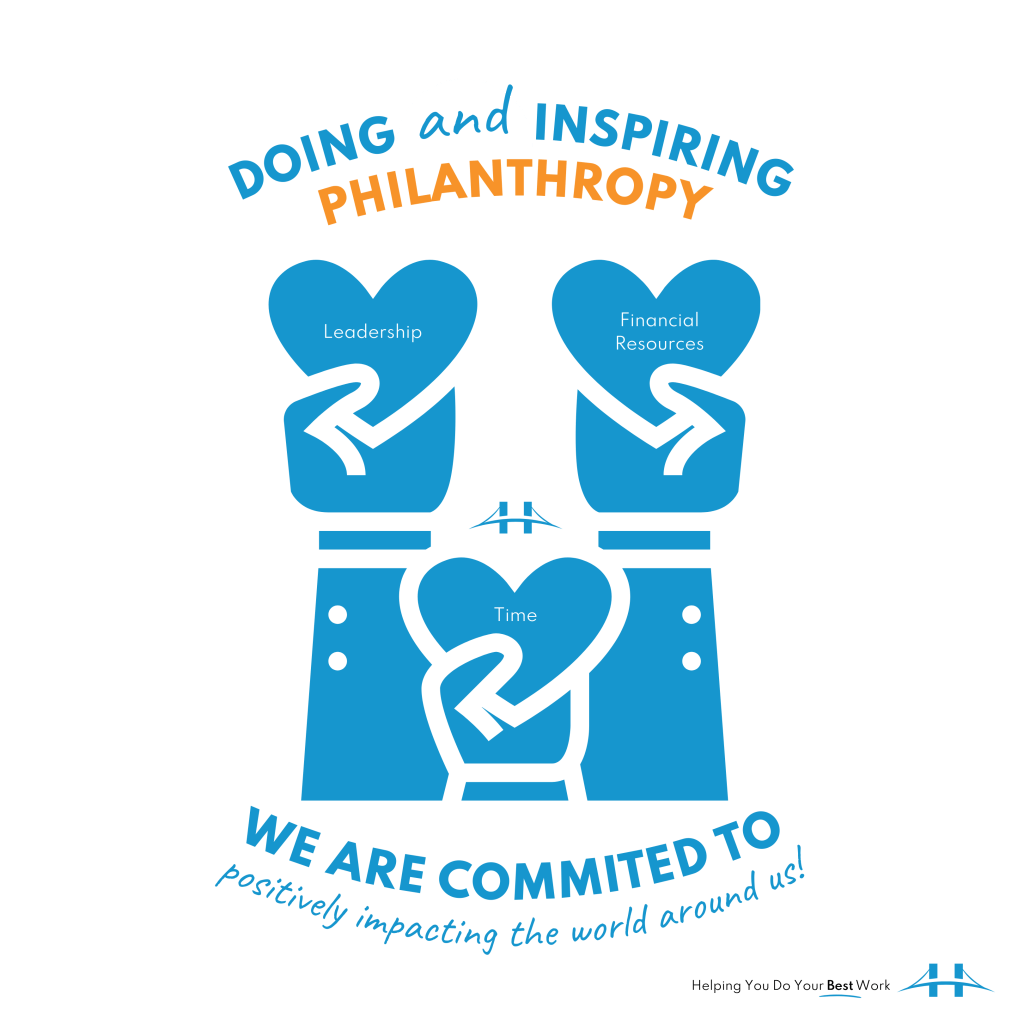
I am so excited to share these because designing them was such an enjoyable experience. I feel like I achieved what I was going after—visually describing our work and what we want to be known for (our #bestwork). I hope you like them! If you have any suggestions for modifications, let me know, I am always happy to make things #better!
Yearning for more design content? Check out these blog posts:
It’s been a while since we’ve presented. With everything going on – ‘the virus’ (as my daughter likes to say), working from home and adjusting to business challenged by a paused economy, we’ve put a hold on Marketing Training. To be honest with you, I’m just amazed to hear about some environmental happenings – jellyfish swimming in the Grand canal for example, just astonishing. Perhaps all this social distancing and staying at home will amount to noticeable improvements in our current climate. That’s something that actually matters today. I have a theory on how COVID-19 relates to AI, but that’s my vision, for now, have to figure out how to break it down first before I go off as I do, you know the gist. For now, here’s a presentation on elevating your marketing approach. Enjoy!
At my new job, we run group presentations every Friday. This is my first contribution, which talks about 2 useful acronyms that can be leveraged in content marketing. Let me know what you think!
Do we all love Grinch green? The original green colouring of the Grinch was inspired by a rental car. This reminds us that inspiration can strike from anything, that’s how easy it is to come up with new and innovative ideas. Just look, see & apply!
Started a new project focused on communicating some mainstay ideas relating to my business entity Blox. Communications. My aim is to further develop my use of transparent, accurate and responsible language. Hope you like this content, let me know what you think!
My work strategies always begin with my mission statement (or simple variations of it) – Simpler is Larger.
In other words, we must create work that is easy to understand, so that businesses can afford more time and apply more effort toward ‘larger’ things.
Read this quick review on supporting businesses using social media strategy.
1
When choosing clients, consider engaging with businesses that are focused on change or influence. Clients should be dedicated toward defining or refining their digital marketing plan.
An example of change could be increasing purchases of an item that has just entered the market and the business’ product list.
An example of influence could be supporting a new real estate development that gives back to Indigenous groups.
2
We should launch campaigns that matter to the community and foster promotions that “persuade target audiences of the relative merits of a product, service, brand or issue”. Think objective and the answers to it. Will the audience (buyer) believe in what they see? Does it make sense? Does it make the business more approachable? Will the work and project parameters make us (seller) happy and productive?
An example of a campaign would be to recognize employees within a large organization. This matters because each employee plays a specific part in helping the company succeed. The employees represent community, because they live where they work and work where they live. Think local (global further down the line), sustainable, viable and profitable.
An example of a promotion would be to develop quick, one-minute videos showing customers a range of products and how they could be used at home. Imagine a household cleaning products line or sleek and modern furniture for the bedroom, then promote the best-selling features of the products in an environment where buyers dwell. Think top of mind, clear, fast and evergreen.
At the end of the campaign/promotion cycle, offer an appealing call to action like, “Our products are made with environmentally friendly, cruelty-free ingredients! Click here to see PROOF and we’ll send you a FREE antibacterial cloth!” Or, offer a discount on stale inventory like, “Receive a FREE eco-friendly table lamp with any purchase of a nightstand!” Think longevity, adaptability, convenience and action.
3
The next step is establishing or fine-tuning the objectives for presentation. We need to understand the business’ identity (more to do with the company itself)and image (more to do with their brand) to develop an effective expression of their work.
Some examples of identity aspects would be things like catch phrases (trendy sayings), slogans (company mottos), keywords (descriptions), tone (for example academic or casual), values, a mission statement and a vision. Identity aspects can be imbued in the work and are most likely to be effective in a post’s caption or ad copy.
Some examples of image aspects would be things like branded colour scheme (best to stick to one or two), a logo (optional), a tag (optional), branded typeface (best to stick to one or two) and style (for example, sleek and modern). Image aspects can change, it’s important to be flexible.
3
Next, true potential will be revealed via design elements, bringing everything together for the audience to capture. The best design elements to consider would be things like source (where is the content coming from – stock imagery or work from an artist), medium (what forms do they want to use – photography, graphic design, text-based, video etc.), composition (how will images be composed), pattern (what pattern will the posts follow) and grid utilization (applying creativity to posting layouts).
4
The main goal of a social media strategy is to achieve balance + harmony with the work itself and to find the ‘sweet spot’/the magic for HOW the work is done. You will know your goal has been met when 1 – both the Seller & Buyer are satisfied with the results; 2 – an efficient workflow has been put into place; and 3 – you have a good idea of HOW to put everything together for publishing. And with the right timing/scheduling and succinctly, yet artfully composed caption/copy, clients’ social media platforms will sing! Think always compete with the best.
5
Remember, if our work is easily understood and done, then the client’s business can consider a greater capacity (which in turn opens up new avenues for us!). Have metrics set up to evaluate the work. If businesses are wondering HOW to put together the required metadata (aspects and elements) / to successfully scale relevant data (the large scale attributes like brand image and company identity) / which in turn impacts the fluency and efficacy of their overarching campaigns and promotions / we can provide a concept kit in a simple and easy to read format.
If you’re enjoying this new listicle style I’ve been using lately, please let me know. I would be happy to produce more work this way.















 Blox. is a Creative & Technical Marketer