5 Ways Social Media is Changing the Way We Communicate

Hey everyone! 

Let’s jump right into it. 

We all know things are different. We rarely use our phones to place calls anymore. Progressively, we are relying on different social media platforms to reach out – to friends, family, co-workers and customers. We can interact with more people at once. No need to place a phone call (unless you want to close a deal); we can send a snap using Snapchat, add tags to Instagram Stories or relay continuous messages via applications like Facebook Messenger. And think, we are doing this while doing the same thing with others. All at once. In synergy, together. Thing are really changing!

The following listicle written for Jelly Marketing, touches on this new ‘permanent impermanence’ or our ability to communicate in infinite ways via digital platforms, a.k.a. social media. Social media is here to stay. Read on to find out HOW social media maximizes communicative potential!

1 Creating New Sets of Social Skills

One of the most amazing ways communication has changed via social media, is in its integration of new sets of social skills or groups of attributes more focused on visual communication. The people we are interacting with are more inclined to be engaged, because they are constantly absorbing positive social imagery – videos, gifs, stickers, emojis and even colourful applications in the form of digital writing instruments like pencils and paintbrushes. Communication has become fun! It’s almost as if this function of elements has paved a way for our social skills to light up a space. Try using Canva to bring light to your brand, for example. In this space, our feelings and emotions are heightened, so as a result we are more likely to engage in this new way, time and time again. In our current adaptive environment, this may contribute toward new forms of success.

New York Behavioral Health emphasizes this idea stating –

“Our ability to process emotional cues is associated with personal, social and academic success (Knapp & Hall, 2010).”

2 Leading with Identity

Social media has provided us with ways to express ourselves, something that is more difficult to do in a short face-to-face encounter or during a mobile phone call. We can use all the different platforms to form our image & identity, then we can choose the ways we want to share this information with others. And the greatest thing about social media is that again, it is a 2-way communication channel, so we can interact with other individuals who have similar interests or attributes. This may increase our levels of self-image or esteem. Of course, there are many discussions that would argue against this, but the point of the matter is – it’s your identity and YOU can choose. We can start to pick apart our best features and develop them further using social media aspects like, a profile picture or Facebook cover photo. Even curating a group of boards showcasing who you are and what you like on Pinterest can help develop your identity!

Dr. Uğur Gündüz is an Associate Professor at Istanbul University for the Faculty of Communication and he wrote a research article published in 2017 for the Mediterranean Journal of Social Sciences on The Effect of Social Media on Identity Construction (www.degruyter.com).

Here is an excerpt relating to my idea of leading with identity –

Social media enables identity expression, exploration, and experimentation; something natural for the human experience. It is the agencies in real life, which provide a source of names for different sectors, that inspire the internet communities and the interactions they make within themselves.

3 Adaptive Learning

The ways that we communicate via social media are vast. It is not only a means to communicate with other people in new and creative ways or for establishing a specific digital identity. It is a structural tool that can be used to learn, teach and educate ourselves and others by employing incentive and authoritative techniques. Take for example, Instagram. Today’s Social Media Coordinators put together detailed strategies while skillfully composing content + format. We are learning to use the left side of our brain by applying grids, patterns, permutations and combinations. On the other end of things, we are training the right side of our brain by developing context and adding visuality to the mix.

The future of Generation Z will rely on social media to communicate findings and research relating to topics that are impacting the world. A couple of examples are the state of the science behind climate change or evaluating mental health based on technological consumption. According to a recent study, more and more teachers and professors are incorporating social media into their classrooms to engage students and support their educational development, whether online or in person (Ashford University).

4 Critical Mass

In marketing, critical mass is the idea that one, small movement in the form of an idea or expression can expand the sheer power and capacity of digital media. This can work in two ways, one – it helps users become aware of today’s most pertinent topics, current events, trends and critical intelligence that affect the way we communicate and do work. We don’t need to rely on a newspaper, we can obtain various points of view on the same topic from several different sources. Then, we can cross-postulate for our own purposes or to share with others across platforms like a blog or company e-newsletter. We can even use the least amount of words to create sustainable influence and significant reach (Twitter). Sharing information has never been so easy! We need to take advantage of critical mass in that sense. The second way is – contributing toward HOW businesses communicate. This impacts brand awareness, brand loyalty and even methods for prospecting and retaining clients. Sellers and buyers can flaunt their understanding of today’s fluctuating market (not just stocks and bonds stuff) without having to depend on outside sources, if they are connected to social media. It’s a two way street and we’re giving each other high fives!

Merriam-Webster points out that, “Once these elements reach the size that enables a company to operate efficiently, it is said that a company has reached its critical mass. Critical mass is the point at which a company becomes profitable.”

In this case, the elements are social platforms which provide new hubs of information that can make or break a company’s profitability. Social media has truly become a vital and crucial form of business development. Businesses cannot thrive without it. We communicate and work with it. Period.

Check out this article for more information – Social Media: The World’s Newest Source of Profit

5 Communicating Your Vision

In an era prior to social media, how did we figure out or map our goals? Probably with a vision board, a thought bubble written down on paper or by simply sitting down, daydreaming about what we could accomplish. This has changed so much today. Now, we can objectify our goals and visions using platforms like LinkedIn. Here, you have ample space in the About section to describe your ideas. It becomes a part of your LinkedIn profile, so other people, including employers, can see what you’re all about. But what’s even better is, you can use this section to produce timely updates relating to your journey. Others are watching and they can see the progression.

Instagram alone has become an indispensable tool for business owners. Through thoughtful curation and strategy, businesses can be portrayed in a respectable light that touches on what they offer, how they care about their customers, and in other words, what they do best. Think – campaigns that reflect a company’s core values, promotional posts that keep customers interested in products and services or spotlights on employees and company best practices, so customers can really know what they’re putting their money toward.

The hope for today is that we may collaboratively succeed using our most innovative tools (social media) and techniques (social media strategy), to communicate with others from all facets of life.

Jelly Marketing is an award-winning Digital Marketing & PR firm providing digital ads, social media, SEO, & public relations services to brands in Vancouver and the Fraser Valley. Their case studies explore various client objectives and the innovative + mainstream ways we can produce results by catering toward communicating vision. Have a look!

That’s it for today and remember everyone, always think of PRAC and are you living it today – Popularity, Relevance, Authority & Credibility.

The power is in us to incite wonder and change!

Talk soon!

Redux – A Work in Progress

(Title inspiration: Reduxwood West)

Hi everyone!

You can find the original blog post under the name A Work in Progress (you can also find it under Technical Work on my homepage).

Since determining that my actual most fit vocation is art/creative direction (yay!), I had to update the original post for transparency and accuracy. I guess the act of doing that is responsible!

Another thing to clarify – saying ‘customized content solutions’ is just a more ambiguous way of saying art/creative direction. And, saying ‘define or refine your brand’ is my way of slowly dissecting the meaning of Digital Presence and how it can impact a business’ success. Is it not crazy to think only half a year ago I didn’t respect my artistry (and 20+ years of it)?! INSANE!

Imagine this graphic in a movie’s title credit (inspired by Star Wars).

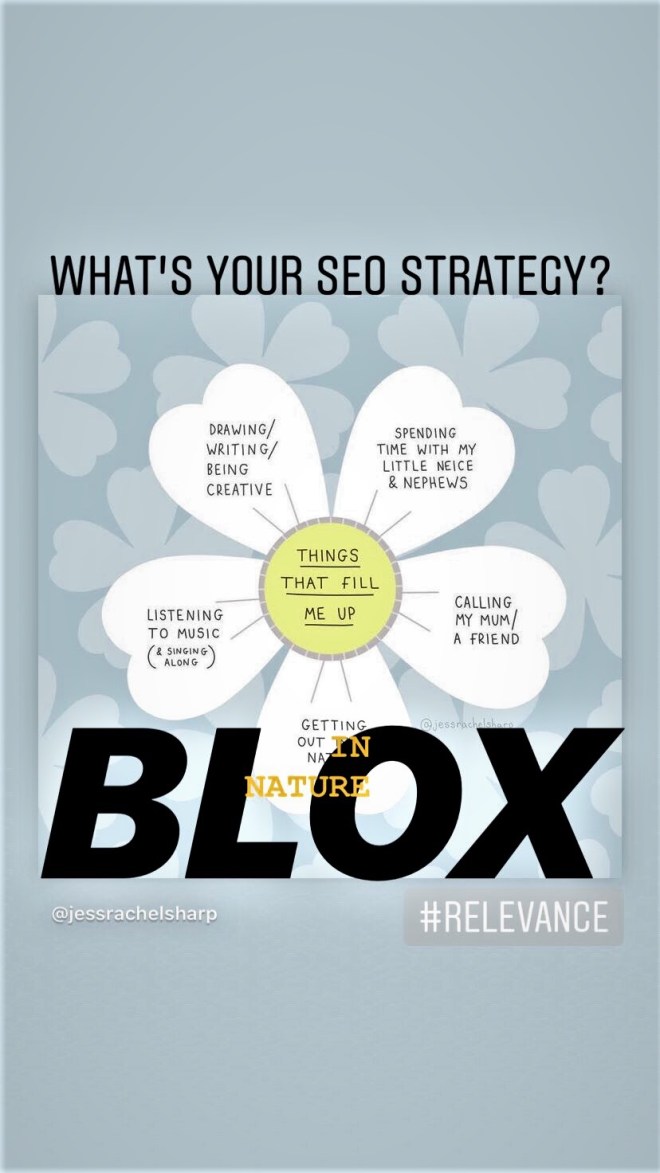
Blox is an artistic identity that was developed in the early 2000s. Since then, it has become a moniker for Chona's creative and technical work embodying explorations of (a concept she developed called) Digital Pre


Tweedle Seller & Buyer Lookin’ Right

5F3E09B7-5BCD-42CA-B42F-CDFF95AA6189

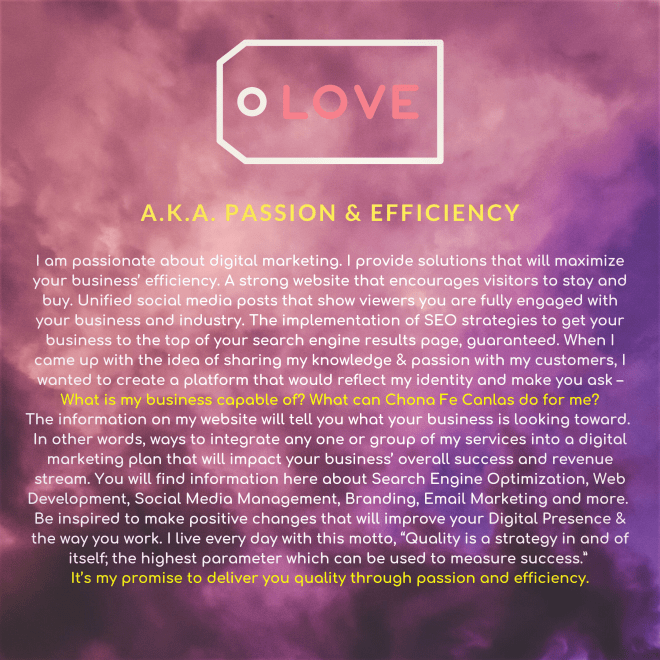
Passion & Efficiency

a.k.a. passion & efficiency (2)

Past Experience

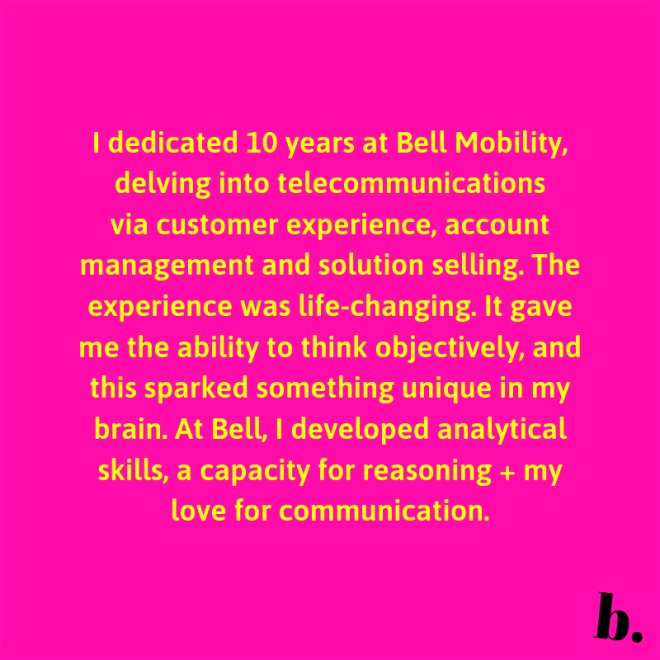
I dedicated 10 years at Bell Mobility, delving into telecommunications via customer experience, account management and solution selling. The entire experience was life-changing. It gave me the ability to think (2)

Copy of Untitled Design (1)

Fruit Salad

Hi everyone!

These are the kinds of stories I love telling my daughter, Bishop. I want her to understand linearity and its purpose. So in the most basic of elements, the beginning and an end. Also, inserting subject matter that she is currently familiar with, like numbers, colours and fruits. Her stories lately start with, “One day!” as if she is saying ‘today’ with so much resolve, confidence and sobriety. She is not referring to daydreams in or of the future. It is a great mentality that I sometimes wonder (with my preposterous knack for discounting – this is why I value BELIEF), did she get that from me?

The answer is: Yes, she did. Of course!

If all else fails: trust your daughter!

Enjoy!

Abstract – the / an / referring / which village are you from

She bombed down the hill, biting her teeth into a teal blue apple. The shiny surface reflected confidence and her sobriety. She was going to win this game! But then suddenly, the mysterious sasquatch was coming. She could hear his roar and he zoomed through the trees landing victoriously onto a pile of soft snow. His green tuque made him look like a kiwi fruit. Bishop was suddenly starving, but there was no time to stop.

A team of yellow capricorns danced around the finish line, laughing and hiccuping at the sight before them. The orange judge was serious and studious. He seemed to bear more focus on his clipboard than on the race. Flipping her hair and toying with the pens behind her ears, another judge was vivacious and fixated. Her red dress was imprinted with marigold polka dots and it swayed in the warm breeze felt by all at Sunshine Village.

Village A is competitive. Always looking for the advantage. Has an alarming penchant for recognition, which bears a sense of positivity in their pursuits. Village A is not at first welcoming, but becomes comfortable if their surroundings seem to agree. 

Suddenly, Chona came flying down the narrow corridor wearing a vintage, pink one-piece snowsuit she found at Value Village precisely 10 years ago. There was no one behind her at this point, so she raised her arms proclaiming, “Funny. These bags seem heavier than they were yesterday. My stuff must have grown!” The clock was ticking down to the last few seconds, then a huge bell signalled the end of the race.

Village B is innovative. Always looking for the answer. Has an alarming penchant for reassurance, which bears a sense of positivity in their pursuits. Village B is not at first welcoming, but becomes comfortable if their surroundings seem to agree.

The champions switched outfits (because that’s what champs do when they win) and all stood boldly on the podium, waving arms, pleasing the crowds who came to watch them.

“Purple purple. The medals are purple! That is so cool!”

SEO

Hi everyone!

Just a short burst of info here. What are you drawn to? Do the colours play a significant role in your interpretation? What connections can you make with the chosen imagery attached to each hashtag?

A perfect brainstorming exercise for design newbies – make a list under each hashtag including transferable elements (actual aspects and items like a brand name or object) and attributes (descriptions and words) for each. Aim for 50 answers, then narrow down to your top 10 answers, then again to your top 3, then top 1. What conclusion can you draw from this experiment?

Always remember the acronym PRAC – Popularity, Relevance, Authority & Credibility. This will help you target your audience and ensure that your content is set up to improve your overall search engine rankings.

Yes, yes…SEO is a lot more complex than a simple acronym, but sometimes starting off with something more general helps to develop your digital marketing strategy or plan more succinctly down the road.

I will get into this topic (SEO) further in the  future!

8516971dc8824311b90739d6057393fc_Moment

3BC9F832-AADE-448A-A8C6-FBD0EEE0A5CE

FA7C92B5-50E1-40FE-A711-714E4251A799.jpg

B63AA3B1-EB38-4600-A85B-35C7CC4B6A72.jpg

Visual Transparency

Hi everyone!

Today’s topic is SMART Goals.

A brief definition of each objective and an example of how each objective can be applied to achieve an effective creative technical writing style.

Here, I am writing about visual transparency as it relates to an image I designed for Blocks, my first and ongoing social media management strategy. Blocks aims to explore left and right-brained thinking and our ability to control destiny (or in simpler terms, improve issues of self-image or esteem.) Note: Initially, I was going to include the image in this post, but the relevance of my imagery is too swift. I will always include my most recent works to keep you up-to-date with my current visual style and tone.

As an extra creative exercise, try to imagine a fruit to attach to each objective. How does it relate to the SMART goal and our definition of visual transparency? Could you affix these tasty symbols to a billboard? What would be the significance? How effective would say, a giant teal apple be at communicating a specific message?

I will post the fruits on my next post tomorrow!

BEGIN

HEADING: The heading is the text indicating the nature of the article below it. The large type front page headline did not come into use until the late 19th century when increased competition between newspapers led to the use of attention-getting headlines. (Wikipedia)

WILL IT ENTICE YOU IN A GLANCE?

SUBHEADING: For documents longer than 3 or 4 paragraphs, subheadings are an important usability and accessibility strategy to help readers both determine the overall outline of the document and to navigate to specific information on the page.

VISUAL TRANSPARENCY AS A COMMUNICATIONS STRATEGY

SPECIFIC: Goals that are specific have a significantly greater chance of being accomplished. It should be well-defined, clear, and unambiguous. Essentially a definition of your idea that allows your audience to understand your topic more accurately. (CFI)

Visual transparency, from an artist’s standpoint, is a form of contextual openness that allows viewers to become engaged on a more subconscious or subliminal level.

MEASURABLE: Goals that are measurable have criteria for measuring progress. Criteria can be in line with your vision, mission, values etc. The point is to measure your progress somehow, for example, how would you measure engagement or participation? Is the action itself significant enough? In writing, a statement of intent is a great way to achieve a sense of measurability. (CFI)

As a writer and digital specialist, the goal is to be transparent, accurate and responsible. As an artist, I simply want to be engaged with my work and for my viewers to participate. Note: professional transparency has more to do with how others perceive you and what your actions say about your brand.

ATTAINABLE: Goals that are attainable help you figure out ways you can realize an objective and work towards it. The achievability of the goal should be stretched to make you feel challenged, but defined well enough that you can actually achieve it. It would be a good time to insert your call to action here. (CFI)

With all of the outlets available, viewers can participate using whichever preferred medium they desire. And they don’t need to be 100% engaged for it to matter. For example, your interaction with a billboard might only last 5 seconds, so the argument could be that visual transparency is actually quite critical.

RELEVANT: Goals that are relevant must be realistic given the available resources and your timeline. What would be the innovative or mainstream approach? What are pertinent examples you can showcase? What will be the outcome? Ideal or realistic? Your exploration should be relevant to your life’s or work’s purpose. (CFI)

This is who we are today. We embrace a fast and furious approach to everything and criticize the results. From placing mobile food orders to providing subscribers with a mere minute to execute a successful Instagram (video) campaign – the faster we engage our viewers while applying visual transparency, the more likely we can succeed in delivering our message.

TIME-BOUND: Goals that are time-bound must have a sense of a start and finish date. What is it like today, what will it be like in the future? If the goal is not time constrained, there will be no sense of urgency or motivation to achieve the goal. What is causing the urgency for action? Are we in a position to answer or question? (CFI)

Perhaps one day it will be different, but for now artists and marketers must adapt to these swift modes of communication. Visual transparency will become the norm, then who knows what will be next…

END

Does using the SMART goal technique help you? I believe that it is a great stepping stone towards achieving a more clear and linear style of communication. Test it out!

Meanwhile, dear Alice is still falling…

down?

below?

towards?

76c60b704f37267d3082e8effe39302d

5 Influential Marketing Personalities

Hi everyone! Without further ado…

We crowdsource (ideas). It’s our membership and contribution to the digital landscape. Wikipedia says –

Crowdsourcing is a sourcing model in which individuals or organizations obtain goods and services, including ideas and finances, from a large, relatively open and often rapidly-evolving group of internet users; it divides work between participants to achieve a cumulative result. The word crowdsourcing itself is a portmanteau of crowd and outsourcing, and was coined in 2005.[1][2][3][4] As a mode of sourcing, crowdsourcing existed prior to the digital age (i.e. “offline“).[5]

Crowdsourcing is a great way to develop content and topics for your target audience. I put together a listicle based on a few influential marketing personalities I admire. In my opinion, they provide some answers (to my design life) and a unique perspective. I hope  they can help you in any way, shape or form.

Also, here they are in a creative digital collage. Does it make you crave mangoes or money?

AA1581DC-2E9C-40B0-956F-8FBD3D35157C

1


Chris Do, Matthew Encina & the team at Blind

It started with advice from my brother. He goes, check out the vlog by The Futur. This happened right when I started at VanWhistle Media. I was looking for a way to feel inspired. These guys helped me identify high-end pricing techniques and I designed my website portfolio around a couple of videos they put out with creative director of Vrontikis Design Office, Petrula Vrontikis. I’m drawn to these guys for simple reasons – energy and passion.

2

Seth Godin

It started with an interview. Chris Do and Seth Godin, together, hashing out topics like, What is school for? Watch it on YouTube – Seth Godin—Make Something Everyday (Best Hour You’ll Spend Today). This was the first time I felt inspired to write continuously and I tried out (half of) his challenge by posting 50 blog posts, once a day. I didn’t quite make it to 50, but the point of the matter is, I identified with Godin’s creative process. He also coined the phrase Make Change Happen, a slogan I adopted for my artistic identity BLOX.

3

Barney the Business Guy

Just a straight-up, no fluff business guy, I follow Barney Cohen on Instagram. I can’t remember how our paths crossed, but he offers a refreshing, business-minded approach to life’s common obstacles. Coming from a corporate background, I identify with his mentality, clear reasoning and straightforward delivery. He has 50 years of experience in business, so his acumen is spot-on. You can check him out on Twitter as well.

4

Neil Patel

Shoot, I almost forgot! Neil is probably the most humourous, dramatic, yet to-the-point marketing entrepreneur I have come across to date. He helps me understand the importance of brand development and every time I come across his feed, I’m pretty sure we’re thinking the same thing. Quid pro quo at it’s finest, Neil can help you develop metrics that work and he will provide all the necessary reasonings behind it. On top of everything, he’s an excellent copywriter.

5

The Rock

To think mainstream is to truly understand the relationship between popularity and accessibility. The Rock shows us that fame can be your next door neighbour, unpretentious and welcoming. In the pursuit of greatness, his face and voice puts a sticker on my blank page. Everyone loves stickers. Not everything has to be complicated. Sometimes you are just a do-gooder with a gigantic heart. The Rock shares these emotions with me and his 154M followers.

What do you admire? Who inspires you to do better? Whether it be music or satirical retorts, we have something in common!


Consonance

IMG_2928

Hi everyone!

We do what we do! But without our mind getting in the way?

I sometimes find myself questioning my work. I ask myself – is it too ‘complicated’ for the ‘average’? Does it come off as ‘fluffy’ or ‘dense’? These words mean too many things, but we get used to one meaning, and that is not right.

And when our minds enter ‘the complex’, we should stop and perform self-talk. People avoid self-talk for fear that it gives others the impression that we’re ‘crazy’. I mean, my mouth moves when I’m thinking too hard! So what! Okay, it might just look ‘odd’. But nowadays, self-talk should be used as a positive, gentle form of therapy to get us back on track to believing in the idea of original intention. Google explores this concept readily, when it comes to understanding how people surf the internet. That being said, why is it today, that we feel an attachment to guilt, pity or shame when it comes to feeling a different way about something? Well, it could be ‘different’ things – an idea of interdependence, requirement or necessity.

When I came across the word consonance, I felt blessed and it quickly resonated with my current circumstance, because it challenges the notion of sleep (figure it out). Like take a break here and there, not everyone hates you, if anything shout it off the tallest rooftop – you are loved everywhere! Just go in with that attitude anyway, smile until it hurts. Find the humour in everything and go ‘nuts’, it’s not going to kill you to have fun! Here’s a bit on consonance as it relates to working and the whole job interview process thingamajigger.

Scott Olster, Ideas Editor at LinkedIn, wrote a brief article around “the idea of business trends, perspectives, and hot topics you need to know to work smarter”. He says –

Success can easily end up feeling hollow when it’s defined and measured by other people’s standards. For our work to have lasting personal value, author Laura Gassner Otting writes that we need to focus on developing what she refers to as consonance.

Laura is a writer for Harvard Business Review and she defines consonance as –

“Consonance is not just purpose writ large (and lofty). It’s your purpose, freely and clearly defined by you, and put into action through awareness of and alignment with your life’s plan. Consonance is when what you do matches who you are (or who you want to be).”

As I enter the interview zone, I will remember alignment with your life’s plans as another tip that will help me remember why this is taking so long. I’m dying here guys!

Hello. Thank you for the opportunity, now I have something to say…

Do you relate to this? What is the interview process like for you? Easy? Intense? How do you prepare?