Here are some social media videos showcasing the #corpcorp vibe.
We all know that these days, videos garner much more engagement than static images and visuals. That’s because they emit a sort of energy, which transmits directly to the viewer, influencing their experience with the content and helping them to make decisions that impact the brand’s ability to connect, sway, and sell.
In my opinion, a good short video pays special attention to the interaction between sound and movement – this in itself moves your audience along, can build anticipation, as well as excitement. Realistically, you have about 3 seconds to make an impression, so it’s critical to ensure the beginning of your video starts off with a bang.
I’m looking forward to creating more content like this! What’s your take on video creation to support brand identity?
When the magic happens, You’re making change happen.
Identity stamped to perfection.
Understanding:
style, thinking, love, goals and aspirations.
There are always ways to re-imagine.
Be who you are. Strive to be better.
*This is a new day, a new era. My new personal brand stamp marks each letter as if to say, “Hi there!” We need to have a conversation about creativity and art and art and creativity and that relationship specifically.
Creativity is necessary. It may not have always been that way, but today, it matters immensely.
Whether you’re an artist painting on a canvas (Are your colours ‘original’? Do they spark emotions we are starting to understand?) or a marketer crafting campaigns (Is your work pivotal? Does it imbue change?)—creativity is the spark that turns ordinary moments into extraordinary breakthroughs.
It’s the difference between refining and redefining.
It is a flash of brilliance.
A slow-burning fire built on curiosity and persistence.
The truth is that creativity thrives at the intersection of structure and imagination.
It’s where the messy “what ifs” meet the grounded “how-tos.” And at this junction lies the power to unlock potential within teams, organizations, and leaders. Oh, and of course, within yourself.
So, creativity isn’t just about expression; it’s about connection—linking ideas, people, and strategies in ways that inspire growth and, more importantly, progress.
It’s about being part of a larger community where each participant has recognized their unique capabilities. We have taken an intellectual oath that includes emotion and experience to persist and sway. To churn ambition into reality, to light the fire beneath, spark bold ideas and fuel new mindsets.
Lean into these queries the next time you feel stuck or uninspired. Funnily enough, doubt can take you there.
Marketing is an environment defined by complexity and constant change.
For example, AI has automated and streamlined processes such as social media management and content creation. Similarly, over the past five years, the world of SEO has shifted away from simply keyword tactics to a more holistic approach involving the rigorous understanding of user intent and experience.
A recent McKinsey study found that 77% of CMOs believe their role has increased in complexity over the past five years, while other research consistently highlights the importance of integrated, customer-centric approaches for increased growth and revenue.
Amidst this frenzy of marketing metamorphosis, we can now say that leaders need more than campaigns. They need systems. They need ways to leverage digital ecosystems while maintaining a hyper-vigilant approach to customer needs and overall growth. That’s where the 9-Point Channel Strategy comes in.
Delving, Developing, and Deducing
This complexity was not theoretical for me – it showed up daily during my Longboard days, when I was part of a small yet mighty team.
A few months into my role, I began to dream about creating a strategy that could answer some of the challenges our team was experiencing – a lack of organization due to poor project management skills, limited human resources to handle social media and email marketing tasks, and most importantly, misalignment and miscommunication with leadership, as well as missed opportunities to collaborate with cross-functional departments.
I wrote a business case and presented it to the CEO.
In my study, I explored all the potential projects and campaigns we could launch if only we were more organized and had more structure to our efforts. It was also the catalyst for doubling our team’s size. After a quick presentation of my findings, my request was quickly approved. I finally had the go-ahead to develop the strategy that had been rattling about in my brain.
A Holistic View
The lack of a holistic view is one significant challenge that spurred the need to develop the 9-Point Channel Strategy.
In holistic marketing, departments and the strategy work together to accomplish shared goals and support an overarching purpose. A holistic stance paired with a transparent purpose is pivotal to scaling efforts and driving incremental volume and revenue.
It allows you to step back and review your work, gaining a deeper and clearer understanding of how inputs influence outcomes. With this perspective, you’ll be better prepared to make thoughtful, proactive decisions. Once you develop a holistic view, you can begin shaping content and messaging that resonates across physical, emotional, social, and even spiritual dimensions. At its core, this unification can lead to outcomes that stand out and make a lasting impact.
The 9-Point Strategy
The 9-Point Channel Strategy is an integrated approach to channel marketing where the primary goal is to understand your market segments and audience so you can deliver campaigns and projects that will produce results, all while driving your mission and vision forward.
By organizing each channel according to activity and assigning roles and responsibilities to the team (RACI chart), you can plan your delivery and create an inspiring experience that results in alignment between identity, delivery, and experience. This framework provides marketing teams with a structured, repeatable approach to align business goals, customer engagement, and brand growth across traditional and digital channels.
The 9-Point Channel Strategy model resembles a rotary phone because every channel (digit) must be dialled deliberately, in a sequence, and through a central hub (budget + analytics) to connect the organization to its customer outcomes (the call).
Why Structure Matters in Marketing
Most marketing teams suffer from one of two extremes: ad hoc creativity with little consistency, or rigid planning that fails to adapt to market shifts. Neither delivers sustainable growth.
The 9-Point Channel Strategy strikes a balance.
At its core, it emphasizes organization, planning, and resource allocation. These are not administrative details; they are the foundations of scaling. A Harvard Business Review study found that companies that link project management discipline with strategy execution are 70% more likely to outperform their peers.
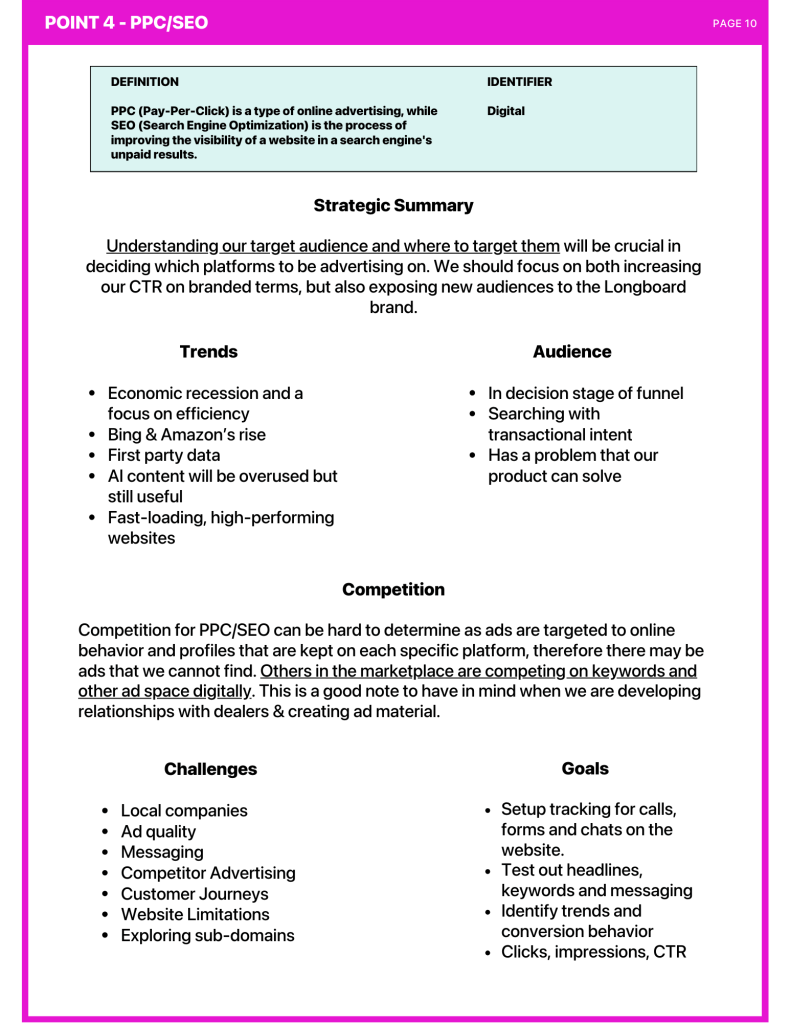
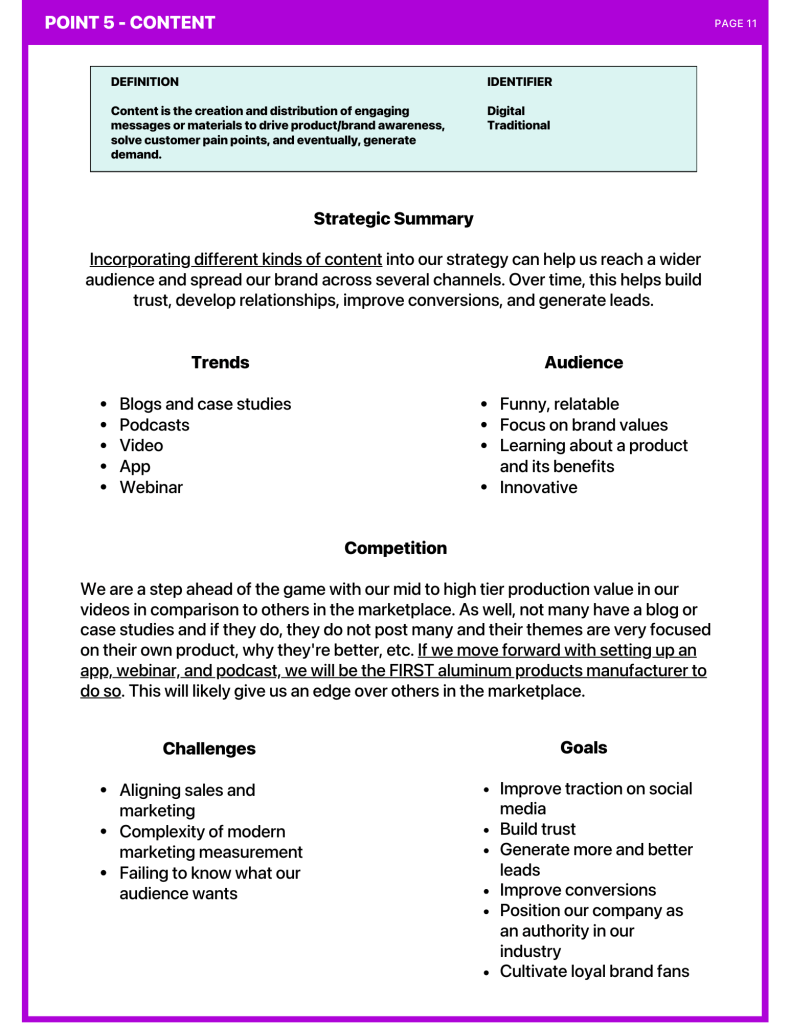
By organizing around nine integrated channels – SEO/PPC, Content, Swag & Signage, Communications and Relationship Management, Tradeshows & Events, PR & Media, Website & Apps, Email Marketing, and Social Media – companies create a roadmap that both grounds their brand and gives teams the agility to respond to change.
From Brand Awareness to Measurable Revenue
Marketing is not just about visibility. Done right, it drives the business. Done wrong, it can degrade the brand and dislodge the customer journey.
So, it’s vital to understand how each channel works singularly and in groups (Channel Groups). Research by Nielsen shows that brands with strong integrated campaigns achieve 31% more effectiveness than those using single-channel approaches.
The 9-Point Channel Strategy is designed to move organizations along this path. It improves:
Brand Awareness: By consistently activating channels that reinforce identity and voice.
Customer Engagement: Through storytelling, dialogue, and relationship management across touchpoints.
Sales Impact: By aligning marketing activity with measurable outcomes such as lead quality, conversion rates, and pipeline growth.
For example, when I applied this framework in past roles, companies saw up to 600% growth in engagement and $25M in new business pipeline opportunities.
It’s critical to understand that this doesn’t just happen out of sheer application – it’s the targeted execution that matters most. It’s like a causeway. You can allocate resources to support your teams, all while understanding your business needs more accurately.
Furthermore, the 9-Point Channel Strategy guides the creation of marketing and sales materials, the development of strategic regional campaigns, and the collection of valuable data using the software and tools you have in place. By investing more time into understanding the potential of your market and the journey your clients take, you can influence product development, boost brand recognition, and more.
You will also improve your breadth of knowledge and meet changing client requirements more quickly and effectively. Client satisfaction will rise, as will your future revenue and profitability. Your reputation will grow as you raise awareness for your company and industry.
The Agile Imperative
No framework survives long if it can’t adapt. The 9-Point Channel Strategy incorporates principles from the Agile Marketing Manifesto, which emphasizes experimentation, cross-functional collaboration, and responsiveness to change.
Five rules serve as guiding pillars:
Focus on client value and business outcomes over activity and outputs.
Deliver value early and often, rather than waiting for perfection.
Learn through experiments and data, rather than opinions and conventions.
Collaborate across functions, not just within silos or hierarchy.
Respond to change by following a static plan.
This isn’t just philosophy. According to AgileSherpas, 42% of marketers now practice some form of Agile marketing, and those teams are twice as likely to report success as their non-Agile counterparts.
To put agility into practice, leaders need guiding principles that balance flexibility with discipline.
Principles for Execution
To embed agility within structure, leaders must:
Align closely with internal and external stakeholders through transparency and trust.
Encourage diverse perspectives to fuel creativity and innovation.
Operate at a sustainable pace, balancing urgency with long-term growth.
Empower small, cross-functional teams who are motivated and trusted.
Continuously refine brand and channel fundamentals—because agility alone is not enough.
The best marketing programs are not built on one-off bursts of inspiration but on disciplined iteration. As Reid Hoffman, LinkedIn co-founder, once put it: “If you are not embarrassed by the first version of your product, you’ve launched too late.”
The Call to Leaders
The 9-Point Channel Strategy is more than a checklist – it is a system for growth in an unpredictable market. By combining structure with agility, organizations can achieve clarity, consistency, and measurable outcomes while staying aligned with their mission, vision, and values.
In an era when customer attention is fragmented and competition is fierce, the companies that win will not be those who do more, but those who do better. Integrated and agile marketing is no longer optional – it is a prerequisite for sustainable success. The 9-Point Channel Strategy offers a path to do just that – driving clarity, consistency, and sustainable growth.
If you’d like to explore how this strategy can work for your business, feel free to reach out to me anytime – info@chonafecanlas.com.
Thanks for reading,
Blox.
PS – Below is an example of a preliminary exploration I did for a company. Let me know if you’d like to chat more about it!
Somehow, it’s an arduous undertaking that I would prefer to leave to my more inclined husband. But tonight, I took it on with confidence.
Lo and behold! I opened her bathroom drawer to reveal not one but three containers of toothpicks. I could smell the faint glimmer of mint, and as I observed the labelling on the bottles, I discovered three different flavours altogether – mint, cinnamon, and KOKESHI.
Now, I presumed that the flavour on the label would match the scent of the toothpicks. So began the exercise. My daughter and I smelled each bottle. Mint, yup mint. Cinnamon, oooh that’s cinnamon. Kokeshi? My daughter inquisitively smelled the toothpicks in the distinct red-orange packaging. Smells like flowers, Mom! I took a whiff and debated, no no, I don’t think so.
I peered through the cheap plastic receptacle and saw that the toothpicks were a different shape. I uttered to my daughter, must be because of this. I pointedly placed the bottle in front of her eyes. We weren’t satisfied. They did look different from the others, looking fancy for picking up appetizers. So, my daughter proclaimed, check Google! Check Google! And with the swipe of a finger, the answer arose –
Kokeshi
Kokeshi are simple wooden Japanese dolls with no arms or legs that have been crafted for more than 150 years as a toy for children.
They are symbols of hopes for bountiful harvests, wishes for good luck and fortune and embody an appreciation for craftsmanship and culture.
Now, this would have been a great answer, but in our case, it was REVELATORY.
I looked in front of me.
Standing peacefully erect on my daughter’s bathroom counter for as long as I can remember was…a…KOKESHI.
Not any kokeshi. A doll I lovingly received from my mom’s very close Japanese girlfriend, Misuko, back in 1985.
My daughter and I squealed with delight. The happenstance was nothing short of extraordinary! And to think, it only took 38 years or five times the length of my daughter’s life to discover it.
Sometimes, life throws you curveballs. Most of the time, you catch the ball like any other ball, on any other day, with the same approach and sentiment. But other times, life passes you inexplicable gifts—gifts that bring light and love into every inch of your being.
As marketers, throw and catch balls. But once in a while, BE the ball and notice the infinite bubbles of gratitude that permeate your life.
Member A – Marketing is a constantly evolving landscape.
Member B – Ideas ignite and fizzle away.
Member C – A structured and creative ebb and flow transpires.
Member D – New campaigns take flight.
.
.
.
.
.
.
Evolution.
We seek out different and diverse points of view, embrace and respond to change, and plan only to a level sufficient to ensure effective prioritization and execution. We find ourselves encountering a phenomenon called—CRITICAL MASS.
Akin to when celestial planets align, critical mass is that single yet multifarious moment when our efforts transcend the ordinary and catapult into the extraordinary. It’s a transformative point when our brand’s message resonates with such force that it achieves unstoppable momentum, similar to a cascading waterfall or an awe-inspiring avalanche.
Achieving critical mass can ignite a spark in the collective consciousness of a team, sparking a wildfire of enthusiasm that spreads contagiously through diligent becomings – social networks, word-of-mouth, and media channels. One clever idea can transform into an iconic cultural touchstone, etching your brand’s identity into the minds of engaged onlookers everywhere.
When an idea reaches critical mass, it propels forward and impacts a team’s ability to meet goals.
Here are some ways your team can make that impact based on some common marketing objectives –
Boost Brand Awareness
As your name, products, and services become more recognized, brand awareness will naturally increase. When your brand reaches a certain level of visibility, popularity, or adoption, it triggers a self-sustaining momentum (critical mass), fostering a positive feedback loop that fuels growth and solidifies your brand’s position in the market.
Obtain New Clients
Your team can focus on targeted campaigns to showcase your USP (unique selling proposition) and differentiators while also highlighting your clients’ success stories and effectively communicating the value of your product to attract a steady stream of interest (demand generation), then ultimately converting that interest into actual sales and new clients (client acquisition).
Strengthen Relationships with Existing Clients
You can contribute to this effort by implementing a preferred client program, personalizing your internal and external communication via channels like social media, email, and content, and creating a detailed plan and strategy around launching new products that address client challenges, needs and pain points.
Increase Sales
As your market presence and brand awareness expand, so does sales potential. A larger customer base combined with the effective execution of a strategy will lead to more opportunities. Your marketing team can collaborate closely with your sales team to generate and nurture high-quality leads, provide sales enablement materials, and optimize the customer journey to convert prospects into loyal clients.
So, what do you think?
Critical mass is a powerful catalyst for any growing team. By reaching this point of substantial growth and influence, your team’s efforts – recognizing ‘critical mass’ as it occurs and creating models to emulate its course – become pivotal in driving continued success.
Inspiration can be a behemoth, and it is waiting for y’all!
Effective communication is simple, straightforward, and accurate.
a
b
c
It follows a linear path and is easy to digest.
a a
b b
c c
Still, in its best forms, it can empower and inspire us to uncover new ways to respond to business demands and challenges. This is change!
a b c
For example, by understanding what type of communication drives our customers to choose us over the competition and then using that data to promote growth, we can harness communication to cultivate opportunity.
a b c
a b c
Here are some things to consider:
Be self-aware and understand the need to adapt your message to your audience
Communicate what you are doing, why you are doing it and how you are going to get there
Build a system or process, then be accountable and track your progress
Focus on transparency, empathy and consistency to elevate trust
Create opportunities for learning and development
Practice active listening to understand and feel the situation
Share your milestones, challenges, concerns and victories
How do you develop an effective communication strategy? What are some important values that support your communicative work?
It’s weird how important points in life can become permanent as art—written in 2018. In other words, it can feel like the universe has swallowed me up, and I have become a planet—experienced as a child and adult. So big, my sight became distorted—on the drive into work. I would look at my bedroom door, and its imposition startled me—the nightmare. I tried to comfort myself by huddling underneath the blankets, but they too swallowed me whole—while dreaming. It was and still is the most alarming thing I have ever experienced.
What is the fear factor? The risk that you will not change. The fault of your pursuits. The question of your intentions. We form who we are based upon who we’ve been and are set on a continuous quest to find and form a new self. These pieces have formed me for a small portion of time, yet they are timeless, ongoing representations of growth and quiescence. My art is my refuge. How do you relate?
I’m no design wizard, but I have an eye for harmony and style!
These images were created as draft ads for a publication. They are not final but simply an example of my design strategy at work.
What strategy is that, you ask?
Well, for a multitude of reasons, there is always a small group of work that stands the test of time. I hold on to these works, for I know they will come in handy later.
And so, I found some old designs used to create our persona project Facebook ads and decided (ever-so-decidedly) that they were appropriate to appropriate (see what I did there) for this particular task.
So alas, using my trusted canvas called Canva, I copied the design in the new dimensions and spent about 2 hours iterating upon iteration, if that could be a thing!
So, what are your thoughts? Which one speaks to you the most? Which one do you think the team went with? Let me know!



















 Blox. is a Creative & Technical Marketer