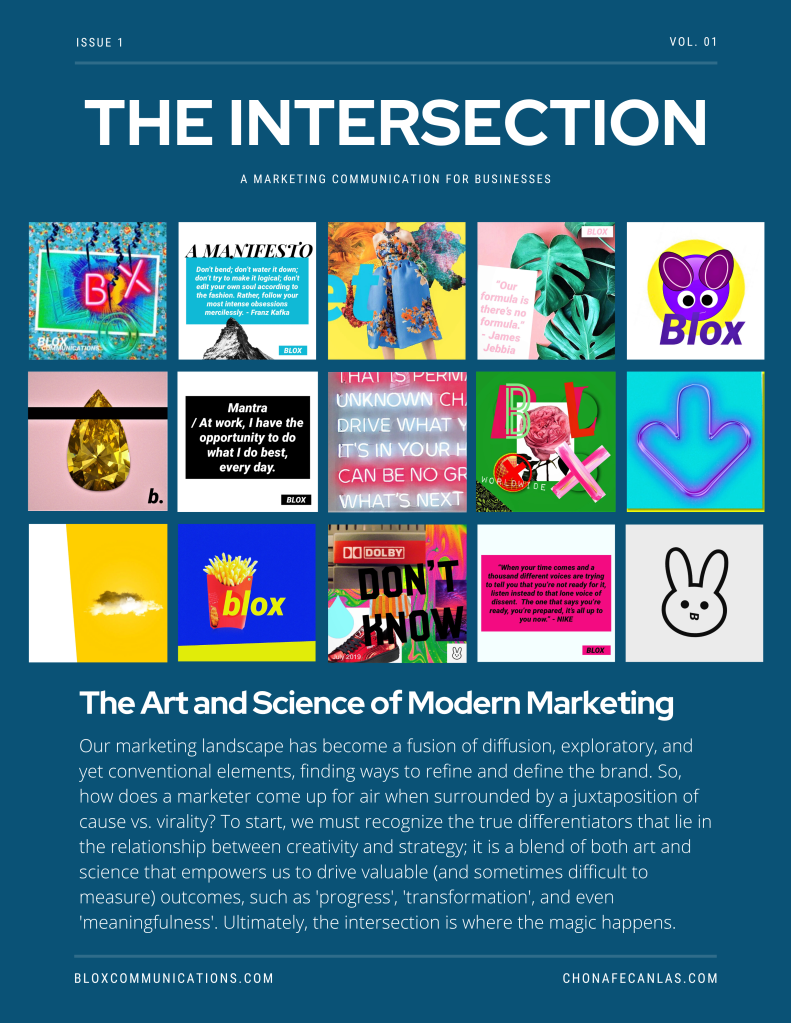
I’ve made some refinements to the original issue, which I previously posted as a plug for a podcast idea (see the updated written version below). If you’re wondering, yes, I still want to start a marketing podcast. I’m still exploring ideas on how to execute all of this. Likely, it will be a monthly contribution, again, following relevant topics around ‘A Marketing Communication for Businesses’.
This serves as inspiration and is also creative fuel for my passion project—Blox. Communications, a marketing consultancy and a project I’m building alongside my professional career as a Marketing Manager. It’s a service-based platform designed to support mid-sized businesses across sectors, including but not limited to manufacturing, distribution, and tech, with bold (a.k.a. creative), strategy-driven marketing solutions that connect, differentiate, and drive results.
If you have a project in mind that sparks your interest or if you’re struggling to find direction for your marketing department, let’s discuss and create a plan tailored to your needs!
The website is being developed, but so far you can take a look here.
And if you’re curious, it has been a long time since I’ve posted. Life has been uber busy, and while I know that is the lamest excuse, believe me, I remain dedicated and committed to my art, writing, and design! Posts to come – promise!
For now, enjoy reading The Intersection, and as always, I am open to hearing your feedback or suggestions. Talk soon.
It’s been a slice since I’ve been on here. It’s because I have recently (well, about five months ago now) started a new job! I’m so excited. It has been the opportunity of a lifetime, and I am learning so much about a new industry and finding myself passionate about the projects I’ve been undertaking. Who is the new company? Delta Water Products! The head office is locally based in Chilliwack and has 14 branches across Western Canada and the Pacific Northwest. I’ve been hired as the new Marketing Manager, and my very first task was to take on the company’s rebranding as it became the parent name to several sub-brands, which required a complete revitalization of the brand.
Now, it’s essential to remember that rebranding is not a mere cosmetic change like a new logo or catchy tagline; it’s a strategic initiative that can redefine a company’s identity, reposition it in the market, and set the stage for long-term success. As businesses evolve, rebranding can be crucial in aligning a company’s image with its vision, values, and the market’s ever-changing demands. Understanding this strategic nature of rebranding can empower those involved to make informed decisions about their company’s future. Let’s delve in to understand better what a rebrand is.
What is Rebranding?
Rebranding is the process of changing an organization’s corporate image. It involves updating or completely overhauling the brand’s name, logo, visual identity, messaging, and sometimes its core values and mission. The goal is to create a new identity that resonates with customers, differentiates the company from its competitors, and reflects its current or future ambitions.
For many companies, rebranding becomes necessary after mergers or acquisitions, market shifts, changes in customer preferences, or a desire to enter new markets. It’s a way of breathing new life into a brand and ensuring it remains relevant and competitive.
What Makes a Successful Rebrand?
A successful rebrand is one that not only captures the essence of what a company stands for but also resonates with its target audience. Here are some key elements that contribute to a successful rebrand:
Clear Purpose and Vision: A rebrand should be driven by clearly understanding the company’s goals. Whether it’s to attract a new customer base, reflect a merger, or reposition the brand in the market, the purpose behind the rebrand should guide every decision.
Consistency Across All Touchpoints: Rebranding isn’t just about changing a logo. It’s about creating a consistent brand experience across all customer touchpoints—from the website and social media to packaging and customer service. Consistency helps build trust and recognition among customers.
Stakeholder Involvement: A rebrand should involve input from critical stakeholders, including employees, customers, and partners. Their insights can provide valuable perspectives on what the brand represents and how it should evolve.
Authenticity: The new brand identity should reflect the company’s values and heritage. A successful rebrand doesn’t mean abandoning what made the brand strong in the first place; it’s about building on that foundation.
Effective Communication: It is crucial to communicate the reasons behind the rebrand and what it means for customers. Transparency helps in gaining customer buy-in and ensures a smooth transition.
Rebranding for Sustainability and Longevity
A well-executed rebrand can significantly contribute to the sustainability and longevity of a company. Here’s how:
Adapting to Market Changes: As markets evolve, so do customer needs and expectations. Rebranding allows a company to adapt to these changes, ensuring it remains relevant and competitive.
Expanding Market Reach: Through rebranding, a company can reposition itself to attract new customer segments or enter new markets. This expansion can lead to increased market share and growth.
Strengthening Brand Equity: A robust and consistent brand builds equity over time. Rebranding can refresh and reinvigorate a brand, increasing its perceived value and enhancing customer loyalty.
Reflecting Growth and Evolution: Companies grow, and their brands should evolve to reflect that growth. Rebranding allows a company to communicate its progress, innovations, and future direction.
Building a Unified Brand Identity: In the case of mergers or acquisitions, rebranding can unify different entities under a single, cohesive brand. This simplifies the brand architecture and helps create a more substantial, recognizable presence in the market.
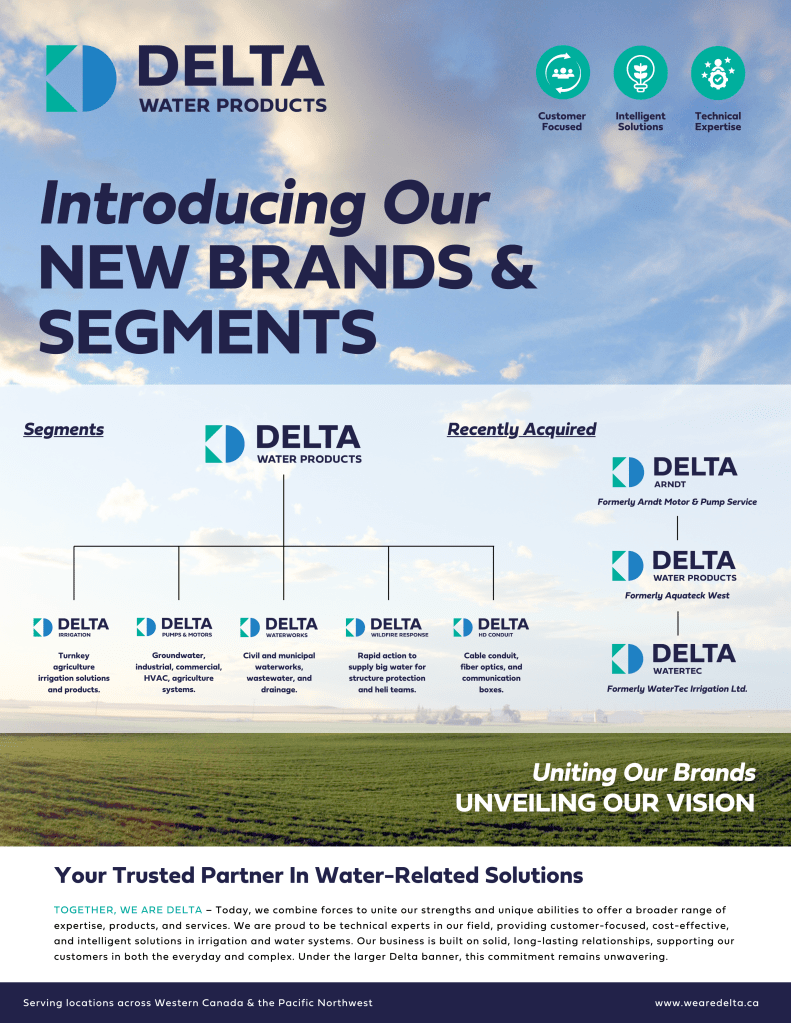
This rebrand was not just about a name change. It was about unifying these brands’ strengths and unique abilities to offer a broader range of expertise, products, and services. By becoming Delta Water Products Group, the company has expanded its geographic coverage across Western Canada and the Pacific Northwest and diversified its product segments, including Irrigation (Turnkey agriculture irrigation solutions and products), Pumps & Motors (Groundwater, industrial, commercial, HVAC, agriculture systems), Waterworks (Civil and municipal waterworks, wastewater, and drainage), Wildfire Response (Rapid action to supply big water for structure protection and heli teams), and HD Conduit (Cable conduit, fibre optics, and communication boxes).
This rebranding effort underscores Delta Water Products Group’s commitment to sustainability and longevity. By consolidating under a single, cohesive brand, the company has strengthened its market position, making it more agile and better equipped to meet the needs of its customers today and in the future.
I hope this all makes sense to you! Just keep in mind – rebranding is a powerful tool that, when executed thoughtfully, can increase a company’s relevance, market share, and longevity. It’s more than just a visual overhaul; it’s about aligning the brand with the company’s current and future goals. For companies like mine, rebranding has provided a renewed sense of purpose, a more robust market presence, and a clear path forward in an ever-evolving industry.
We took many steps to execute the rebrand, including building a new landing page, updating email signatures, and releasing brand announcement letters. My next big project is building one unified website to consolidate the brands and represent our group. I’ve shared a couple of different brand announcements I made below so you can understand my approach and the new branding. If you have any questions, feel free to contact me anytime!
Member A – Marketing is a constantly evolving landscape.
Member B – Ideas ignite and fizzle away.
Member C – A structured and creative ebb and flow transpires.
Member D – New campaigns take flight.
.
.
.
.
.
.
Evolution.
We seek out different and diverse points of view, embrace and respond to change, and plan only to a level sufficient to ensure effective prioritization and execution. We find ourselves encountering a phenomenon called—CRITICAL MASS.
Akin to when celestial planets align, critical mass is that single yet multifarious moment when our efforts transcend the ordinary and catapult into the extraordinary. It’s a transformative point when our brand’s message resonates with such force that it achieves unstoppable momentum, similar to a cascading waterfall or an awe-inspiring avalanche.
Achieving critical mass can ignite a spark in the collective consciousness of a team, sparking a wildfire of enthusiasm that spreads contagiously through diligent becomings – social networks, word-of-mouth, and media channels. One clever idea can transform into an iconic cultural touchstone, etching your brand’s identity into the minds of engaged onlookers everywhere.
When an idea reaches critical mass, it propels forward and impacts a team’s ability to meet goals.
Here are some ways your team can make that impact based on some common marketing objectives –
Boost Brand Awareness
As your name, products, and services become more recognized, brand awareness will naturally increase. When your brand reaches a certain level of visibility, popularity, or adoption, it triggers a self-sustaining momentum (critical mass), fostering a positive feedback loop that fuels growth and solidifies your brand’s position in the market.
Obtain New Clients
Your team can focus on targeted campaigns to showcase your USP (unique selling proposition) and differentiators while also highlighting your clients’ success stories and effectively communicating the value of your product to attract a steady stream of interest (demand generation), then ultimately converting that interest into actual sales and new clients (client acquisition).
Strengthen Relationships with Existing Clients
You can contribute to this effort by implementing a preferred client program, personalizing your internal and external communication via channels like social media, email, and content, and creating a detailed plan and strategy around launching new products that address client challenges, needs and pain points.
Increase Sales
As your market presence and brand awareness expand, so does sales potential. A larger customer base combined with the effective execution of a strategy will lead to more opportunities. Your marketing team can collaborate closely with your sales team to generate and nurture high-quality leads, provide sales enablement materials, and optimize the customer journey to convert prospects into loyal clients.
So, what do you think?
Critical mass is a powerful catalyst for any growing team. By reaching this point of substantial growth and influence, your team’s efforts – recognizing ‘critical mass’ as it occurs and creating models to emulate its course – become pivotal in driving continued success.
Inspiration can be a behemoth, and it is waiting for y’all!
Hey everyone! My gosh, has it been a long time! I’ve been so busy working on my career that I haven’t had two seconds to post on my personal website. Transparency aside, I wanted to share a new series based on a weekly project I run at work called Social Media Update. In this series, I touch on social media and general marketing strategy, and I thought it would be great to share it with you all.
I’ll work my way back to when I started at Longboard, so here is our first instalment! Have fun with it, and if you have any questions, feel free to reach out at info@chonafecanlas.com.
Finding the ‘intriguing angle’ is the idea that we can focus on big-picture topics like our core aspects (innovation, sustainability, quality) to create compelling content that impacts our target audiences.
When creating social media content, we can ask and answer a couple of questions:
Q: What is a significant concern for our business and other businesses today?
A: Our audience demands a greater understanding of where and how our products are sourced and manufactured.
Q: What approach can we take?
A: We can and should comment on sustainability by promoting a transparent and traceable approach. This entails a mix of carefully curated messaging that effectively positions our differentiators while driving an emotional reaction from our audience.
For example, we could share that all production is on-site and that we have an incredible production team that helps to build our premium products. We would also mention that we pursue responsible consumption and production, which helps create sustainable architecture that positively impacts the environment and the communities around us.
Our team is mindful that we must not fall into the trap of hoping word will get out and the customers will come. Through proactive and strategic messaging, we can understand why we do what we do, and share that message with the world.
So, what did you think of that? Do you feel inspired to identify some core aspects of your business, then do a deep dive into how they can impact your target audience? Please share your thoughts!
A good curveball is an opportunity (remember, problems are opportunities) to:
1 – Own your dreams.
2 – Reimagine the world.
Own Your Dreams
To own your dreams, you must recognize, acknowledge, and value the fact that something is waiting for you out in the world.
It is there to fulfill.
It exists to make you happy.
You are satisfied when united (or reunited) with it.
It becomes a part of you and can be shared with others.
A Good Curveball
Owning my dreams is being connected to work I’ve always envisioned doing—building a sustainable and scalable brand that will influence people inside and outside the operation.
Reimagine the World
Second, to a good curveball is our ability to reimagine the world. Through a clear and defined vision and mission, we can accomplish anything. With a good heart and holistic stance, our world can become something better, more equal and more understanding.
Reimagining the world involves pushing boundaries, setting new standards, and developing a structure or process that leads to innovation, progression, and growth.
I think I get thrown more good curveballs as I age, so I hope this becomes the norm and the opportunities don’t cease!
As I continue to inspire and empower people to make a difference in their daily lives, I recognize three things that matter to me today. Of course, there’s always more, but let’s get started with these!
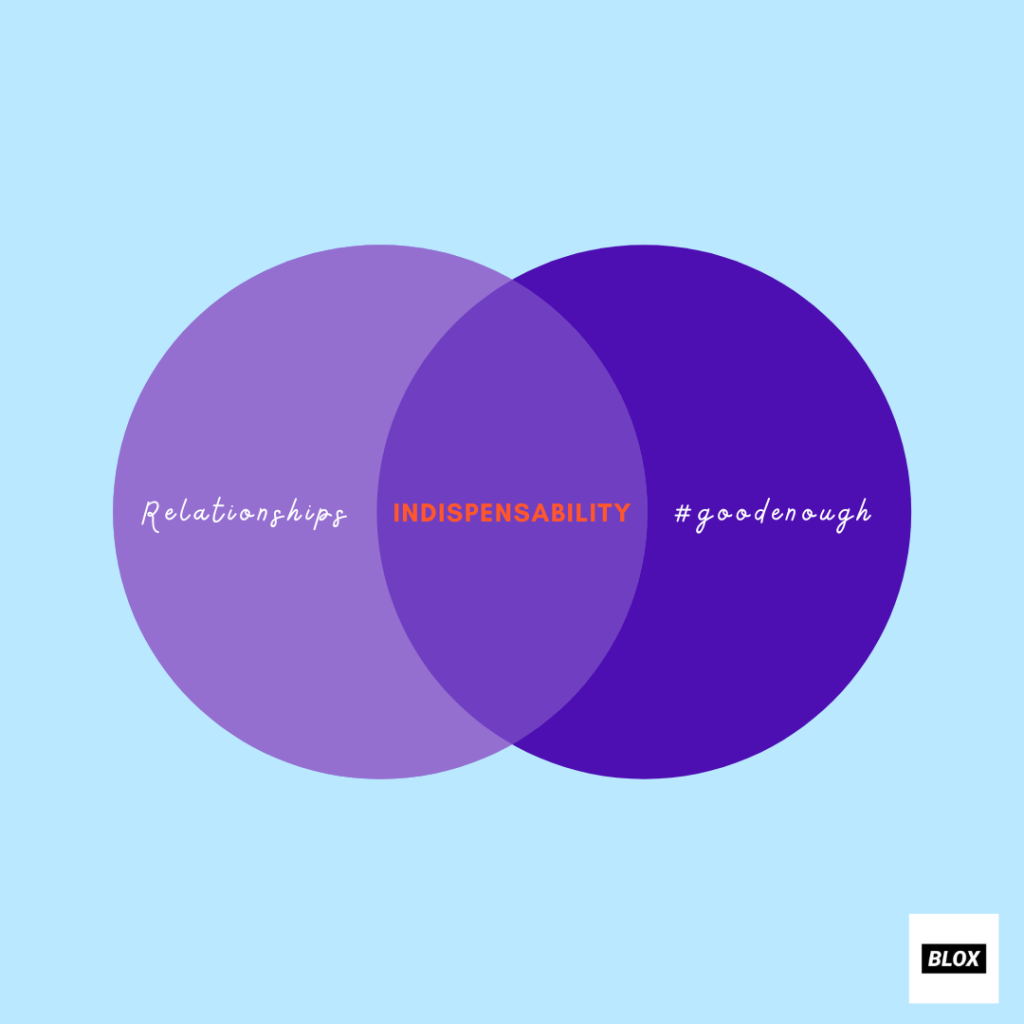
Become Indispensable
1- Relationships
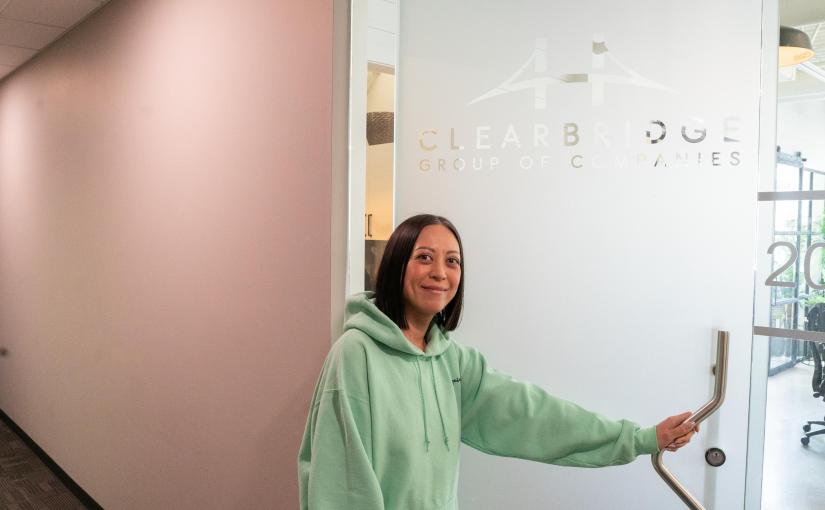
One of the biggest influencers in my marketing career has been the formative relationships I have built over time—in both the long and short-term. Having a direct report has taught me to be vulnerable and courageous as I’ve had to steer a small team in a viable direction while maintaining strong, personal connections which benefitted the entire team. I am particularly grateful for the opportunity to work directly under the Founder and CEO of Clearbridge, Ryan Kononoff. He has taught me many things about engagement and the effort required to make meaningful projects matter to an audience. I am also thankful for every other team member I’ve had the chance to grow alongside.
You are bright.
You are dedicated.
You are special!
2 – #goodenough
This is one lesson that has helped me to conquer my perfectionism. I recall working on one of my first projects, a new brand book (or later called a Playbook), which in scope was a huge undertaking that could have demanded months of work. But with the knowledge that a marketer should be agile, or as the Agile Marketing Manifesto states –
“To keep up with the speed and complexity of marketing today, we must deliver value early and often over waiting for perfection.”
In creative marketing, we challenge ourselves by generating work that is original, unique and that manifests a change in its surroundings. In analytical marketing, we must use data sets to quantify results. Pairing the two (creative + analytical marketing) is where #goodenough truly shines—we can experiment to determine what approach works the best, and we don’t have to wait to be enlightened. We should find insights with every movement or decision we make!
3 – Indispensability
I rarely finish an entire book in one sitting. It’s often hard for me to finish it at all. I prefer to scan information and read what will be of value to me. Such was the case with Seth Godin’s book Linchpin. As he writes –
“You have brilliance in you, your contribution is essential, and the art you create is precious. Only you can do it, and you must.”
Such an important lesson because it’s much too easy to forget your worth. We must use every inch of our being to recognize and become more self-aware. In marketing, the potential to get lost in a sea of tasks and activities might forsake where the value truly lies—creating, ideating, and examining the wonder and change that a type of approach can incite.
Being indispensable takes:
Courage
A growth mindset
Initiative
Risk
And most importantly…talent. You can’t duplicate indispensable work. I truly believe this!
The Playbook
A pièce de résistance, I hope you find value in reading it!
I love to write, and emails are a breath of fresh air.
No editing. No fancy words. No issues over length. No need for profundity.
It has been almost five years since I left Bell Mobility to pursue a career in marketing, and one thing that has drastically changed is how often I communicate via email.
I miss the simplicity of it all. I miss reaching out to my clients daily. I miss the back-and-forth motion that builds connection.
At Bell, I had so many great relationships; I used email to build better ones along the way. It was just so damn efficient. Templates allowed the writing to take shape quickly. In mere minutes, I was sending off concise and compelling messages. Over and over again. Each email was re-read once, at most twice, and then sent so I could continue to the next case. It was a beautiful workflow, and it was all supported by Salesforce.
And by the way, I am trying to write more like Seth Godin. Also, finding my way back to my university days. My favourite professor and mentor, Paul Woodrow, graded an essay I wrote on the fallacies of Coca-Cola, commenting in tiny writing and bright green ink, “Swift and punchy, Chona!”
So begets my email manifesto –
I will always try to write swift and punchy.
If I can remember to, that is.
Alas, I have a pop quiz for y’all.
I want you to decide which entry below is authentic, meaning not edited. And which one is “fake”, as in completely and utterly revised from its original style + tone.
How can you tell? What gives it away? Which is written better?
Ah, so many questions to ponder, but if only we had more time.
Off to bed, now, enjoy the exercise!
Entry 1
For all my years as a Corporate Account Manager at Bell, some of my fondest memories included writing emails. I loved how fluid and uncomplicated it was to craft messages on the spot without spending copious amounts of time editing. I would not mind working on some ideas to “wow” our current and prospective customers with something easy to read, memorable, and impactful!
Entry 2
I spent many years as a Corporate Account Manager at Bell, crafting friendly and professional emails. I thought it was so exciting (yup, I love communication!) to be able to write something on the spot that didn’t require any editing. It’s an art form really. Would love to work on some ideas to incorporate more emails into how we communicate with our customers.
Job hunting can be gruelling. For six months, I searched for the perfect fit. I did everything I could to embrace the energy, excitement and engagement that comes with it, but frankly, I was exhausted. Each step required work. Hard work. It felt like a fight for my future. I was gaining momentum, but I did not feel empowered. I wanted to make positive decisions that would bring me closer to achieving my goals. So I created a mission statement to give me a sense of purpose. I added it to my resume with gusto –
My vision as a marketer is to empower and inspire people to make a difference in their daily lives.
These words, within my experience, proposed change as a way to improve and move forward. Suddenly, I was motivated to find the next step in my career and not just a new job. Suddenly, I was searching for similar words in job descriptions as a way to feed out mismatched opportunities. I felt like I was in control. By developing this meaningful statement, I was working on myself. I started to see that helping others was important to me, and I wanted to find work that would help me grow into a person who could Make Change Happen.
Making my routine move, I visited their website. A sentence, written in white, spread across the front page drew me in. Helping you do your best work. It reminded me of my mission statement! I envisioned the word empowering substituting the word helping and knew at that moment that my marketing mind was intrigued. Then I thought, what is my best work? The answer to that? Me. I decided right then and there that Clearbridge was invested in this tagline—they want to empower their customers to do their best work and employees to be the best versions of themselves. This brief exercise in recognizing worth drove me to apply, and the rest? Keep reading.
#bestwayspossible
We always have a choice and the option to take the first step. In the context of job hunting, if we choose the best option, that is, making positive decisions that bring us closer to achieving our goals, then we are empowering ourselves. The concept of connection becomes a critical building block here. Connection is about linking two entities that work better together (think: peanut butter & jelly). When you take time to recognize a connection (they stick so well together) and then work toward building that relationship (how many versions of a pb & j sandwich could you make), you are creating the best ways possible to put yourself in a favourable circumstance (eating the pb & j sandwich), and there is nothing more empowering than that (delicious).
Learning to see
Since becoming a marketer, I’ve been inspired by the work of Seth Godin. He says you can’t be seen until you learn to see, and this was my experience applying for the Marketing Coordinator position at Clearbridge.
My first interaction was with Amanda, the People Operations Coordinator. Bright and outgoing, she started our conversation with a compliment. Now, how often would that be the way to begin an interview? I was drawn to this approach. She acknowledged me (creativity and all), and I appreciated that. Acknowledging or demonstrating gratitude and acceptance is one of the best ways to get to know someone (am I right Amanda?).
After a spirited discussion about my interests, work history and marketing experience, Amanda reinforced our connection through her use of positive language and overall eagerness to empower me through the next step. I was impressed and wanted to learn more about the position and the company. I was starting to see what Clearbridge was about! She scheduled a meeting with the CEO (Ryan) and Operations Manager (Allison) early the next day.
The interview went smoothly, and I noticed something about Ryan and Allison. They were both contemplative, friendly, and engaged. There were moments when I got stuck on a few questions—I get nervous. I used these opportunities to find inward answers and show my resourcefulness. There was a lot of feedback. It felt like we were all learning from each other. By the end of the interview, we were smiling pretty hard, and for the first time in a long time, I felt seen.
I returned to work feeling ecstatic about the new connections I had made. It felt like they were offering me the opportunity to take my career to the next level, focus on what mattered the most, and grow as a person and creative marketer. Minutes later, I received a phone call from Amanda. To my delight, they offered me the position!
Finding #better
Doing better is often described as arriving home. This is what I felt when I joined the team at Clearbridge. Suddenly, there was a better space for me to dream and create (more peanut butter & jelly sandwiches, right). I was welcomed into a cool, bustling office filled with natural sunlight and a sense of possibility. During my first week, it felt like each day was a chance to do better and become a better person. Someone my peers could rely on. I learned that my true calling was not just about fulfilling a lifelong dream or pursuing an arbitrary passion. It was about being connected with the right people and being in the right place at the right time.
Sitting at my new workstation, I leaned back into my ergonomic chair and beamed.
When you know something is just right, you know it is (I can’t stop with the pb & j references!). But there are a lot of clues that can help you see better.
Here are some I can take away from my first week at Clearbridge:
When the team takes time to put you through a well-thought-out onboarding process, you know they are devoted to empowering you, helping you feel ready to take on the responsibilities of your new role.
Working in a space that promotes collaboration for someone with creative inclinations is living the dream. I can’t wait to see where it takes me.
Joining a company that embraces change is everything. This especially matters when you’re creative because ideation thrives in a facilitative environment. If I’m able to grow creatively, I know I will become a better marketer and, in turn, can create and develop the best ideas because I am part of a group of people now who value that too.
Feedback is essentially a means of trust. It allows us to discover possibilities, and at the same time, we earn the right to discover our peers’ communication styles. Once we unlock this type of interaction, we can evolve as human beings and accomplish larger goals, like I’ll be honest—changing the world!
In pursuit of innovation
Seth Godin says, “The first step on the path to making things better is to make better things.” This is now my truth since joining Clearbridge.
I’ve always been driven and ambitious. From a very young age, I partook in various extracurricular activities, from public speaking to creative writing and sign language classes to competitions with my classmates on who could act out The Babysitters Club book series with the most panache. Life back then was always about showing the world who I was and what I was capable of.
In my first week at Clearbridge, I feel like that kid again, taking on my dreams as if there were no limitations. I’ve also learned a thing or two about communication strategy. For one, you need a dedicated team that wants to make change happen for anything to improve. You also need to be laser-focused on outcomes and putting the best systems in place to win in every situation. We must constantly be challenged to innovate in our domain, then share our knowledge with one another, our customers, and partners.
We are doers
From snacks of every kind (lots and lots of chips, locally-made ice cream, and most critically, Phil & Sebastian coffee) to a business book library, the environment at Clearbridge supports doing. There’s no hiding in a cubicle as if you didn’t exist. It’s more like—look around you and see. See everyone and everything in its place. I’ve already started working on a social media strategy that will educate and engage our audience around technology, helping them find pertinent information (hello cybersecurity), how-to-dos, tips, tricks, and hacks that every person can find handy. I am also working on a company manual that entails everything from branding guidelines to who we are to our communication strategy. It will be a living document and serve as an introduction for future Clearbridgers.
Building great relationships with great communication
So, it all comes down to this—through empowerment, connection, communication, and the desire to do better (and find the best ways possible), we can succeed in work and life. I know that’s a big statement to make, but since joining the team here at Clearbridge, I feel that is the journey I am on. What’s more, I am starting to build strong relationships founded on intention. We are all here to do great work. We all want to understand that. I hope my time will be productive, meaningful and filled with positive transformation for Clearbridge and me.
How did you feel when starting a new job and what made you think it was the right choice? Share your comments; we would love to hear them!
Effective communication is simple, straightforward, and accurate.
a
b
c
It follows a linear path and is easy to digest.
a a
b b
c c
Still, in its best forms, it can empower and inspire us to uncover new ways to respond to business demands and challenges. This is change!
a b c
For example, by understanding what type of communication drives our customers to choose us over the competition and then using that data to promote growth, we can harness communication to cultivate opportunity.
a b c
a b c
Here are some things to consider:
Be self-aware and understand the need to adapt your message to your audience
Communicate what you are doing, why you are doing it and how you are going to get there
Build a system or process, then be accountable and track your progress
Focus on transparency, empathy and consistency to elevate trust
Create opportunities for learning and development
Practice active listening to understand and feel the situation
Share your milestones, challenges, concerns and victories
How do you develop an effective communication strategy? What are some important values that support your communicative work?
A United Nations report declares we have reached “a breaking point”.
So, what does that mean?
With almost 10% of the 8 billion people living on this earth suffering from malnutrition, 3 million lacking healthy diets, and climate change issues rising to the forefront, it is no surprise that we are in desperate need of a way to produce more food without harming the environment.
The report reviews a few critical ‘climate change impacts’ like reversing water degradation by choosing smart technologies and sustainable farming practices or sequestering greenhouse gases emitted during agricultural activities by employing regenerative farming principles.
And perhaps the most critical solution of all? Deploying technology to enable a more connected agriculture and food industry. In my opinion, we can become powered by data and collaboration, putting us in a better position to come up with answers to big global problems and, in the long term, create a more resilient economy.
Still, to make an impact today, we need to understand the challenges and realities that farmers face now. So your first stop is here.
The ‘support local’ movement is a force driving change worldwide. It moves people to want to purchase fresh, healthy products from farmers. It creates a connection between shoppers, where we can ignite conversations to examine how we’re doing our part and why it’s so important. Products are showing up more readily and in places where you least expect to see them. Overall, there is a feeling of togetherness, kindness, and open-mindedness that helps promote awareness and captures the interest of new, existing, and prospective customers.
I wanted to create a fun digital ad that spoke to the nature of the ‘support local’ concept, one that explores options (expressed using a carousel format), eliminates predisposition (articulated in the ad copy), and ultimately grants us the ability to choose (the call-to-action ‘but local first’) – take action (decide what you want to eat for breakfast) or take action through inspiration (are your eggs local? Well, you can get them laid the same day of delivery! How awesome is that!). The inspiration trickles through in a matter of seconds affecting all those involved (conveyed through various images, colours, animation, and the image of a family). As individuals watching the ad, we feel more attuned to thinking about what’s on our plates, how it got there, where it comes from, and why our consumption habits can negatively or positively impact the planet. The focus remains on the following values –
Support local
Empower people
Help the planet
Grow the community
What are your thoughts on this ad? If I could make one change, I would use a graphic of a globe in place of the farming graphic (at the end of the video). Does it speak to you and make you feel empowered to support local? Let me know your thoughts; open to discussing with you!


















 Support local
 Empower people
 Help the planet
 Grow the community
 Blox. is a Creative & Technical Marketer