Here are some social media videos showcasing the #corpcorp vibe.
We all know that these days, videos garner much more engagement than static images and visuals. That’s because they emit a sort of energy, which transmits directly to the viewer, influencing their experience with the content and helping them to make decisions that impact the brand’s ability to connect, sway, and sell.
In my opinion, a good short video pays special attention to the interaction between sound and movement – this in itself moves your audience along, can build anticipation, as well as excitement. Realistically, you have about 3 seconds to make an impression, so it’s critical to ensure the beginning of your video starts off with a bang.
I’m looking forward to creating more content like this! What’s your take on video creation to support brand identity?
Marketing is an environment defined by complexity and constant change.
For example, AI has automated and streamlined processes such as social media management and content creation. Similarly, over the past five years, the world of SEO has shifted away from simply keyword tactics to a more holistic approach involving the rigorous understanding of user intent and experience.
A recent McKinsey study found that 77% of CMOs believe their role has increased in complexity over the past five years, while other research consistently highlights the importance of integrated, customer-centric approaches for increased growth and revenue.
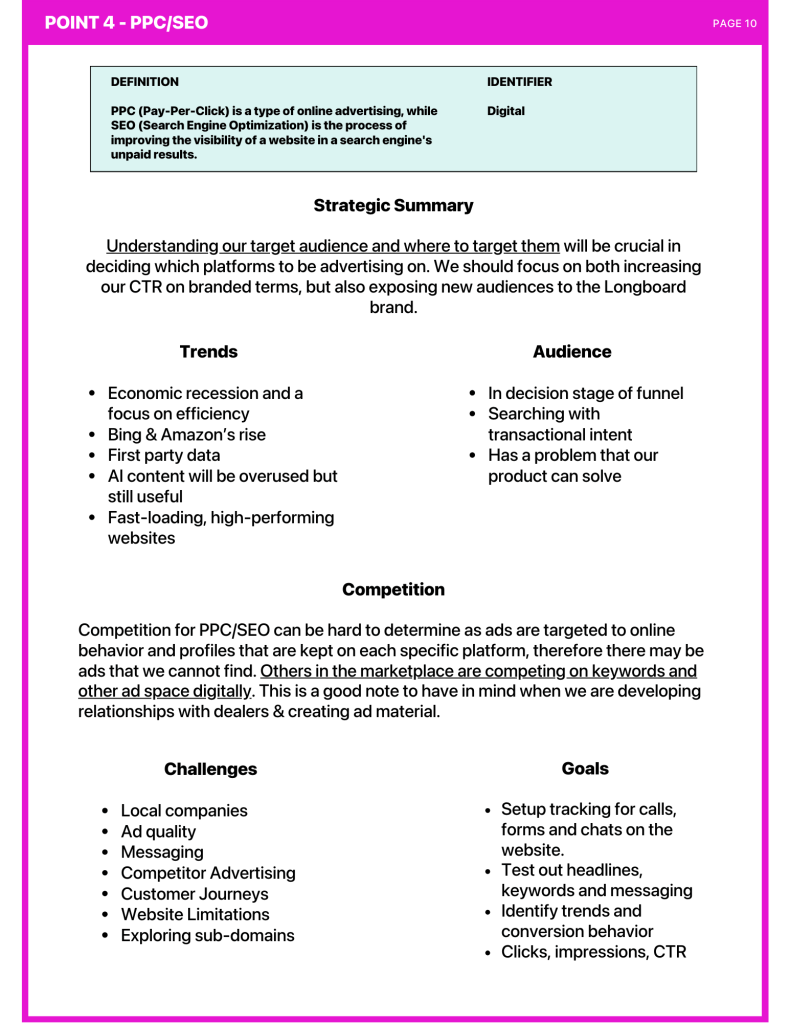
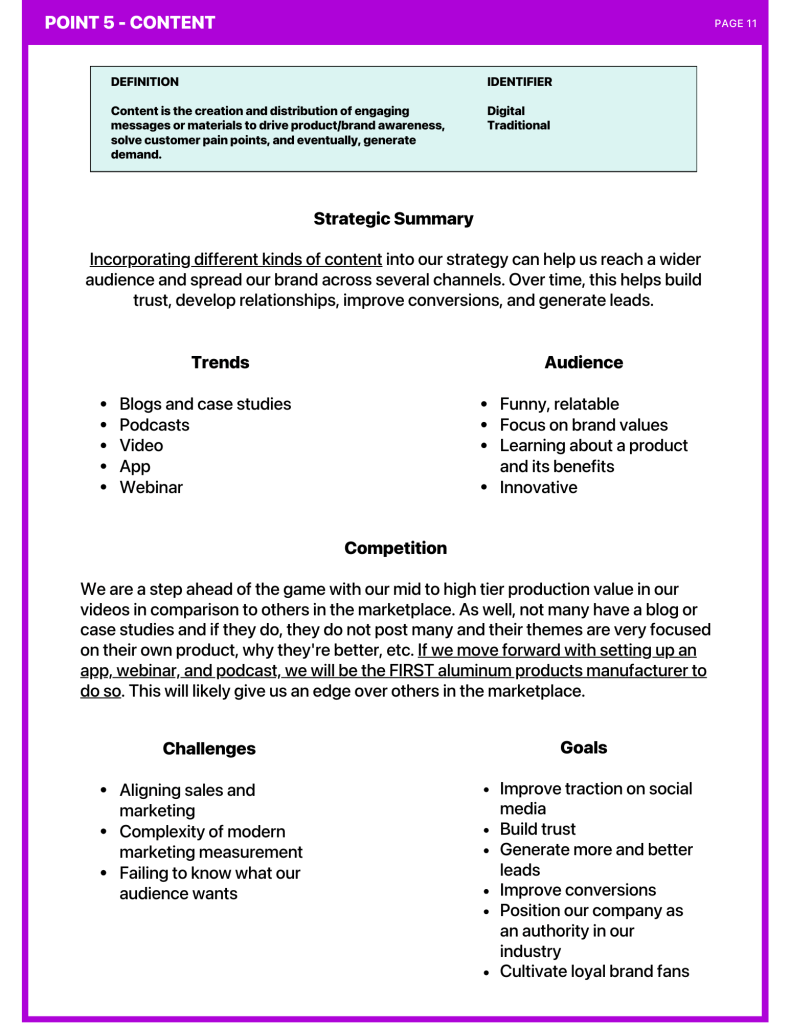
Amidst this frenzy of marketing metamorphosis, we can now say that leaders need more than campaigns. They need systems. They need ways to leverage digital ecosystems while maintaining a hyper-vigilant approach to customer needs and overall growth. That’s where the 9-Point Channel Strategy comes in.
Delving, Developing, and Deducing
This complexity was not theoretical for me – it showed up daily during my Longboard days, when I was part of a small yet mighty team.
A few months into my role, I began to dream about creating a strategy that could answer some of the challenges our team was experiencing – a lack of organization due to poor project management skills, limited human resources to handle social media and email marketing tasks, and most importantly, misalignment and miscommunication with leadership, as well as missed opportunities to collaborate with cross-functional departments.
I wrote a business case and presented it to the CEO.
In my study, I explored all the potential projects and campaigns we could launch if only we were more organized and had more structure to our efforts. It was also the catalyst for doubling our team’s size. After a quick presentation of my findings, my request was quickly approved. I finally had the go-ahead to develop the strategy that had been rattling about in my brain.
A Holistic View
The lack of a holistic view is one significant challenge that spurred the need to develop the 9-Point Channel Strategy.
In holistic marketing, departments and the strategy work together to accomplish shared goals and support an overarching purpose. A holistic stance paired with a transparent purpose is pivotal to scaling efforts and driving incremental volume and revenue.
It allows you to step back and review your work, gaining a deeper and clearer understanding of how inputs influence outcomes. With this perspective, you’ll be better prepared to make thoughtful, proactive decisions. Once you develop a holistic view, you can begin shaping content and messaging that resonates across physical, emotional, social, and even spiritual dimensions. At its core, this unification can lead to outcomes that stand out and make a lasting impact.
The 9-Point Strategy
The 9-Point Channel Strategy is an integrated approach to channel marketing where the primary goal is to understand your market segments and audience so you can deliver campaigns and projects that will produce results, all while driving your mission and vision forward.
By organizing each channel according to activity and assigning roles and responsibilities to the team (RACI chart), you can plan your delivery and create an inspiring experience that results in alignment between identity, delivery, and experience. This framework provides marketing teams with a structured, repeatable approach to align business goals, customer engagement, and brand growth across traditional and digital channels.
The 9-Point Channel Strategy model resembles a rotary phone because every channel (digit) must be dialled deliberately, in a sequence, and through a central hub (budget + analytics) to connect the organization to its customer outcomes (the call).
Why Structure Matters in Marketing
Most marketing teams suffer from one of two extremes: ad hoc creativity with little consistency, or rigid planning that fails to adapt to market shifts. Neither delivers sustainable growth.
The 9-Point Channel Strategy strikes a balance.
At its core, it emphasizes organization, planning, and resource allocation. These are not administrative details; they are the foundations of scaling. A Harvard Business Review study found that companies that link project management discipline with strategy execution are 70% more likely to outperform their peers.
By organizing around nine integrated channels – SEO/PPC, Content, Swag & Signage, Communications and Relationship Management, Tradeshows & Events, PR & Media, Website & Apps, Email Marketing, and Social Media – companies create a roadmap that both grounds their brand and gives teams the agility to respond to change.
From Brand Awareness to Measurable Revenue
Marketing is not just about visibility. Done right, it drives the business. Done wrong, it can degrade the brand and dislodge the customer journey.
So, it’s vital to understand how each channel works singularly and in groups (Channel Groups). Research by Nielsen shows that brands with strong integrated campaigns achieve 31% more effectiveness than those using single-channel approaches.
The 9-Point Channel Strategy is designed to move organizations along this path. It improves:
Brand Awareness: By consistently activating channels that reinforce identity and voice.
Customer Engagement: Through storytelling, dialogue, and relationship management across touchpoints.
Sales Impact: By aligning marketing activity with measurable outcomes such as lead quality, conversion rates, and pipeline growth.
For example, when I applied this framework in past roles, companies saw up to 600% growth in engagement and $25M in new business pipeline opportunities.
It’s critical to understand that this doesn’t just happen out of sheer application – it’s the targeted execution that matters most. It’s like a causeway. You can allocate resources to support your teams, all while understanding your business needs more accurately.
Furthermore, the 9-Point Channel Strategy guides the creation of marketing and sales materials, the development of strategic regional campaigns, and the collection of valuable data using the software and tools you have in place. By investing more time into understanding the potential of your market and the journey your clients take, you can influence product development, boost brand recognition, and more.
You will also improve your breadth of knowledge and meet changing client requirements more quickly and effectively. Client satisfaction will rise, as will your future revenue and profitability. Your reputation will grow as you raise awareness for your company and industry.
The Agile Imperative
No framework survives long if it can’t adapt. The 9-Point Channel Strategy incorporates principles from the Agile Marketing Manifesto, which emphasizes experimentation, cross-functional collaboration, and responsiveness to change.
Five rules serve as guiding pillars:
Focus on client value and business outcomes over activity and outputs.
Deliver value early and often, rather than waiting for perfection.
Learn through experiments and data, rather than opinions and conventions.
Collaborate across functions, not just within silos or hierarchy.
Respond to change by following a static plan.
This isn’t just philosophy. According to AgileSherpas, 42% of marketers now practice some form of Agile marketing, and those teams are twice as likely to report success as their non-Agile counterparts.
To put agility into practice, leaders need guiding principles that balance flexibility with discipline.
Principles for Execution
To embed agility within structure, leaders must:
Align closely with internal and external stakeholders through transparency and trust.
Encourage diverse perspectives to fuel creativity and innovation.
Operate at a sustainable pace, balancing urgency with long-term growth.
Empower small, cross-functional teams who are motivated and trusted.
Continuously refine brand and channel fundamentals—because agility alone is not enough.
The best marketing programs are not built on one-off bursts of inspiration but on disciplined iteration. As Reid Hoffman, LinkedIn co-founder, once put it: “If you are not embarrassed by the first version of your product, you’ve launched too late.”
The Call to Leaders
The 9-Point Channel Strategy is more than a checklist – it is a system for growth in an unpredictable market. By combining structure with agility, organizations can achieve clarity, consistency, and measurable outcomes while staying aligned with their mission, vision, and values.
In an era when customer attention is fragmented and competition is fierce, the companies that win will not be those who do more, but those who do better. Integrated and agile marketing is no longer optional – it is a prerequisite for sustainable success. The 9-Point Channel Strategy offers a path to do just that – driving clarity, consistency, and sustainable growth.
If you’d like to explore how this strategy can work for your business, feel free to reach out to me anytime – info@chonafecanlas.com.
Thanks for reading,
Blox.
PS – Below is an example of a preliminary exploration I did for a company. Let me know if you’d like to chat more about it!
I want to make 2024 the year to share some insights. I have time! You have time! We all have time! While perfecting pour-overs, tackling big hills on runs, or when driving into work – these are all great opportunities to listen and learn something valuable, even if just one small concept, it could turn into a big change-maker!
First up is the Cube of Creativity by marketing strategist Andrew Davis. This framework can help marketers leverage their creative process to promote innovation and encourage better outcomes.
To apply this shift in mindset, we need to be open to embracing constraints, defined by the four sides of a cube –
1 – Eliminate the Unnecessary 2 – Define a Single, Measurable Outcome 3 – Add Unreasonable Creative Constraints 4 – Raise the Stakes
Hey everyone! My gosh, has it been a long time! I’ve been so busy working on my career that I haven’t had two seconds to post on my personal website. Transparency aside, I wanted to share a new series based on a weekly project I run at work called Social Media Update. In this series, I touch on social media and general marketing strategy, and I thought it would be great to share it with you all.
I’ll work my way back to when I started at Longboard, so here is our first instalment! Have fun with it, and if you have any questions, feel free to reach out at info@chonafecanlas.com.
Finding the ‘intriguing angle’ is the idea that we can focus on big-picture topics like our core aspects (innovation, sustainability, quality) to create compelling content that impacts our target audiences.
When creating social media content, we can ask and answer a couple of questions:
Q: What is a significant concern for our business and other businesses today?
A: Our audience demands a greater understanding of where and how our products are sourced and manufactured.
Q: What approach can we take?
A: We can and should comment on sustainability by promoting a transparent and traceable approach. This entails a mix of carefully curated messaging that effectively positions our differentiators while driving an emotional reaction from our audience.
For example, we could share that all production is on-site and that we have an incredible production team that helps to build our premium products. We would also mention that we pursue responsible consumption and production, which helps create sustainable architecture that positively impacts the environment and the communities around us.
Our team is mindful that we must not fall into the trap of hoping word will get out and the customers will come. Through proactive and strategic messaging, we can understand why we do what we do, and share that message with the world.
So, what did you think of that? Do you feel inspired to identify some core aspects of your business, then do a deep dive into how they can impact your target audience? Please share your thoughts!
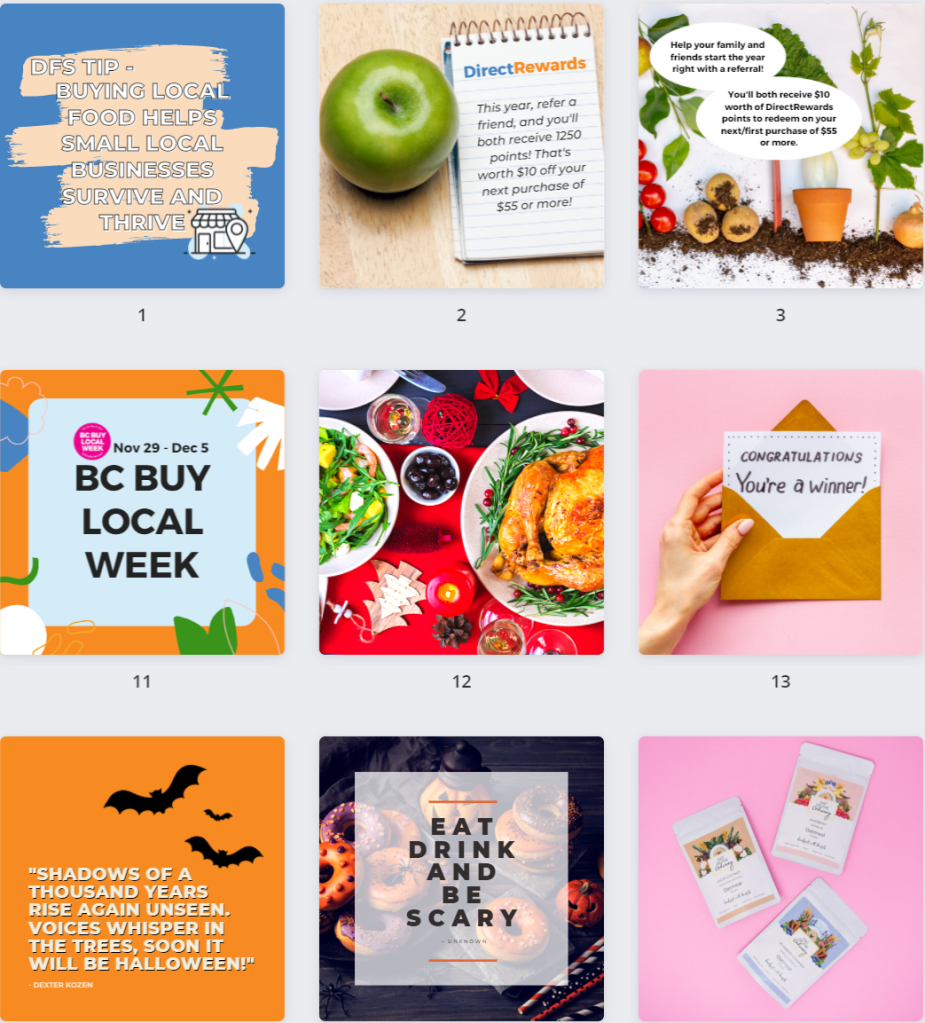
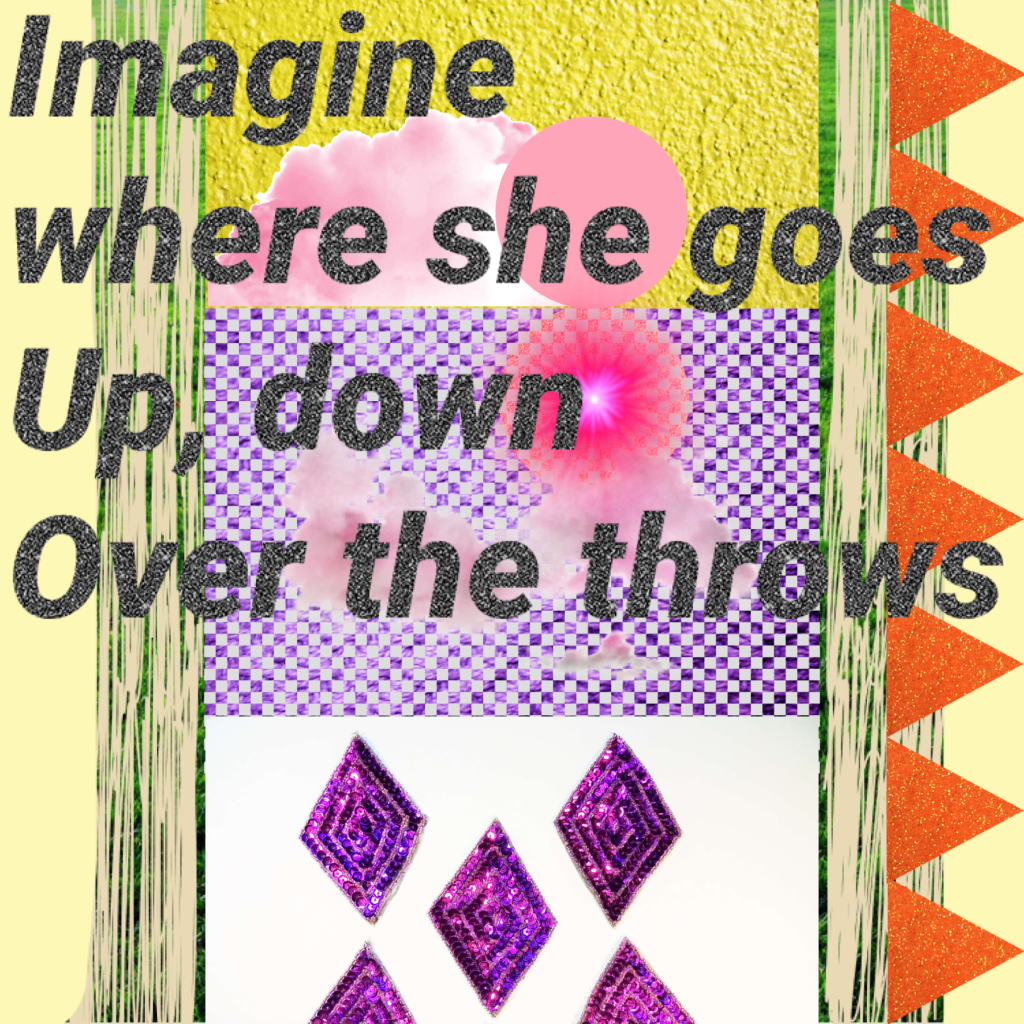
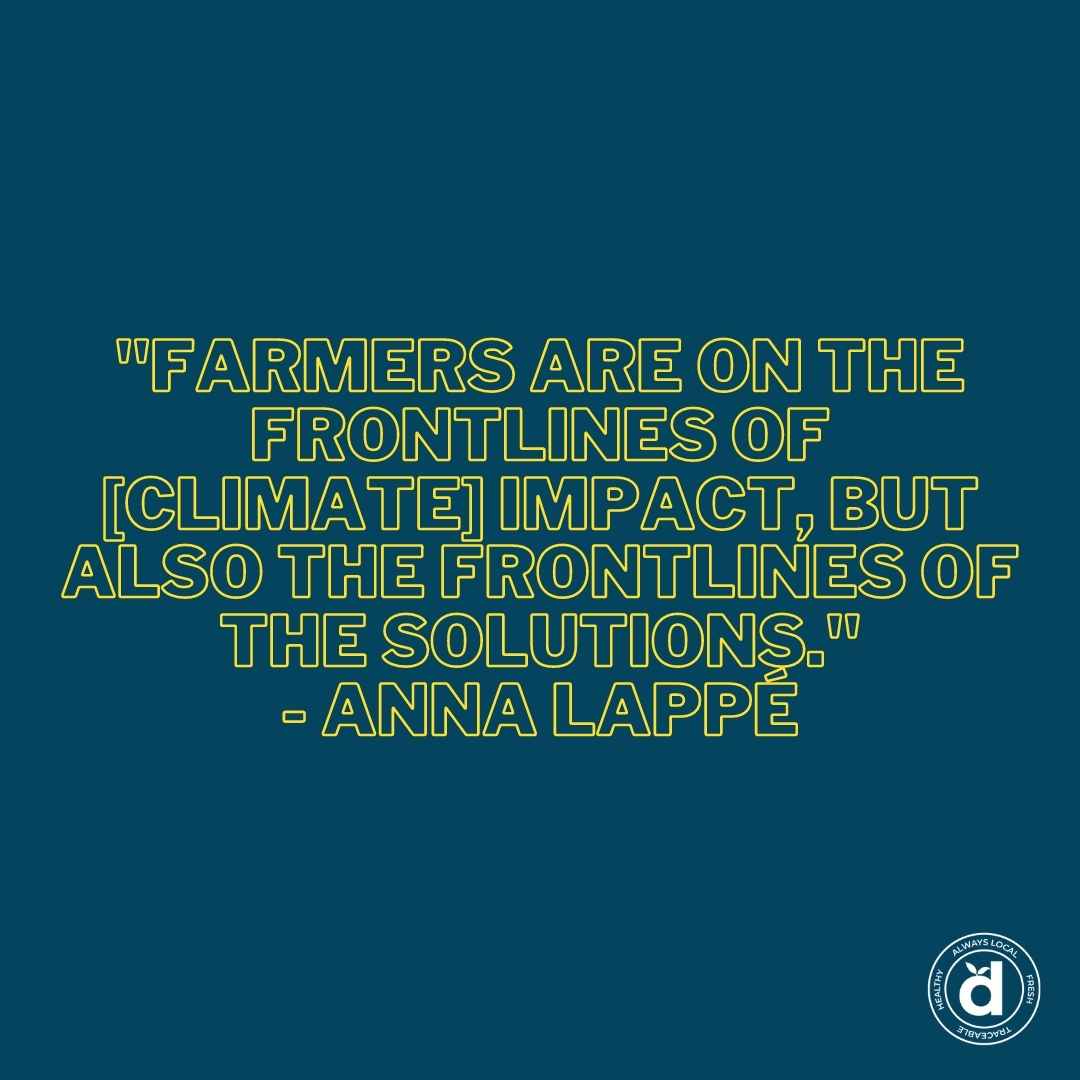
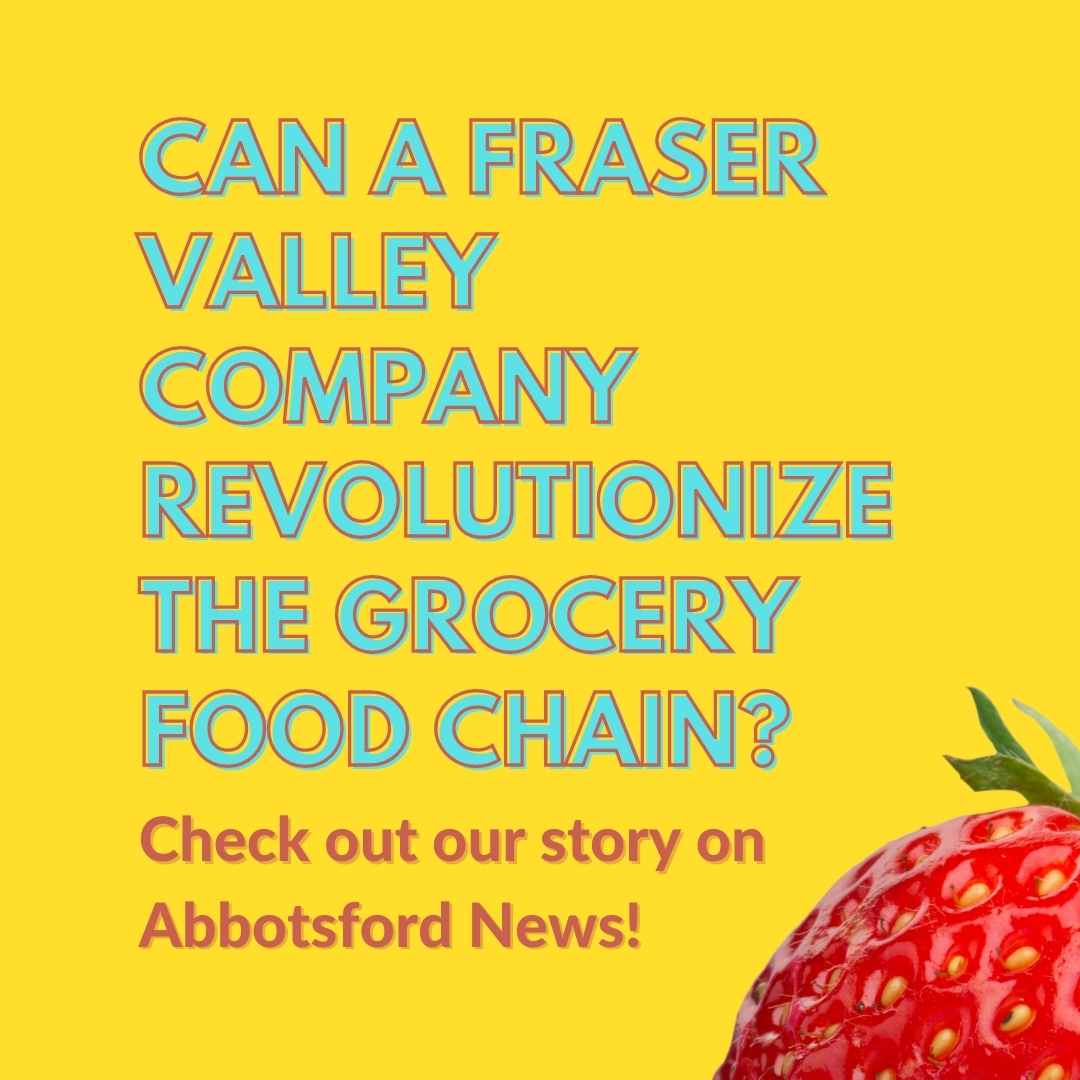
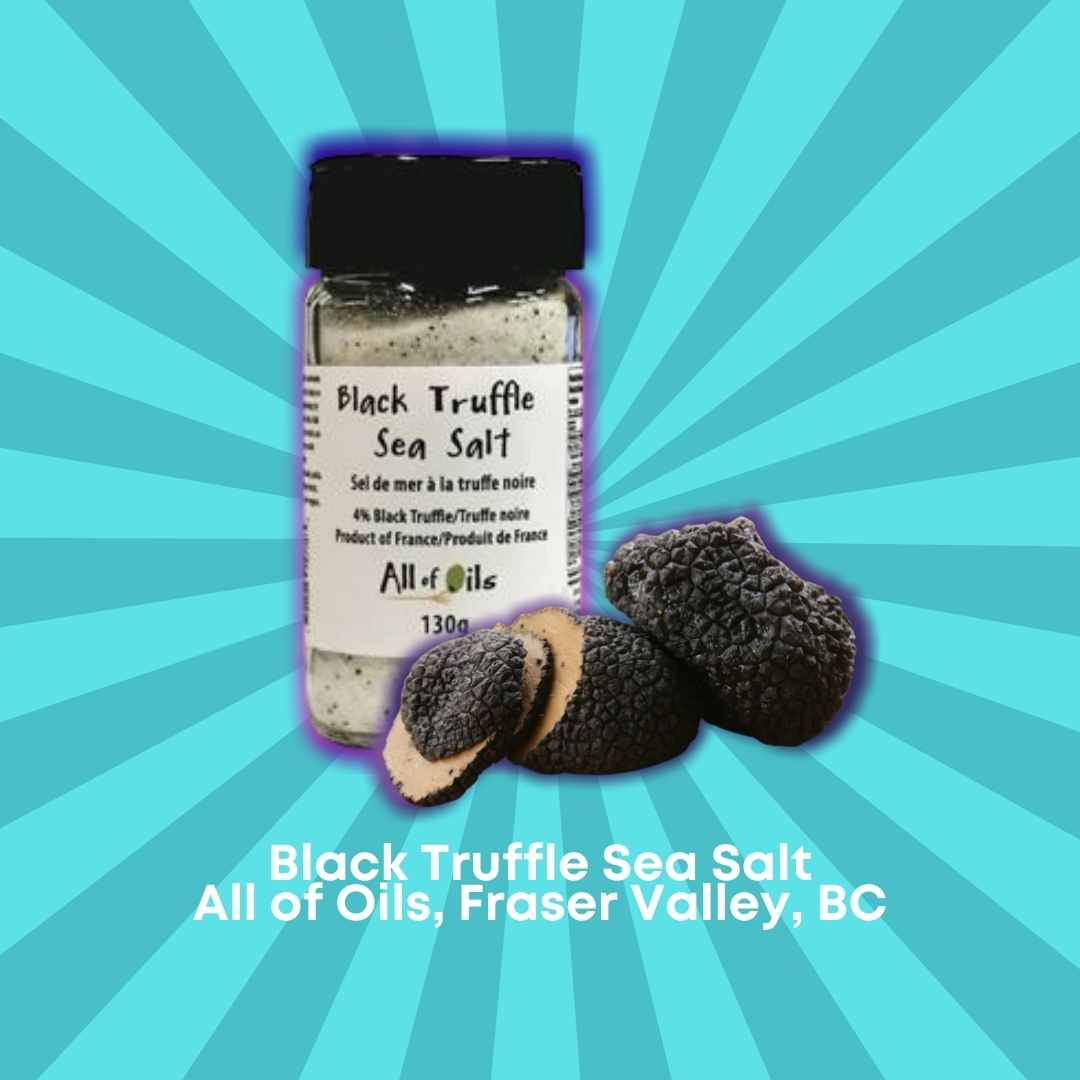
A grid, which features multiple images split into a visually appealing frame, is one way to brand your business on Instagram.
Three benefits (that connect in the end) –
Command attention: make a lasting first impression; if a viewer’s average attention span is about eight seconds, they will have some time to absorb what you have to present to them.
Stand out: imprint your audience’s mind with a quick taste of your identity; give them immediate access to your information and interests while establishing credibility and authority.
Tell a targeted story: communicate who you are to your existing and potential followers while stimulating emotions, and on a practical side, organizing the layout of your images into a narrative.
I created these grids when reviewing the masses of content I have made over the past year for DirectFood. store’s email marketing strategy (a whole other topic on its own). I like how the colours and shapes seem to speak to one another, and the creative copy helps deliver a message in tune with the selected graphics and photographs.
If you like this sort of work, let me know. I’m happy to share more impromptu design posts here for you!
Daisy was always looking for inspiration, the appearance of cursive writing or the look of a padded, bulky knit sweater featuring crimson and indigo animal characters like Filburt. Anything creative, really, would do.
The day she noticed something, she quizzically peered into a bathroom mirror, hoping because she was in the large stall, her sweater would reverse.
Utterly distracted, Daisy made a note never to do it again.
“My progress has become insuperable from all the months of writing exact-sized phrases and headlines with five words or less.” Daisy thought fast while twiddling her phone in her hand.
“Have things changed in A Day? What were things like when I first started anyhow?” she thought. “Well, I was definitely more satisfied. Had a bounce to my step, could care less about the matchy-ness of my outfits. I also felt more powerful, like people were listening to me, learning from me, and so on.”
Stroking her phone, Daisy continued, “However, today, everything is an exercise—an exercise in recalling (all types included).” Distracted, she goes on, “I have great hair, and my skin is young, it seems. On that note, ageing has not necessarily imparted more wisdom or money in my purse.”
She was always digressing.
Back home, Chona grabbed her fire orange Frank & Oak bucket bag and booked it out the door. She was late, again. Always leaving the house ten minutes post-shower. She hopped into her 2008 white Rogue and took off toward the light.
The road was slick, and rain dripped down hard, like her binary code pleated skirt that streamed neon pink zeros and ones from her waist down to her thighs.
She hated driving, though. It was dangerous in Elevententeen, and she knew one day it would kill her. Still, she cranked the radio and listened to old 90s songs like The Cranberries’ Linger. She hummed this tune imagining it more regal played on the baby grand piano at her dad’s house.
When she sat back to play, his gigantic TV wouldn’t let her use the old music books, so she had to carefully balance grade 8 Royal Conservatory in volumes six, seven, eight and ten. The chords? They prevented her from falling.
Daisy’s next big project was sitting in her bag. She put it in there to prevent its glorious shimmer from stirring the Outsiders’ eyes. It could kill, and she didn’t want to be a murderer tonight.
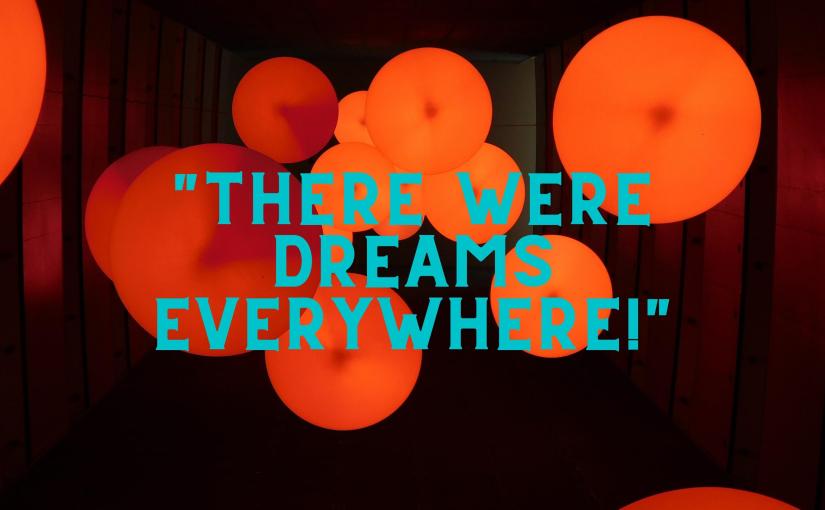
Finally arriving, she stepped out of her car. There were Dreams everywhere! She blinked. Then, blinked again. Her eyes started to roll back into her head, and she could feel the surge streaming now from her crown down to her feet, hiding neatly inside her red rain boots.
In her room.
Someone painted her Brooklyn studio apartment bright orange-red! So, she knew the test had begun.
Should she attack? Chona could barely hold her head up, let alone break out into dance and song. She would just have to sleep it off, her phone continually buzzing that darn song. Then, like all the other times, she passed out. What remained Wide Awake in complete consciousness (forget Artha today) was her supple orange bucket bag. And within it, her project, slipping away…
A great campaign is built on a solid concept. It can stir our emotions and set our souls free to dream. Recently, I had the opportunity to put together a Valentine’s Day video campaign for DirectFood.store. It was a fantastic experience, and I am proud of the output. Here is a little bit more about it.
DirectFood.store is a DTC online grocery store delivery platform that sells fresh, local and organic food from local farmers and vendors to the community. As a brand, DirectFood.store aims to inspire and empower consumers to eat healthily, buy local, and learn more about the farm-to-table concept. Priority is placed on ensuring high-quality products, affordable pricing, and easy ordering, plus free delivery direct to the doorstep.
For this particular campaign, our objectives are:
Increase brand awareness
Connect with our target audience (young, millennial couples and families with kids; age 25-34 / baby boomers drawn to compelling video and who will purchase something based on its value; age 45-64)
Promote interest in our platform and products
Provide entertainment
Create a need for buying local, fresh & organic food from local farmers and vendors with free delivery direct to the doorstep
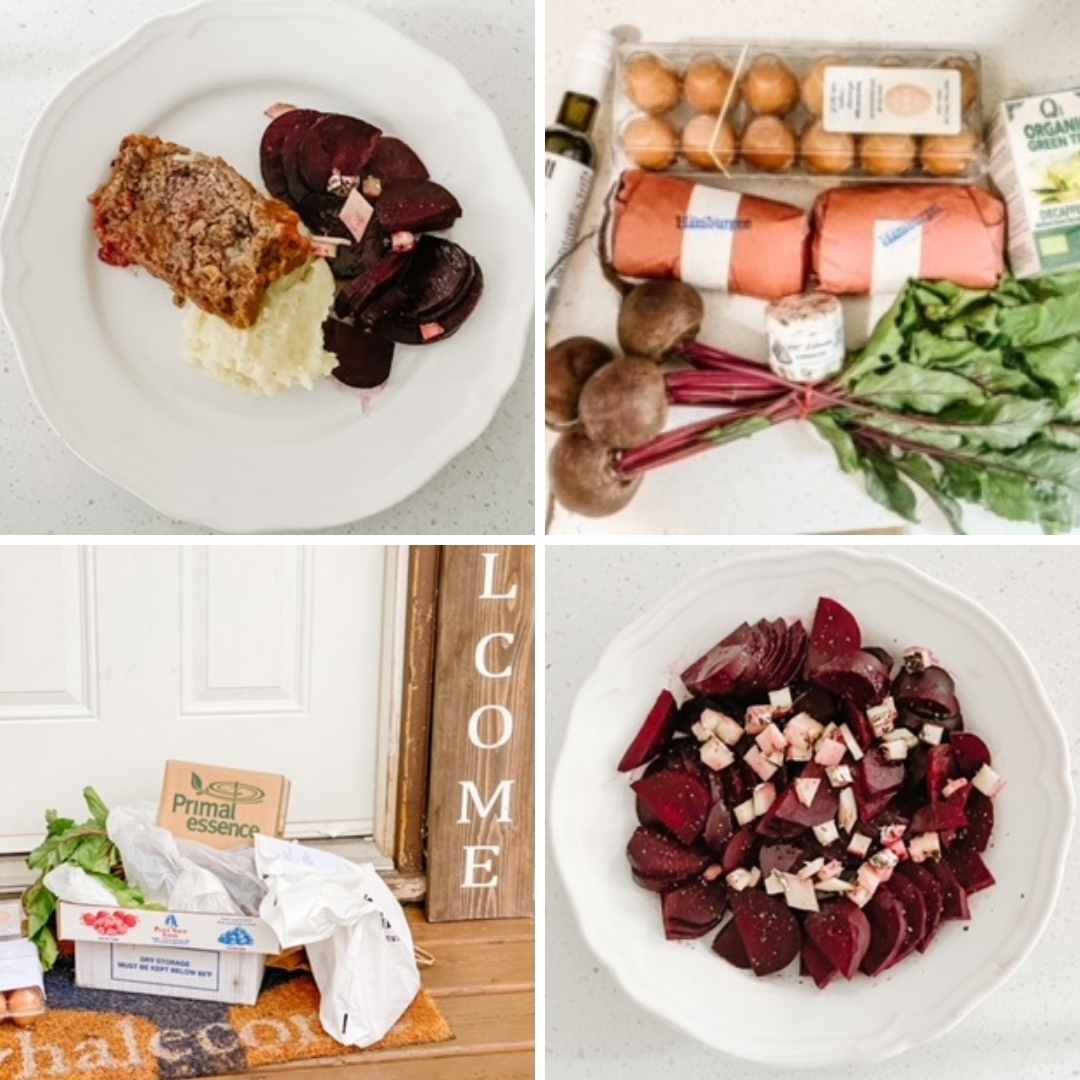
The campaign features BC blogger and influencer Chelsea Helm. We find her wondering how to impress her Valentine. While pondering an answer, she suddenly thinks of DirectFood.store. She decides to put together a thoughtful and delicious dinner for her partner. The campaign follows Chelsea through her decision-making process. She orders the ingredients, and they arrive at her doorstep. We then capture her preparing a steak and salad, setting the table and signing a Valentine’s day card. Will her Valentine make it in time? Will they be surprised? Ultimately, she shares with the audience that through DirectFood.store, you can make something special for that special someone in your life.
I wanted the advertising tone to be fun, happy, thoughtful, romantic, youthful, and vibrant. Our primary message is that consumers identify with our brand, and our products fit their lifestyle and choices. I think we hit the mark, and best of all, the campaign was completed on brand, on time and on budget. Now to see how it performs as a Facebook ad!
I hope you enjoyed the video. If you have any questions or comments, feel free to reach out!
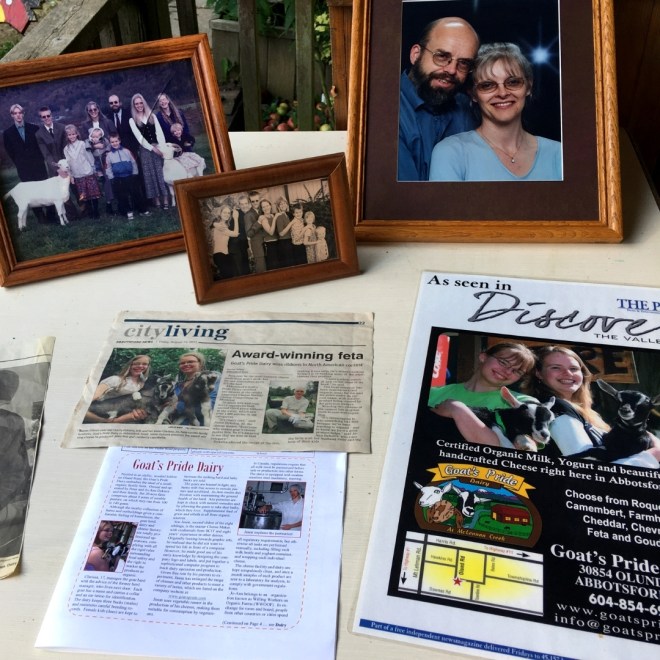
Milca (teammate) and I spent the afternoon filming on location at Goat’s Pride Dairy.
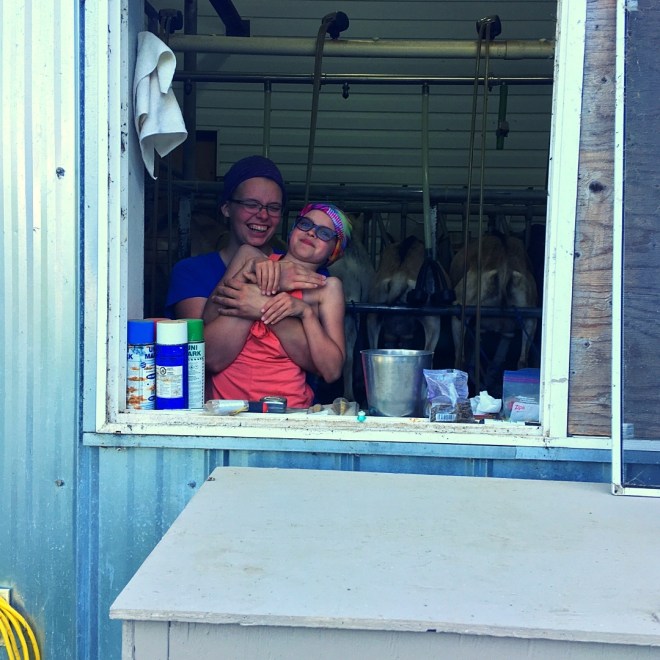
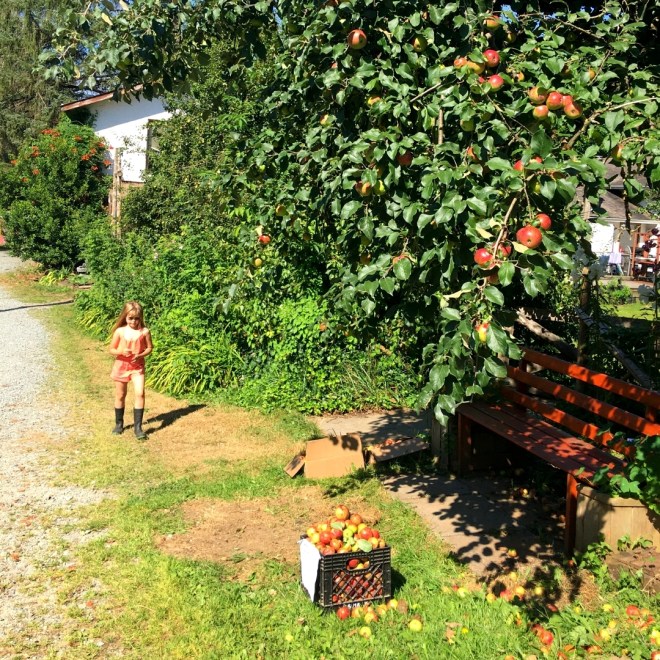
I arrived earlier, still late, but feeling excused because of the weather. I was greeted by a girl in a salmon-coloured romper, and then shortly, another young girl looking much the same presented herself smiling. They could have been twins, but one was taller and wore a hat I could not stop examining. For my life, I forget what Jo-Ann (matriarch of the Dykstra family) called it, but alas, it was some sort of hat slash cover used to protect the face and hair from harsh elements.
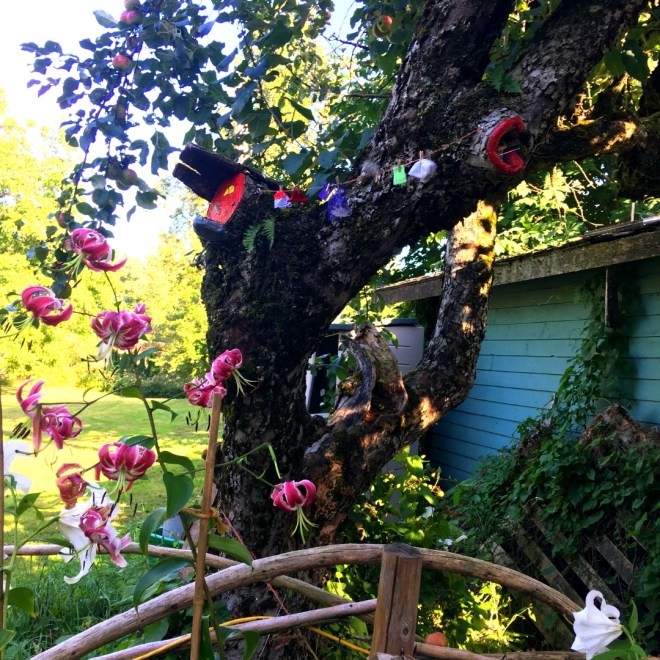
I asked a quiet girl sitting on a step if she knew where Jo-Ann could be. She turned out to be the farm gardener. I asked the young girls. It was only after they cautiously pointed me in the direction of the bathroom, that I noticed a small house set stoically aside an apple tree, which the girls promptly proclaimed, “That’s the shop! She is probably in there!”
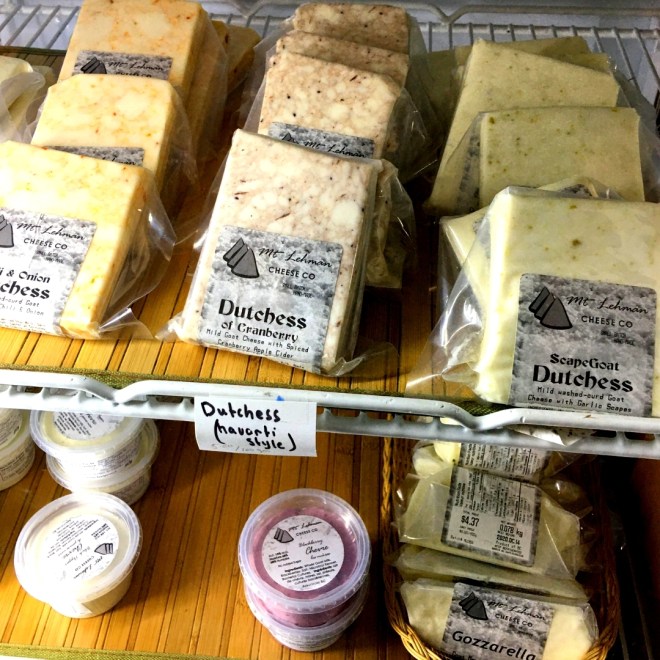
And there I found her. She had an easygoing air and quirky smile and laugh. Jo-Ann Dykstra was stocking fridges for ‘social media’, which I thought was brilliant. I appreciated that she was still preparing her farm for our visit. We had a brief introduction, then went off on our ways. I had to check if Milca, my filmmaker, had arrived, and Jo-Ann was probably considering a few other things to wrap up before filming commenced.
Other family members started to appear; each one donning a bright blue t-shirt with amusing imagery and text that accurately explained the context of their ubiquitous smirks. It was fun and again very thoughtful and made a tremendous blue background for certain shots, primarily in the greens or browns.
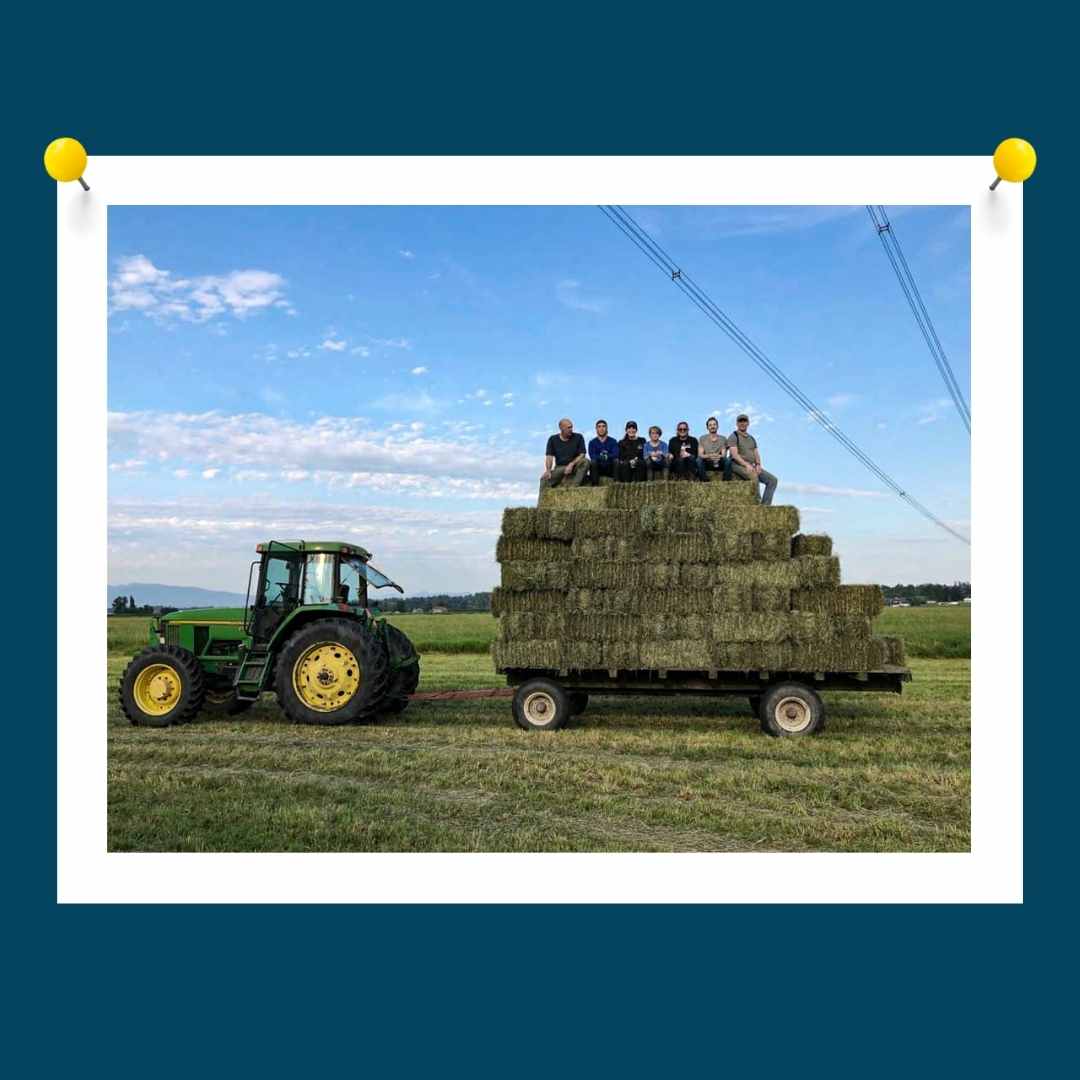
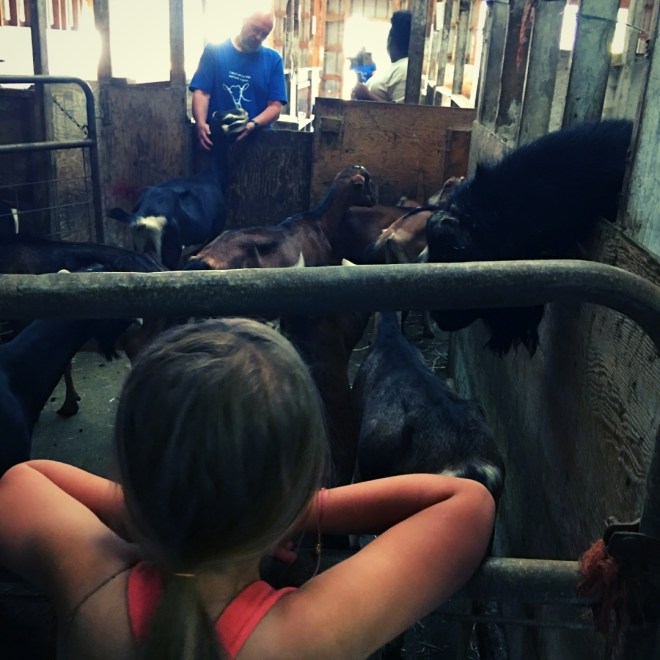
And so she finally arrives, with all her equipment. I am mesmerized by her calm and friendly demeanour, telling myself in my head, I need to be more like Milca. We filmed for the next 3 hours, if not more. The processing room where we witnessed son Jason laboriously creating goat mozzarella (Mt. Lehman Cheese Co.). The interview portion on the backyard veranda. The goats inside their cozy home. A new baby goat only four hours old. And best of all, daughter and grand-daughter milking the herd. Finally, a quick visit to the babbling brook known as McLennan Creek, also the name of their store as prescribed on a handmade wooden sign.
It was a great experience. It felt like I was at home, as a boarder or wanderer travelling across British Columbia who finds a remote place that offers up service, work and a sprawling, farm-set playground. It was almost too hard to leave, sharing a last-minute conversation with Jo-Ann about their upcoming open house.
If you have a chance, visit their farm and experience goat farming first hand. You will be welcomed, and I guarantee, the two young farm managers will greet you with open arms, maybe matching outfits as they did us today. You’ll want to explore and find out what a smallholding agricultural operation is like.
I am just being introduced to the world of agriculture, and I am astounded every day. I look forward to learning more about farming in the future!
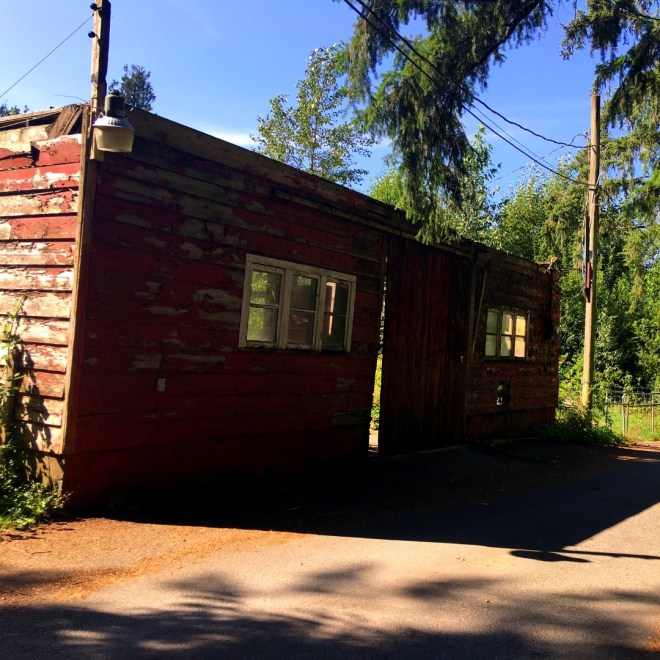
Here are some photos I captured. We will be sharing our first Farm Stories video soon, so stay tuned!


























































 Blox. is a Creative & Technical Marketer