When the magic happens, You’re making change happen.
Identity stamped to perfection.
Understanding:
style, thinking, love, goals and aspirations.
There are always ways to re-imagine.
Be who you are. Strive to be better.
*This is a new day, a new era. My new personal brand stamp marks each letter as if to say, “Hi there!” We need to have a conversation about creativity and art and art and creativity and that relationship specifically.
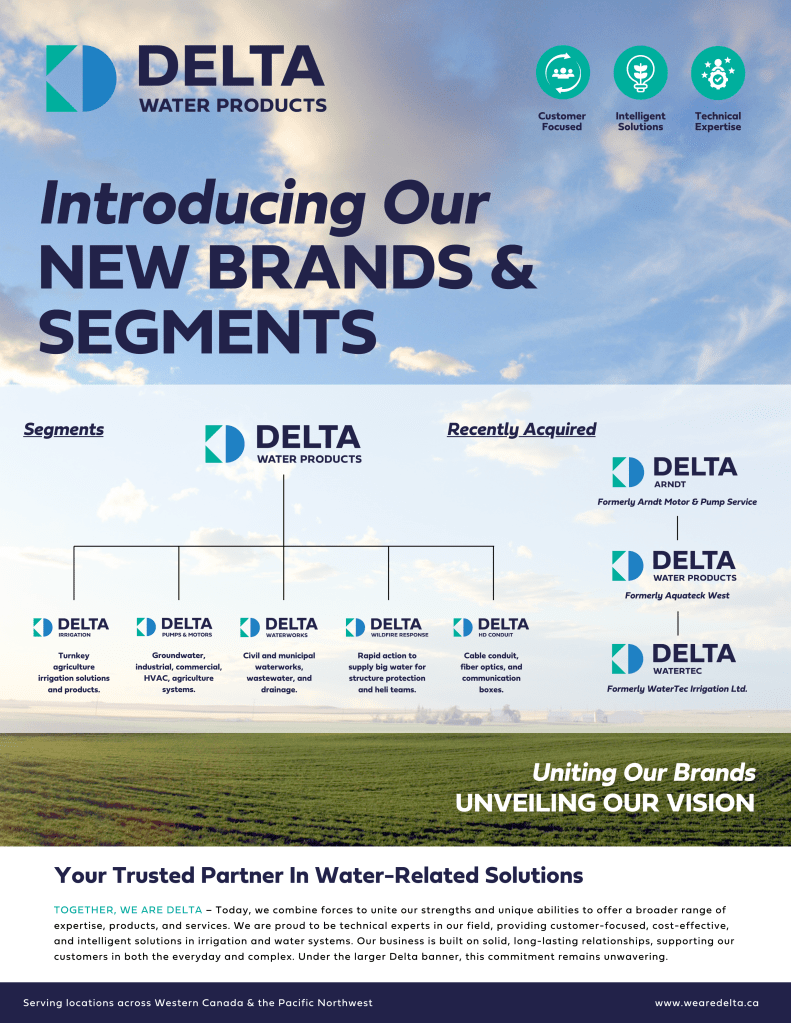
It’s been a slice since I’ve been on here. It’s because I have recently (well, about five months ago now) started a new job! I’m so excited. It has been the opportunity of a lifetime, and I am learning so much about a new industry and finding myself passionate about the projects I’ve been undertaking. Who is the new company? Delta Water Products! The head office is locally based in Chilliwack and has 14 branches across Western Canada and the Pacific Northwest. I’ve been hired as the new Marketing Manager, and my very first task was to take on the company’s rebranding as it became the parent name to several sub-brands, which required a complete revitalization of the brand.
Now, it’s essential to remember that rebranding is not a mere cosmetic change like a new logo or catchy tagline; it’s a strategic initiative that can redefine a company’s identity, reposition it in the market, and set the stage for long-term success. As businesses evolve, rebranding can be crucial in aligning a company’s image with its vision, values, and the market’s ever-changing demands. Understanding this strategic nature of rebranding can empower those involved to make informed decisions about their company’s future. Let’s delve in to understand better what a rebrand is.
What is Rebranding?
Rebranding is the process of changing an organization’s corporate image. It involves updating or completely overhauling the brand’s name, logo, visual identity, messaging, and sometimes its core values and mission. The goal is to create a new identity that resonates with customers, differentiates the company from its competitors, and reflects its current or future ambitions.
For many companies, rebranding becomes necessary after mergers or acquisitions, market shifts, changes in customer preferences, or a desire to enter new markets. It’s a way of breathing new life into a brand and ensuring it remains relevant and competitive.
What Makes a Successful Rebrand?
A successful rebrand is one that not only captures the essence of what a company stands for but also resonates with its target audience. Here are some key elements that contribute to a successful rebrand:
Clear Purpose and Vision: A rebrand should be driven by clearly understanding the company’s goals. Whether it’s to attract a new customer base, reflect a merger, or reposition the brand in the market, the purpose behind the rebrand should guide every decision.
Consistency Across All Touchpoints: Rebranding isn’t just about changing a logo. It’s about creating a consistent brand experience across all customer touchpoints—from the website and social media to packaging and customer service. Consistency helps build trust and recognition among customers.
Stakeholder Involvement: A rebrand should involve input from critical stakeholders, including employees, customers, and partners. Their insights can provide valuable perspectives on what the brand represents and how it should evolve.
Authenticity: The new brand identity should reflect the company’s values and heritage. A successful rebrand doesn’t mean abandoning what made the brand strong in the first place; it’s about building on that foundation.
Effective Communication: It is crucial to communicate the reasons behind the rebrand and what it means for customers. Transparency helps in gaining customer buy-in and ensures a smooth transition.
Rebranding for Sustainability and Longevity
A well-executed rebrand can significantly contribute to the sustainability and longevity of a company. Here’s how:
Adapting to Market Changes: As markets evolve, so do customer needs and expectations. Rebranding allows a company to adapt to these changes, ensuring it remains relevant and competitive.
Expanding Market Reach: Through rebranding, a company can reposition itself to attract new customer segments or enter new markets. This expansion can lead to increased market share and growth.
Strengthening Brand Equity: A robust and consistent brand builds equity over time. Rebranding can refresh and reinvigorate a brand, increasing its perceived value and enhancing customer loyalty.
Reflecting Growth and Evolution: Companies grow, and their brands should evolve to reflect that growth. Rebranding allows a company to communicate its progress, innovations, and future direction.
Building a Unified Brand Identity: In the case of mergers or acquisitions, rebranding can unify different entities under a single, cohesive brand. This simplifies the brand architecture and helps create a more substantial, recognizable presence in the market.
This rebrand was not just about a name change. It was about unifying these brands’ strengths and unique abilities to offer a broader range of expertise, products, and services. By becoming Delta Water Products Group, the company has expanded its geographic coverage across Western Canada and the Pacific Northwest and diversified its product segments, including Irrigation (Turnkey agriculture irrigation solutions and products), Pumps & Motors (Groundwater, industrial, commercial, HVAC, agriculture systems), Waterworks (Civil and municipal waterworks, wastewater, and drainage), Wildfire Response (Rapid action to supply big water for structure protection and heli teams), and HD Conduit (Cable conduit, fibre optics, and communication boxes).
This rebranding effort underscores Delta Water Products Group’s commitment to sustainability and longevity. By consolidating under a single, cohesive brand, the company has strengthened its market position, making it more agile and better equipped to meet the needs of its customers today and in the future.
I hope this all makes sense to you! Just keep in mind – rebranding is a powerful tool that, when executed thoughtfully, can increase a company’s relevance, market share, and longevity. It’s more than just a visual overhaul; it’s about aligning the brand with the company’s current and future goals. For companies like mine, rebranding has provided a renewed sense of purpose, a more robust market presence, and a clear path forward in an ever-evolving industry.
We took many steps to execute the rebrand, including building a new landing page, updating email signatures, and releasing brand announcement letters. My next big project is building one unified website to consolidate the brands and represent our group. I’ve shared a couple of different brand announcements I made below so you can understand my approach and the new branding. If you have any questions, feel free to contact me anytime!
🚀 Embrace Innovation + Disruption = A Lesson for Every Marketer
I downloaded a new app called Headway. It’s a great way to learn about new books, and I recommend it to anyone. Here are some of my learnings over the weekend.
The main idea is that creating a new market poses less risk than entering an established market. It is also more rewarding. Nonetheless, small new markets can barely satisfy the required growth requirements of larger businesses.
In other words, businesses may overlook game-changing opportunities because their model is primarily to maintain the status quo. 🛳️ To lead the pack, marketers must be forward-thinking, disruption-leaning changemakers.
Here are a couple of definitions to start –
Innovation: In marketing, this is the fusion of creativity and strategy. Innovation is our ability to craft compelling narratives and experiences that captivate audiences, redefine brands, and transcend conventional boundaries.
Disruption: Closely connected to the above, disruption in marketing is the radical departure from norms, leveraging innovative approaches to challenge conventions and reshape audience/buyer behaviour on a larger scale.
So, what’s the takeaway for us marketers? Here are a few key points to keep in mind:
🔍 Stay vigilant: Keep your eyes peeled for emerging trends and technologies, even if your first inclination is to tell yourself it’s too small or too niche of an idea. Do you want to cross over strategy between industries? Why not see how it fits? Run some experiments to test the waters – but before you launch anything, earn buy-in from your team. Your role will be to convince them with supporting data.
💡 Think like a startup: Embrace agility and experimentation. Don’t get too comfortable with your current strategies. See the value for your audience. How does that influence business outcomes? And if there is a misalignment, you might focus too much on activities and output. Your strategy must respond to change, not be static or a quest for perfection.
🗣️ Listen to your audience/buyers, but watch the market too: While meeting current needs is significant, don’t ignore opportunities outside your existing customer base. Seek out different and diverse points of view. Your creative director friend? He might have some powerful assertions worth exploring. Always carry paper and a pen as it provides immediate focus and stimulation – good stuff for your head.
⚡ Be proactive: Don’t wait for disruption to hit you—seek ways to innovate and stay ahead of the curve. And you can do it by yourself! Self-learning can help learners become more autonomous, organized, self-disciplined, and able to communicate. Just remember – cross-collaboration over silos and hierarchies.
What are your thoughts on innovation and disruption in marketing?
Somehow, it’s an arduous undertaking that I would prefer to leave to my more inclined husband. But tonight, I took it on with confidence.
Lo and behold! I opened her bathroom drawer to reveal not one but three containers of toothpicks. I could smell the faint glimmer of mint, and as I observed the labelling on the bottles, I discovered three different flavours altogether – mint, cinnamon, and KOKESHI.
Now, I presumed that the flavour on the label would match the scent of the toothpicks. So began the exercise. My daughter and I smelled each bottle. Mint, yup mint. Cinnamon, oooh that’s cinnamon. Kokeshi? My daughter inquisitively smelled the toothpicks in the distinct red-orange packaging. Smells like flowers, Mom! I took a whiff and debated, no no, I don’t think so.
I peered through the cheap plastic receptacle and saw that the toothpicks were a different shape. I uttered to my daughter, must be because of this. I pointedly placed the bottle in front of her eyes. We weren’t satisfied. They did look different from the others, looking fancy for picking up appetizers. So, my daughter proclaimed, check Google! Check Google! And with the swipe of a finger, the answer arose –
Kokeshi
Kokeshi are simple wooden Japanese dolls with no arms or legs that have been crafted for more than 150 years as a toy for children.
They are symbols of hopes for bountiful harvests, wishes for good luck and fortune and embody an appreciation for craftsmanship and culture.
Now, this would have been a great answer, but in our case, it was REVELATORY.
I looked in front of me.
Standing peacefully erect on my daughter’s bathroom counter for as long as I can remember was…a…KOKESHI.
Not any kokeshi. A doll I lovingly received from my mom’s very close Japanese girlfriend, Misuko, back in 1985.
My daughter and I squealed with delight. The happenstance was nothing short of extraordinary! And to think, it only took 38 years or five times the length of my daughter’s life to discover it.
Sometimes, life throws you curveballs. Most of the time, you catch the ball like any other ball, on any other day, with the same approach and sentiment. But other times, life passes you inexplicable gifts—gifts that bring light and love into every inch of your being.
As marketers, throw and catch balls. But once in a while, BE the ball and notice the infinite bubbles of gratitude that permeate your life.
Revelation. I’ve taken up something I’m sure a million (or more) of you do. I’m back to listening to ebooks while driving to work. Haha – and you thought it would be something more complicated! I did it before but found I was getting bored of it. I’m unsure if it’s the drone of narration or my susceptibility to zoning in and out. Probably a mixture of both. Alas, as part of my year of sharing insights, I thought it would make sense to dedicate myself to it again.
So, today, I want to talk about reciprocity in marketing. From a psychological standpoint, this rule is simple. What you give is what you get. We tend to feel obligated to return a favour or gesture after receiving something from someone else. If I come back from the cafe with a donut for you, you will likely buy me a baked good the next time you’re picking up a coffee. 😉
In marketing, this sense of indebtedness in our actions, or more specifically, messaging, can steer our audience to feel more motivated or compelled to make a decision that will impact their buying trajectory. For example, as part of our ABM strategy, I put together a booklet and sample kit for prospective customers. The act of sending and receiving the package in the mail is not only thoughtful but leverages something of value, something tactile and beautiful, something helpful and intriguing that, in turn, can help the receiving party better understand where our brand comes from and ultimately, our passion and intention of supporting the design and construction community through not only inspiring architecture but inspiration, in and of itself!
Creating this cycle of giving and receiving strengthens social connections and encourages cooperative behaviour among individuals and groups within communities, small and big. I see it as small steps of action becoming big sips of gratitude and many more meaningful opportunities in the future!
Have you taken a reciprocal step? In what way did it change the trajectory of your day? Your goals? Your journey as a marketer?
Not done yet! Reciprocity has even been known to foster creativity and innovation, such as this Adobe example in a short Medium article – https://bit.ly/48McaDl
I want to make 2024 the year to share some insights. I have time! You have time! We all have time! While perfecting pour-overs, tackling big hills on runs, or when driving into work – these are all great opportunities to listen and learn something valuable, even if just one small concept, it could turn into a big change-maker!
First up is the Cube of Creativity by marketing strategist Andrew Davis. This framework can help marketers leverage their creative process to promote innovation and encourage better outcomes.
To apply this shift in mindset, we need to be open to embracing constraints, defined by the four sides of a cube –
1 – Eliminate the Unnecessary 2 – Define a Single, Measurable Outcome 3 – Add Unreasonable Creative Constraints 4 – Raise the Stakes
A fighter brand is when a company introduces a new, lower-priced product or brand to compete directly with its own existing products or with those of its competitors.
The purpose of a fighter brand is to target price-sensitive consumers who may otherwise choose a competitor’s cheaper alternatives, thereby protecting the company’s market share and overall brand image.
Pros
Market Segmentation: A fighter brand allows you to target different market segments simultaneously. It enables you to cater to both price-conscious consumers and those who are willing to pay a premium for your main brand, thus widening the client base.
Competitive Advantage: By offering a lower-priced option, you can directly challenge your competitors on price. It can capture clients who prioritize cost savings without undermining the reputation or sales of your higher-priced main brand.
Risk Mitigation: In the face of tough economic conditions or fluctuations in consumer preferences, the fighter brand can act as a buffer for your overall performance. If consumers tighten their budgets, they may switch to the more affordable fighter brand, maintaining sales for you.
Brand Loyalty: Clients who begin their journey with the fighter brand may eventually move up to your main brand if they have a positive experience. It can create brand loyalty within the client base, potentially increasing long-term client retention.
Cons
Cannibalization: One of the significant risks associated with fighter brands is the potential for cannibalization of sales. If the fighter brand draws clients away from your main brand without attracting new clients, overall revenue could suffer.
Brand Dilution: Introducing a lower-priced brand may lead to a perception of reduced product quality or brand dilution. If not managed carefully, it can negatively impact the image of your main brand, especially if clients associate the fighter brand with inferiority.
Marketing Costs: Successfully launching and maintaining a fighter brand requires investment in marketing and advertising. If the returns on this investment are not significant, it could strain your financial resources.
Logistical Complexity: Operating multiple brands can add complexity to your supply chain, distribution, and inventory management processes. It requires careful coordination and management.
Impact on a Growing Company:
For a growing company, introducing a fighter brand could have several implications:
Competitive Edge: In a competitive market, launching a fighter brand could help you gain a competitive edge by offering a more affordable alternative to your existing products and those of your competitors. This could attract budget-conscious clients and win market share.
Revenue Stability: Economic downturns or fluctuations in any industry can affect purchasing behavior. The fighter brand could help maintain revenue stability during challenging times by capturing price-sensitive clients.
Customer Acquisition and Loyalty: The fighter brand can act as a stepping stone for clients who are initially hesitant to invest in your main brand’s premium products. If they have a positive experience with the fighter brand, they may become loyal clients and eventually upgrade to the main brand.
Product Diversification: Introducing a fighter brand allows you to diversify your product portfolio and address the needs of a broader client base. This diversification can reduce reliance on a single product line and expand market reach.
Challenges in Brand Management: You must carefully manage your marketing and positioning of the fighter brand to avoid brand dilution and cannibalization. Clear differentiation between the fighter brand and the main brand is essential to maintain their distinct identities.
Operational Considerations: The introduction of a new brand may require adjustments to your processes, supply chain, and distribution channels. Proper planning is necessary to handle the increased logistical complexity.
In summary, a fighter brand can be a valuable strategy for a growing company. One main benefit of developing a fighter brand is that clients who initially purchase from the fighter brand might be enticed to upgrade entirely to or add-on different products and services as their needs and budgets evolve. This can foster long-term client loyalty (a longer term marketing strategy). To solidify a fighter brand’s market position, you would need to develop a clear communication strategy to explain the relationship between the main brand and the fighter brand to avoid confusion among clients.
I’m going to share more explorations on brand types in coming posts, so stay tuned!
Industry 4.0 is revolutionizing how companies manufacture, distribute and improve their products. But how does it impact businesses from a marketing perspective?
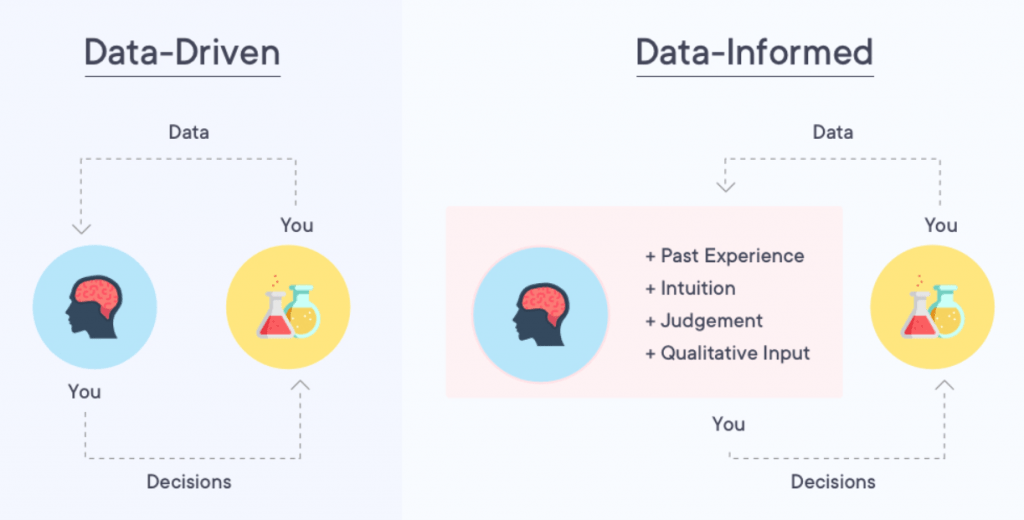
Characterized by increased automation and “smart” machines and factories, Industry 4.0 differs from previous industrial eras because manufacturing companies now have informeddata (data + research + experience + personal insights) to help them manufacture their products more efficiently and productively across the value chain.
As a positive example of social, economic, and environmental responsibility, Industry 4.0 provides an incredible opportunity to share and expand on core concepts (for a manufacturing company, these could be ideas like efficiency, reliability, and speed) via targeted and strategic messaging. I’ll talk about a 9-Point Marketing Strategy later!
You can achieve this by promoting modern, forward-thinking concepts that can help differentiate you (this is USP) from others (competitors) in the marketplace.
Your USP or Unique Selling Proposition makes your business better than your competitors and is the reason why customers should buy from you. A USP informs every business modality, including brand management, slogans, developing and describing new products and services, and how you interact with clients. A strong USP will put your customers needs front and center.
Here are topics that can help build your USP as a manufacturing company (wanting to dial into Industry 4.0 concepts in messaging) –
Increasing revenue and profitability: Industry 4.0 creates a more efficient and higher-quality production process and opens up marketing avenues for differentiating your product user journey against others in the marketplace.
Optimizing processes for improved outputs: The need for integrated systems and the results they can produce will drive greater collaboration and communication among producers, suppliers, and other stakeholders in both the technological and marketing domains.
Leading with high-quality products: You have a tremendous opportunity to realign and refocus quality and demonstrate to the world how new technologies can benefit and synergize the entire manufacturing industry, putting you in a position to lead the way with how you position your brand.
BRAND IMPACT
The impacts of Industry 4.0 (automation, “smart” machines and factories, etc.) can work conceptually and integrate into a marketing plan or strategy. Take its main outputs (for automation, think efficiency, reliability, speed) and apply them in cross-functional applications (namely, your content and messaging).
For example, if your drive for “efficiency” is to make your products easier to manufacture and is achieved thanks to new technologies like “smart factories”, then the output would be how it contributes toward messaging concepts like industry-best lead times (meeting on-time delivery requirements of clients) and added capacity to provide exceptional customer service (improving the client experience by developing enduring relationships at every touchpoint).
Today, I am developing a streamlined approach (that’s the 9-Point Marketing Strategy!) and testing various campaigns and projects to attain current goals and inform our future work. Of course, ensuring my team is collaborative and agile while leveraging informed data to drive the vision and mission forward.
It will be exciting to see what new product innovations (and process changes within marketing) grow from Industry 4.0.
What are your thoughts on this topic? Share, share away!
A good curveball is an opportunity (remember, problems are opportunities) to:
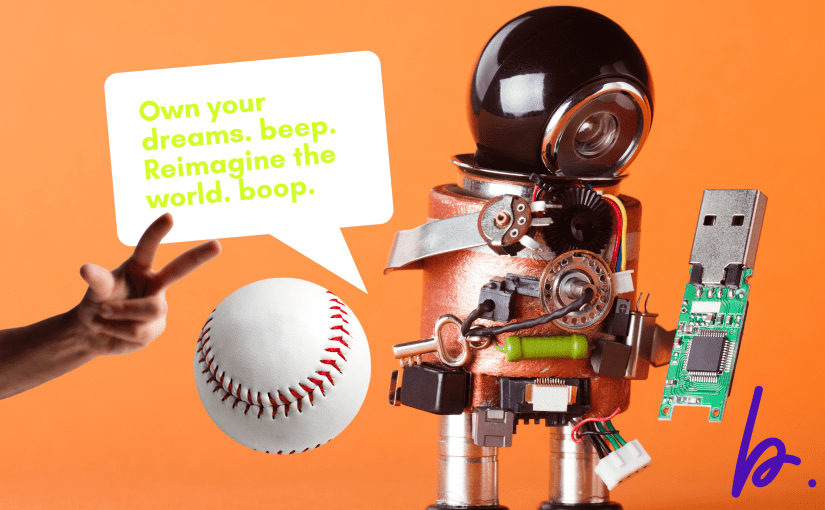
1 – Own your dreams.
2 – Reimagine the world.
Own Your Dreams
To own your dreams, you must recognize, acknowledge, and value the fact that something is waiting for you out in the world.
It is there to fulfill.
It exists to make you happy.
You are satisfied when united (or reunited) with it.
It becomes a part of you and can be shared with others.
A Good Curveball
Owning my dreams is being connected to work I’ve always envisioned doing—building a sustainable and scalable brand that will influence people inside and outside the operation.
Reimagine the World
Second, to a good curveball is our ability to reimagine the world. Through a clear and defined vision and mission, we can accomplish anything. With a good heart and holistic stance, our world can become something better, more equal and more understanding.
Reimagining the world involves pushing boundaries, setting new standards, and developing a structure or process that leads to innovation, progression, and growth.
I think I get thrown more good curveballs as I age, so I hope this becomes the norm and the opportunities don’t cease!
As I continue to inspire and empower people to make a difference in their daily lives, I recognize three things that matter to me today. Of course, there’s always more, but let’s get started with these!
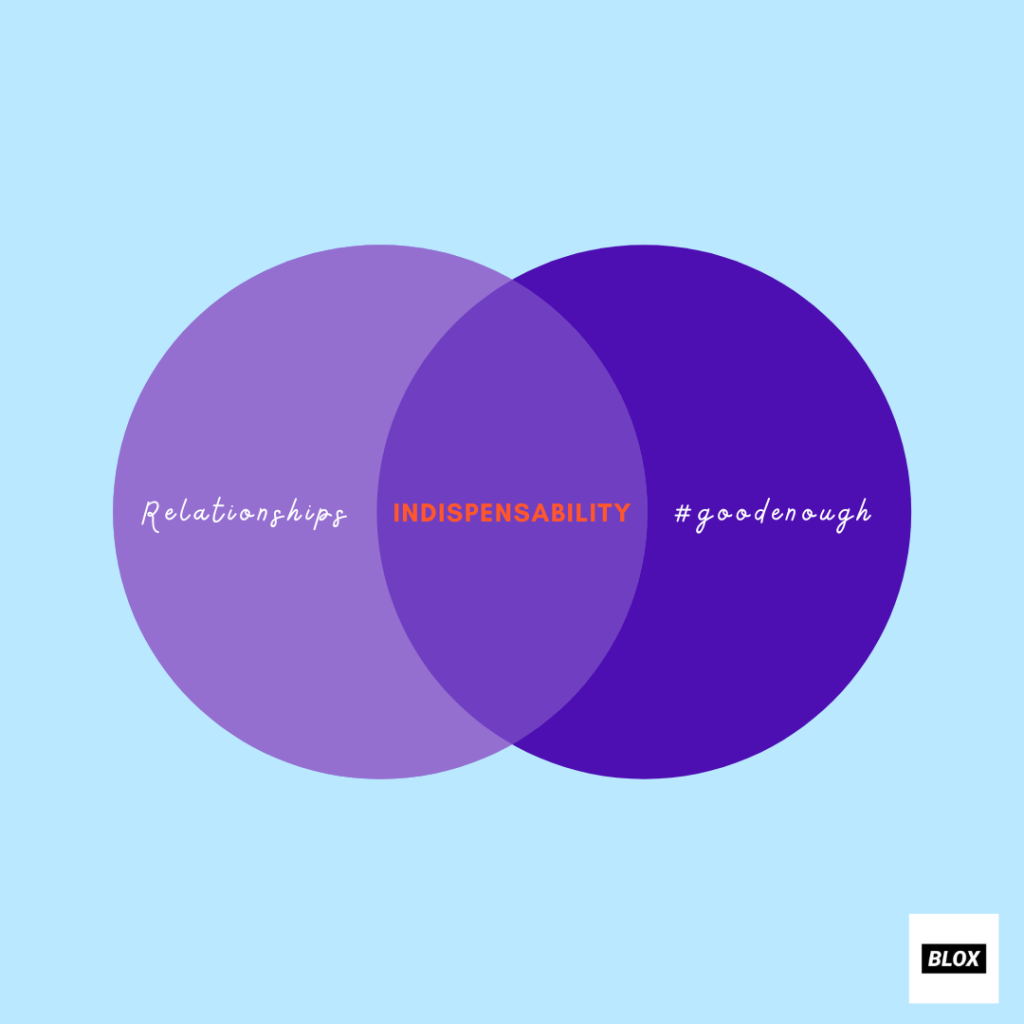
Become Indispensable
1- Relationships
One of the biggest influencers in my marketing career has been the formative relationships I have built over time—in both the long and short-term. Having a direct report has taught me to be vulnerable and courageous as I’ve had to steer a small team in a viable direction while maintaining strong, personal connections which benefitted the entire team. I am particularly grateful for the opportunity to work directly under the Founder and CEO of Clearbridge, Ryan Kononoff. He has taught me many things about engagement and the effort required to make meaningful projects matter to an audience. I am also thankful for every other team member I’ve had the chance to grow alongside.
You are bright.
You are dedicated.
You are special!
2 – #goodenough
This is one lesson that has helped me to conquer my perfectionism. I recall working on one of my first projects, a new brand book (or later called a Playbook), which in scope was a huge undertaking that could have demanded months of work. But with the knowledge that a marketer should be agile, or as the Agile Marketing Manifesto states –
“To keep up with the speed and complexity of marketing today, we must deliver value early and often over waiting for perfection.”
In creative marketing, we challenge ourselves by generating work that is original, unique and that manifests a change in its surroundings. In analytical marketing, we must use data sets to quantify results. Pairing the two (creative + analytical marketing) is where #goodenough truly shines—we can experiment to determine what approach works the best, and we don’t have to wait to be enlightened. We should find insights with every movement or decision we make!
3 – Indispensability
I rarely finish an entire book in one sitting. It’s often hard for me to finish it at all. I prefer to scan information and read what will be of value to me. Such was the case with Seth Godin’s book Linchpin. As he writes –
“You have brilliance in you, your contribution is essential, and the art you create is precious. Only you can do it, and you must.”
Such an important lesson because it’s much too easy to forget your worth. We must use every inch of our being to recognize and become more self-aware. In marketing, the potential to get lost in a sea of tasks and activities might forsake where the value truly lies—creating, ideating, and examining the wonder and change that a type of approach can incite.
Being indispensable takes:
Courage
A growth mindset
Initiative
Risk
And most importantly…talent. You can’t duplicate indispensable work. I truly believe this!
The Playbook
A pièce de résistance, I hope you find value in reading it!











 Blox. is a Creative & Technical Marketer