Here are some social media videos showcasing the #corpcorp vibe.
We all know that these days, videos garner much more engagement than static images and visuals. That’s because they emit a sort of energy, which transmits directly to the viewer, influencing their experience with the content and helping them to make decisions that impact the brand’s ability to connect, sway, and sell.
In my opinion, a good short video pays special attention to the interaction between sound and movement – this in itself moves your audience along, can build anticipation, as well as excitement. Realistically, you have about 3 seconds to make an impression, so it’s critical to ensure the beginning of your video starts off with a bang.
I’m looking forward to creating more content like this! What’s your take on video creation to support brand identity?
When the magic happens, You’re making change happen.
Identity stamped to perfection.
Understanding:
style, thinking, love, goals and aspirations.
There are always ways to re-imagine.
Be who you are. Strive to be better.
*This is a new day, a new era. My new personal brand stamp marks each letter as if to say, “Hi there!” We need to have a conversation about creativity and art and art and creativity and that relationship specifically.
Marketing is an environment defined by complexity and constant change.
For example, AI has automated and streamlined processes such as social media management and content creation. Similarly, over the past five years, the world of SEO has shifted away from simply keyword tactics to a more holistic approach involving the rigorous understanding of user intent and experience.
A recent McKinsey study found that 77% of CMOs believe their role has increased in complexity over the past five years, while other research consistently highlights the importance of integrated, customer-centric approaches for increased growth and revenue.
Amidst this frenzy of marketing metamorphosis, we can now say that leaders need more than campaigns. They need systems. They need ways to leverage digital ecosystems while maintaining a hyper-vigilant approach to customer needs and overall growth. That’s where the 9-Point Channel Strategy comes in.
Delving, Developing, and Deducing
This complexity was not theoretical for me – it showed up daily during my Longboard days, when I was part of a small yet mighty team.
A few months into my role, I began to dream about creating a strategy that could answer some of the challenges our team was experiencing – a lack of organization due to poor project management skills, limited human resources to handle social media and email marketing tasks, and most importantly, misalignment and miscommunication with leadership, as well as missed opportunities to collaborate with cross-functional departments.
I wrote a business case and presented it to the CEO.
In my study, I explored all the potential projects and campaigns we could launch if only we were more organized and had more structure to our efforts. It was also the catalyst for doubling our team’s size. After a quick presentation of my findings, my request was quickly approved. I finally had the go-ahead to develop the strategy that had been rattling about in my brain.
A Holistic View
The lack of a holistic view is one significant challenge that spurred the need to develop the 9-Point Channel Strategy.
In holistic marketing, departments and the strategy work together to accomplish shared goals and support an overarching purpose. A holistic stance paired with a transparent purpose is pivotal to scaling efforts and driving incremental volume and revenue.
It allows you to step back and review your work, gaining a deeper and clearer understanding of how inputs influence outcomes. With this perspective, you’ll be better prepared to make thoughtful, proactive decisions. Once you develop a holistic view, you can begin shaping content and messaging that resonates across physical, emotional, social, and even spiritual dimensions. At its core, this unification can lead to outcomes that stand out and make a lasting impact.
The 9-Point Strategy
The 9-Point Channel Strategy is an integrated approach to channel marketing where the primary goal is to understand your market segments and audience so you can deliver campaigns and projects that will produce results, all while driving your mission and vision forward.
By organizing each channel according to activity and assigning roles and responsibilities to the team (RACI chart), you can plan your delivery and create an inspiring experience that results in alignment between identity, delivery, and experience. This framework provides marketing teams with a structured, repeatable approach to align business goals, customer engagement, and brand growth across traditional and digital channels.
The 9-Point Channel Strategy model resembles a rotary phone because every channel (digit) must be dialled deliberately, in a sequence, and through a central hub (budget + analytics) to connect the organization to its customer outcomes (the call).
Why Structure Matters in Marketing
Most marketing teams suffer from one of two extremes: ad hoc creativity with little consistency, or rigid planning that fails to adapt to market shifts. Neither delivers sustainable growth.
The 9-Point Channel Strategy strikes a balance.
At its core, it emphasizes organization, planning, and resource allocation. These are not administrative details; they are the foundations of scaling. A Harvard Business Review study found that companies that link project management discipline with strategy execution are 70% more likely to outperform their peers.
By organizing around nine integrated channels – SEO/PPC, Content, Swag & Signage, Communications and Relationship Management, Tradeshows & Events, PR & Media, Website & Apps, Email Marketing, and Social Media – companies create a roadmap that both grounds their brand and gives teams the agility to respond to change.
From Brand Awareness to Measurable Revenue
Marketing is not just about visibility. Done right, it drives the business. Done wrong, it can degrade the brand and dislodge the customer journey.
So, it’s vital to understand how each channel works singularly and in groups (Channel Groups). Research by Nielsen shows that brands with strong integrated campaigns achieve 31% more effectiveness than those using single-channel approaches.
The 9-Point Channel Strategy is designed to move organizations along this path. It improves:
Brand Awareness: By consistently activating channels that reinforce identity and voice.
Customer Engagement: Through storytelling, dialogue, and relationship management across touchpoints.
Sales Impact: By aligning marketing activity with measurable outcomes such as lead quality, conversion rates, and pipeline growth.
For example, when I applied this framework in past roles, companies saw up to 600% growth in engagement and $25M in new business pipeline opportunities.
It’s critical to understand that this doesn’t just happen out of sheer application – it’s the targeted execution that matters most. It’s like a causeway. You can allocate resources to support your teams, all while understanding your business needs more accurately.
Furthermore, the 9-Point Channel Strategy guides the creation of marketing and sales materials, the development of strategic regional campaigns, and the collection of valuable data using the software and tools you have in place. By investing more time into understanding the potential of your market and the journey your clients take, you can influence product development, boost brand recognition, and more.
You will also improve your breadth of knowledge and meet changing client requirements more quickly and effectively. Client satisfaction will rise, as will your future revenue and profitability. Your reputation will grow as you raise awareness for your company and industry.
The Agile Imperative
No framework survives long if it can’t adapt. The 9-Point Channel Strategy incorporates principles from the Agile Marketing Manifesto, which emphasizes experimentation, cross-functional collaboration, and responsiveness to change.
Five rules serve as guiding pillars:
Focus on client value and business outcomes over activity and outputs.
Deliver value early and often, rather than waiting for perfection.
Learn through experiments and data, rather than opinions and conventions.
Collaborate across functions, not just within silos or hierarchy.
Respond to change by following a static plan.
This isn’t just philosophy. According to AgileSherpas, 42% of marketers now practice some form of Agile marketing, and those teams are twice as likely to report success as their non-Agile counterparts.
To put agility into practice, leaders need guiding principles that balance flexibility with discipline.
Principles for Execution
To embed agility within structure, leaders must:
Align closely with internal and external stakeholders through transparency and trust.
Encourage diverse perspectives to fuel creativity and innovation.
Operate at a sustainable pace, balancing urgency with long-term growth.
Empower small, cross-functional teams who are motivated and trusted.
Continuously refine brand and channel fundamentals—because agility alone is not enough.
The best marketing programs are not built on one-off bursts of inspiration but on disciplined iteration. As Reid Hoffman, LinkedIn co-founder, once put it: “If you are not embarrassed by the first version of your product, you’ve launched too late.”
The Call to Leaders
The 9-Point Channel Strategy is more than a checklist – it is a system for growth in an unpredictable market. By combining structure with agility, organizations can achieve clarity, consistency, and measurable outcomes while staying aligned with their mission, vision, and values.
In an era when customer attention is fragmented and competition is fierce, the companies that win will not be those who do more, but those who do better. Integrated and agile marketing is no longer optional – it is a prerequisite for sustainable success. The 9-Point Channel Strategy offers a path to do just that – driving clarity, consistency, and sustainable growth.
If you’d like to explore how this strategy can work for your business, feel free to reach out to me anytime – info@chonafecanlas.com.
Thanks for reading,
Blox.
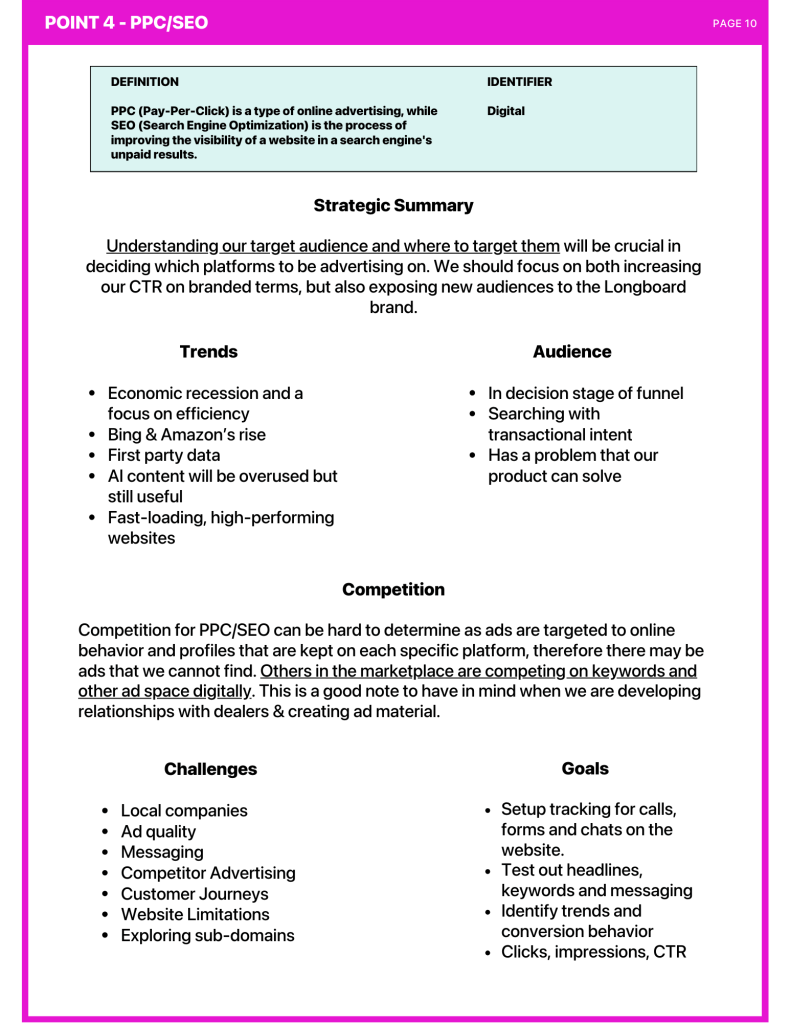
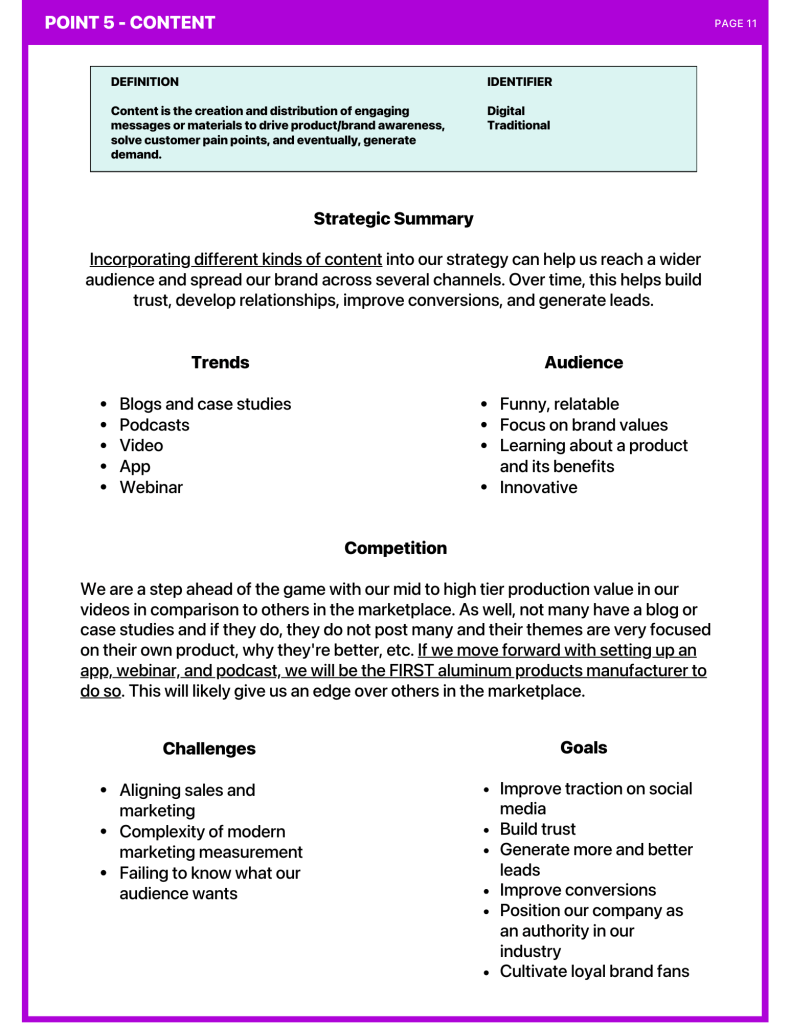
PS – Below is an example of a preliminary exploration I did for a company. Let me know if you’d like to chat more about it!
Revelation. I’ve taken up something I’m sure a million (or more) of you do. I’m back to listening to ebooks while driving to work. Haha – and you thought it would be something more complicated! I did it before but found I was getting bored of it. I’m unsure if it’s the drone of narration or my susceptibility to zoning in and out. Probably a mixture of both. Alas, as part of my year of sharing insights, I thought it would make sense to dedicate myself to it again.
So, today, I want to talk about reciprocity in marketing. From a psychological standpoint, this rule is simple. What you give is what you get. We tend to feel obligated to return a favour or gesture after receiving something from someone else. If I come back from the cafe with a donut for you, you will likely buy me a baked good the next time you’re picking up a coffee. 😉
In marketing, this sense of indebtedness in our actions, or more specifically, messaging, can steer our audience to feel more motivated or compelled to make a decision that will impact their buying trajectory. For example, as part of our ABM strategy, I put together a booklet and sample kit for prospective customers. The act of sending and receiving the package in the mail is not only thoughtful but leverages something of value, something tactile and beautiful, something helpful and intriguing that, in turn, can help the receiving party better understand where our brand comes from and ultimately, our passion and intention of supporting the design and construction community through not only inspiring architecture but inspiration, in and of itself!
Creating this cycle of giving and receiving strengthens social connections and encourages cooperative behaviour among individuals and groups within communities, small and big. I see it as small steps of action becoming big sips of gratitude and many more meaningful opportunities in the future!
Have you taken a reciprocal step? In what way did it change the trajectory of your day? Your goals? Your journey as a marketer?
Not done yet! Reciprocity has even been known to foster creativity and innovation, such as this Adobe example in a short Medium article – https://bit.ly/48McaDl
Industry 4.0 is revolutionizing how companies manufacture, distribute and improve their products. But how does it impact businesses from a marketing perspective?
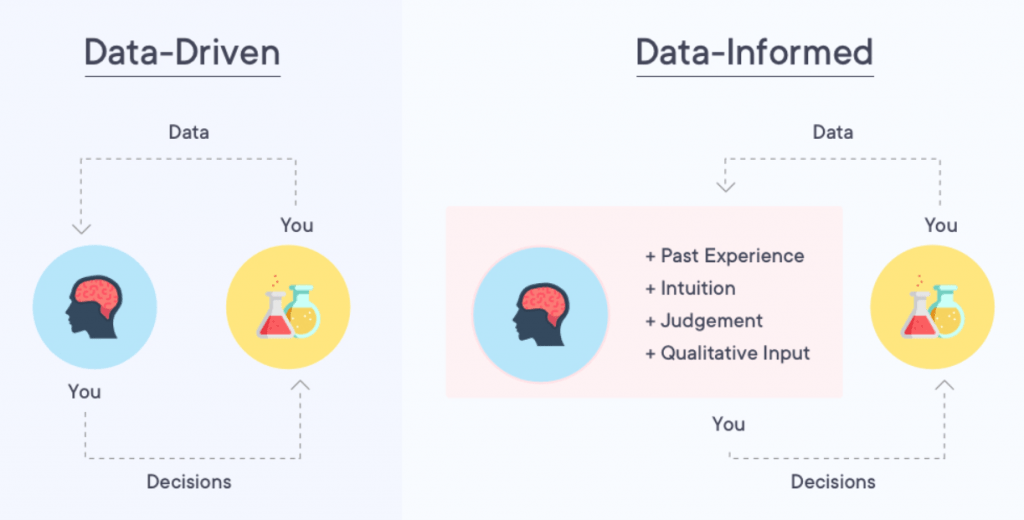
Characterized by increased automation and “smart” machines and factories, Industry 4.0 differs from previous industrial eras because manufacturing companies now have informeddata (data + research + experience + personal insights) to help them manufacture their products more efficiently and productively across the value chain.
As a positive example of social, economic, and environmental responsibility, Industry 4.0 provides an incredible opportunity to share and expand on core concepts (for a manufacturing company, these could be ideas like efficiency, reliability, and speed) via targeted and strategic messaging. I’ll talk about a 9-Point Marketing Strategy later!
You can achieve this by promoting modern, forward-thinking concepts that can help differentiate you (this is USP) from others (competitors) in the marketplace.
Your USP or Unique Selling Proposition makes your business better than your competitors and is the reason why customers should buy from you. A USP informs every business modality, including brand management, slogans, developing and describing new products and services, and how you interact with clients. A strong USP will put your customers needs front and center.
Here are topics that can help build your USP as a manufacturing company (wanting to dial into Industry 4.0 concepts in messaging) –
Increasing revenue and profitability: Industry 4.0 creates a more efficient and higher-quality production process and opens up marketing avenues for differentiating your product user journey against others in the marketplace.
Optimizing processes for improved outputs: The need for integrated systems and the results they can produce will drive greater collaboration and communication among producers, suppliers, and other stakeholders in both the technological and marketing domains.
Leading with high-quality products: You have a tremendous opportunity to realign and refocus quality and demonstrate to the world how new technologies can benefit and synergize the entire manufacturing industry, putting you in a position to lead the way with how you position your brand.
BRAND IMPACT
The impacts of Industry 4.0 (automation, “smart” machines and factories, etc.) can work conceptually and integrate into a marketing plan or strategy. Take its main outputs (for automation, think efficiency, reliability, speed) and apply them in cross-functional applications (namely, your content and messaging).
For example, if your drive for “efficiency” is to make your products easier to manufacture and is achieved thanks to new technologies like “smart factories”, then the output would be how it contributes toward messaging concepts like industry-best lead times (meeting on-time delivery requirements of clients) and added capacity to provide exceptional customer service (improving the client experience by developing enduring relationships at every touchpoint).
Today, I am developing a streamlined approach (that’s the 9-Point Marketing Strategy!) and testing various campaigns and projects to attain current goals and inform our future work. Of course, ensuring my team is collaborative and agile while leveraging informed data to drive the vision and mission forward.
It will be exciting to see what new product innovations (and process changes within marketing) grow from Industry 4.0.
What are your thoughts on this topic? Share, share away!
Hey everyone! My gosh, has it been a long time! I’ve been so busy working on my career that I haven’t had two seconds to post on my personal website. Transparency aside, I wanted to share a new series based on a weekly project I run at work called Social Media Update. In this series, I touch on social media and general marketing strategy, and I thought it would be great to share it with you all.
I’ll work my way back to when I started at Longboard, so here is our first instalment! Have fun with it, and if you have any questions, feel free to reach out at info@chonafecanlas.com.
Finding the ‘intriguing angle’ is the idea that we can focus on big-picture topics like our core aspects (innovation, sustainability, quality) to create compelling content that impacts our target audiences.
When creating social media content, we can ask and answer a couple of questions:
Q: What is a significant concern for our business and other businesses today?
A: Our audience demands a greater understanding of where and how our products are sourced and manufactured.
Q: What approach can we take?
A: We can and should comment on sustainability by promoting a transparent and traceable approach. This entails a mix of carefully curated messaging that effectively positions our differentiators while driving an emotional reaction from our audience.
For example, we could share that all production is on-site and that we have an incredible production team that helps to build our premium products. We would also mention that we pursue responsible consumption and production, which helps create sustainable architecture that positively impacts the environment and the communities around us.
Our team is mindful that we must not fall into the trap of hoping word will get out and the customers will come. Through proactive and strategic messaging, we can understand why we do what we do, and share that message with the world.
So, what did you think of that? Do you feel inspired to identify some core aspects of your business, then do a deep dive into how they can impact your target audience? Please share your thoughts!
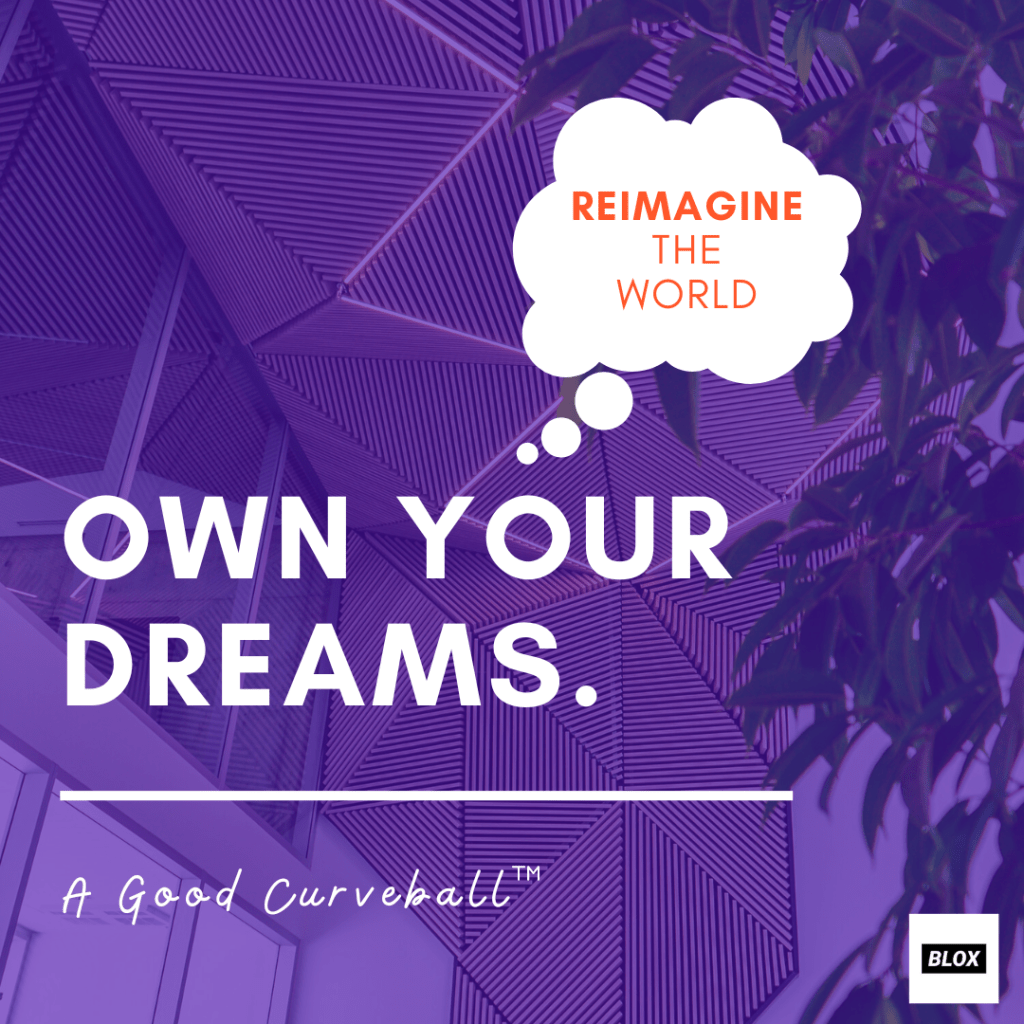
A good curveball is an opportunity (remember, problems are opportunities) to:
1 – Own your dreams.
2 – Reimagine the world.
Own Your Dreams
To own your dreams, you must recognize, acknowledge, and value the fact that something is waiting for you out in the world.
It is there to fulfill.
It exists to make you happy.
You are satisfied when united (or reunited) with it.
It becomes a part of you and can be shared with others.
A Good Curveball
Owning my dreams is being connected to work I’ve always envisioned doing—building a sustainable and scalable brand that will influence people inside and outside the operation.
Reimagine the World
Second, to a good curveball is our ability to reimagine the world. Through a clear and defined vision and mission, we can accomplish anything. With a good heart and holistic stance, our world can become something better, more equal and more understanding.
Reimagining the world involves pushing boundaries, setting new standards, and developing a structure or process that leads to innovation, progression, and growth.
I think I get thrown more good curveballs as I age, so I hope this becomes the norm and the opportunities don’t cease!
As I continue to inspire and empower people to make a difference in their daily lives, I recognize three things that matter to me today. Of course, there’s always more, but let’s get started with these!
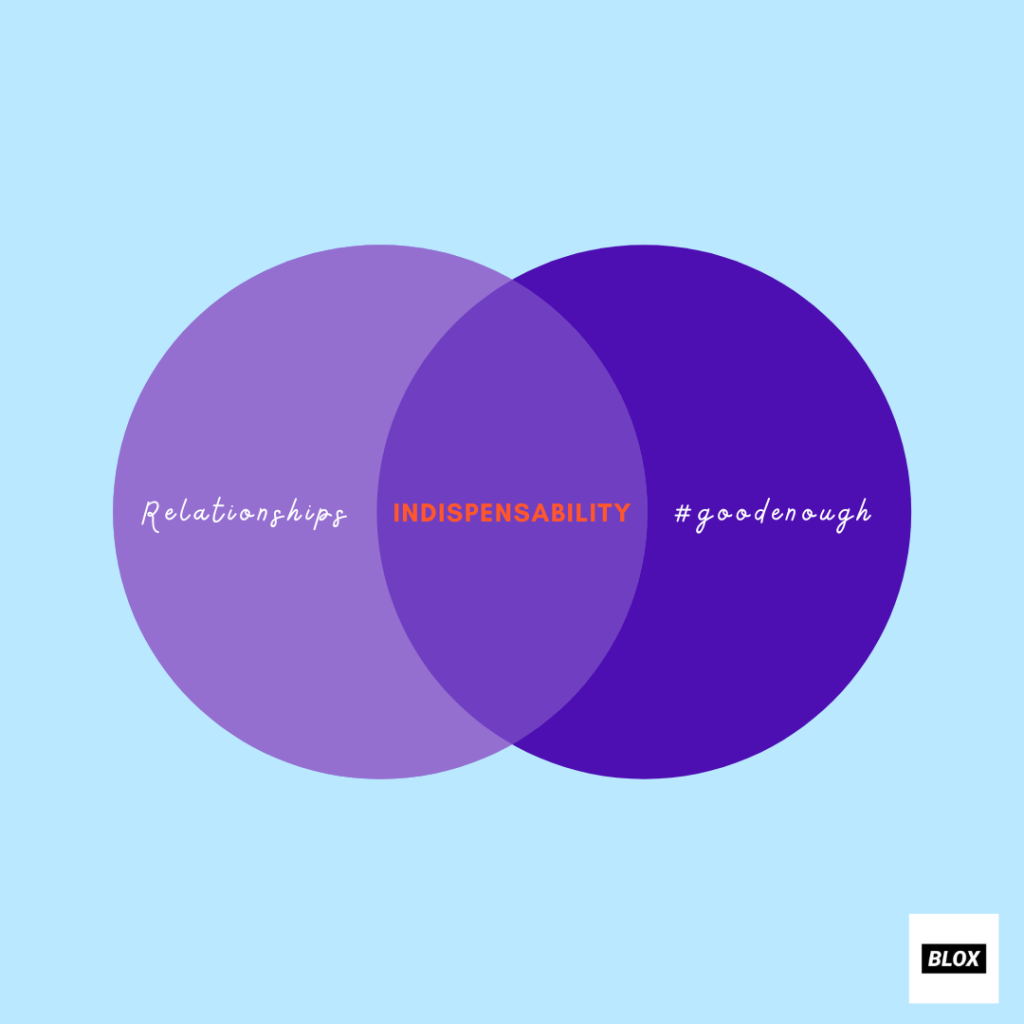
Become Indispensable
1- Relationships
One of the biggest influencers in my marketing career has been the formative relationships I have built over time—in both the long and short-term. Having a direct report has taught me to be vulnerable and courageous as I’ve had to steer a small team in a viable direction while maintaining strong, personal connections which benefitted the entire team. I am particularly grateful for the opportunity to work directly under the Founder and CEO of Clearbridge, Ryan Kononoff. He has taught me many things about engagement and the effort required to make meaningful projects matter to an audience. I am also thankful for every other team member I’ve had the chance to grow alongside.
You are bright.
You are dedicated.
You are special!
2 – #goodenough
This is one lesson that has helped me to conquer my perfectionism. I recall working on one of my first projects, a new brand book (or later called a Playbook), which in scope was a huge undertaking that could have demanded months of work. But with the knowledge that a marketer should be agile, or as the Agile Marketing Manifesto states –
“To keep up with the speed and complexity of marketing today, we must deliver value early and often over waiting for perfection.”
In creative marketing, we challenge ourselves by generating work that is original, unique and that manifests a change in its surroundings. In analytical marketing, we must use data sets to quantify results. Pairing the two (creative + analytical marketing) is where #goodenough truly shines—we can experiment to determine what approach works the best, and we don’t have to wait to be enlightened. We should find insights with every movement or decision we make!
3 – Indispensability
I rarely finish an entire book in one sitting. It’s often hard for me to finish it at all. I prefer to scan information and read what will be of value to me. Such was the case with Seth Godin’s book Linchpin. As he writes –
“You have brilliance in you, your contribution is essential, and the art you create is precious. Only you can do it, and you must.”
Such an important lesson because it’s much too easy to forget your worth. We must use every inch of our being to recognize and become more self-aware. In marketing, the potential to get lost in a sea of tasks and activities might forsake where the value truly lies—creating, ideating, and examining the wonder and change that a type of approach can incite.
Being indispensable takes:
Courage
A growth mindset
Initiative
Risk
And most importantly…talent. You can’t duplicate indispensable work. I truly believe this!
The Playbook
A pièce de résistance, I hope you find value in reading it!
I love to write, and emails are a breath of fresh air.
No editing. No fancy words. No issues over length. No need for profundity.
It has been almost five years since I left Bell Mobility to pursue a career in marketing, and one thing that has drastically changed is how often I communicate via email.
I miss the simplicity of it all. I miss reaching out to my clients daily. I miss the back-and-forth motion that builds connection.
At Bell, I had so many great relationships; I used email to build better ones along the way. It was just so damn efficient. Templates allowed the writing to take shape quickly. In mere minutes, I was sending off concise and compelling messages. Over and over again. Each email was re-read once, at most twice, and then sent so I could continue to the next case. It was a beautiful workflow, and it was all supported by Salesforce.
And by the way, I am trying to write more like Seth Godin. Also, finding my way back to my university days. My favourite professor and mentor, Paul Woodrow, graded an essay I wrote on the fallacies of Coca-Cola, commenting in tiny writing and bright green ink, “Swift and punchy, Chona!”
So begets my email manifesto –
I will always try to write swift and punchy.
If I can remember to, that is.
Alas, I have a pop quiz for y’all.
I want you to decide which entry below is authentic, meaning not edited. And which one is “fake”, as in completely and utterly revised from its original style + tone.
How can you tell? What gives it away? Which is written better?
Ah, so many questions to ponder, but if only we had more time.
Off to bed, now, enjoy the exercise!
Entry 1
For all my years as a Corporate Account Manager at Bell, some of my fondest memories included writing emails. I loved how fluid and uncomplicated it was to craft messages on the spot without spending copious amounts of time editing. I would not mind working on some ideas to “wow” our current and prospective customers with something easy to read, memorable, and impactful!
Entry 2
I spent many years as a Corporate Account Manager at Bell, crafting friendly and professional emails. I thought it was so exciting (yup, I love communication!) to be able to write something on the spot that didn’t require any editing. It’s an art form really. Would love to work on some ideas to incorporate more emails into how we communicate with our customers.
Job hunting can be gruelling. For six months, I searched for the perfect fit. I did everything I could to embrace the energy, excitement and engagement that comes with it, but frankly, I was exhausted. Each step required work. Hard work. It felt like a fight for my future. I was gaining momentum, but I did not feel empowered. I wanted to make positive decisions that would bring me closer to achieving my goals. So I created a mission statement to give me a sense of purpose. I added it to my resume with gusto –
My vision as a marketer is to empower and inspire people to make a difference in their daily lives.
These words, within my experience, proposed change as a way to improve and move forward. Suddenly, I was motivated to find the next step in my career and not just a new job. Suddenly, I was searching for similar words in job descriptions as a way to feed out mismatched opportunities. I felt like I was in control. By developing this meaningful statement, I was working on myself. I started to see that helping others was important to me, and I wanted to find work that would help me grow into a person who could Make Change Happen.
Making my routine move, I visited their website. A sentence, written in white, spread across the front page drew me in. Helping you do your best work. It reminded me of my mission statement! I envisioned the word empowering substituting the word helping and knew at that moment that my marketing mind was intrigued. Then I thought, what is my best work? The answer to that? Me. I decided right then and there that Clearbridge was invested in this tagline—they want to empower their customers to do their best work and employees to be the best versions of themselves. This brief exercise in recognizing worth drove me to apply, and the rest? Keep reading.
#bestwayspossible
We always have a choice and the option to take the first step. In the context of job hunting, if we choose the best option, that is, making positive decisions that bring us closer to achieving our goals, then we are empowering ourselves. The concept of connection becomes a critical building block here. Connection is about linking two entities that work better together (think: peanut butter & jelly). When you take time to recognize a connection (they stick so well together) and then work toward building that relationship (how many versions of a pb & j sandwich could you make), you are creating the best ways possible to put yourself in a favourable circumstance (eating the pb & j sandwich), and there is nothing more empowering than that (delicious).
Learning to see
Since becoming a marketer, I’ve been inspired by the work of Seth Godin. He says you can’t be seen until you learn to see, and this was my experience applying for the Marketing Coordinator position at Clearbridge.
My first interaction was with Amanda, the People Operations Coordinator. Bright and outgoing, she started our conversation with a compliment. Now, how often would that be the way to begin an interview? I was drawn to this approach. She acknowledged me (creativity and all), and I appreciated that. Acknowledging or demonstrating gratitude and acceptance is one of the best ways to get to know someone (am I right Amanda?).
After a spirited discussion about my interests, work history and marketing experience, Amanda reinforced our connection through her use of positive language and overall eagerness to empower me through the next step. I was impressed and wanted to learn more about the position and the company. I was starting to see what Clearbridge was about! She scheduled a meeting with the CEO (Ryan) and Operations Manager (Allison) early the next day.
The interview went smoothly, and I noticed something about Ryan and Allison. They were both contemplative, friendly, and engaged. There were moments when I got stuck on a few questions—I get nervous. I used these opportunities to find inward answers and show my resourcefulness. There was a lot of feedback. It felt like we were all learning from each other. By the end of the interview, we were smiling pretty hard, and for the first time in a long time, I felt seen.
I returned to work feeling ecstatic about the new connections I had made. It felt like they were offering me the opportunity to take my career to the next level, focus on what mattered the most, and grow as a person and creative marketer. Minutes later, I received a phone call from Amanda. To my delight, they offered me the position!
Finding #better
Doing better is often described as arriving home. This is what I felt when I joined the team at Clearbridge. Suddenly, there was a better space for me to dream and create (more peanut butter & jelly sandwiches, right). I was welcomed into a cool, bustling office filled with natural sunlight and a sense of possibility. During my first week, it felt like each day was a chance to do better and become a better person. Someone my peers could rely on. I learned that my true calling was not just about fulfilling a lifelong dream or pursuing an arbitrary passion. It was about being connected with the right people and being in the right place at the right time.
Sitting at my new workstation, I leaned back into my ergonomic chair and beamed.
When you know something is just right, you know it is (I can’t stop with the pb & j references!). But there are a lot of clues that can help you see better.
Here are some I can take away from my first week at Clearbridge:
When the team takes time to put you through a well-thought-out onboarding process, you know they are devoted to empowering you, helping you feel ready to take on the responsibilities of your new role.
Working in a space that promotes collaboration for someone with creative inclinations is living the dream. I can’t wait to see where it takes me.
Joining a company that embraces change is everything. This especially matters when you’re creative because ideation thrives in a facilitative environment. If I’m able to grow creatively, I know I will become a better marketer and, in turn, can create and develop the best ideas because I am part of a group of people now who value that too.
Feedback is essentially a means of trust. It allows us to discover possibilities, and at the same time, we earn the right to discover our peers’ communication styles. Once we unlock this type of interaction, we can evolve as human beings and accomplish larger goals, like I’ll be honest—changing the world!
In pursuit of innovation
Seth Godin says, “The first step on the path to making things better is to make better things.” This is now my truth since joining Clearbridge.
I’ve always been driven and ambitious. From a very young age, I partook in various extracurricular activities, from public speaking to creative writing and sign language classes to competitions with my classmates on who could act out The Babysitters Club book series with the most panache. Life back then was always about showing the world who I was and what I was capable of.
In my first week at Clearbridge, I feel like that kid again, taking on my dreams as if there were no limitations. I’ve also learned a thing or two about communication strategy. For one, you need a dedicated team that wants to make change happen for anything to improve. You also need to be laser-focused on outcomes and putting the best systems in place to win in every situation. We must constantly be challenged to innovate in our domain, then share our knowledge with one another, our customers, and partners.
We are doers
From snacks of every kind (lots and lots of chips, locally-made ice cream, and most critically, Phil & Sebastian coffee) to a business book library, the environment at Clearbridge supports doing. There’s no hiding in a cubicle as if you didn’t exist. It’s more like—look around you and see. See everyone and everything in its place. I’ve already started working on a social media strategy that will educate and engage our audience around technology, helping them find pertinent information (hello cybersecurity), how-to-dos, tips, tricks, and hacks that every person can find handy. I am also working on a company manual that entails everything from branding guidelines to who we are to our communication strategy. It will be a living document and serve as an introduction for future Clearbridgers.
Building great relationships with great communication
So, it all comes down to this—through empowerment, connection, communication, and the desire to do better (and find the best ways possible), we can succeed in work and life. I know that’s a big statement to make, but since joining the team here at Clearbridge, I feel that is the journey I am on. What’s more, I am starting to build strong relationships founded on intention. We are all here to do great work. We all want to understand that. I hope my time will be productive, meaningful and filled with positive transformation for Clearbridge and me.
How did you feel when starting a new job and what made you think it was the right choice? Share your comments; we would love to hear them!





















 Blox. is a Creative & Technical Marketer